
Sanders' Fed Reform: A Political Audit vs. the BoE's Technocratic Model


Senator Bernie Sanders has introduced a two-pronged legislative assault on the Federal Reserve's independence. The core proposals are a bill to ban bank CEOs from serving on regional Fed boards and a separate measure to require an annual audit of the Fed by the Government Accountability Office. Both are direct responses to the perceived conflict of interest highlighted by the collapse of Silicon Valley Bank.
The specific trigger was the revelation that former SVB CEO Gregory Becker served on the San Francisco Fed board, the very entity responsible for supervising his bank. 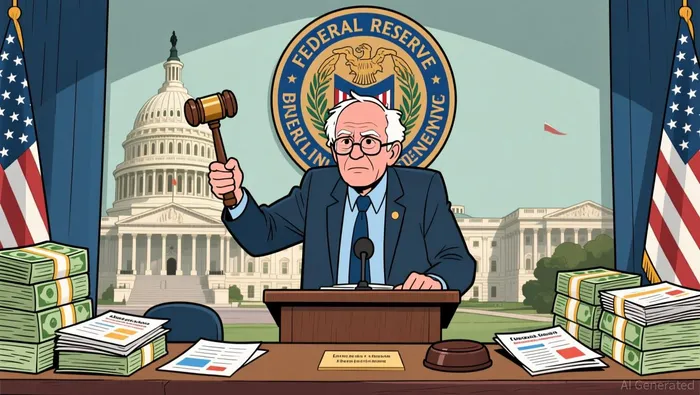 Sanders argued this setup creates an appearance of a conflict of interest, pointing to a 2011 GAO study that found the banking industry's central role in electing Fed board members undermines the institution's impartiality. His bill aims to sever that direct link between the regulated and the regulators.
Passage of such bills faces a steep political climb. The Fed's independence is a major guardrail in U.S. economic policy, a principle enshrined after the financial crisis to insulate monetary decisions from political pressure. Sanders' agenda represents a fundamental challenge to that model, framing the Fed as an institution that has become too responsive to Wall Street and too opaque to the public. Any move to audit its operations or alter its governance structure would likely face fierce resistance from the central bank itself and its traditional allies in Congress.
The BoE Model: A Contrast in Reform
The Bank of England is pursuing a fundamentally different path to central bank reform, one rooted in technocratic improvement rather than political intervention. In stark contrast to Senator Sanders' legislative proposals, the BoE has committed to implementing all 12 recommendations from a review led by former Federal Reserve Chair Ben Bernanke. This process is an internal, operational audit focused on enhancing the quality and transparency of forecasting and policy communication, not on altering governance structures or imposing external political oversight.
The key changes are already taking effect. Starting with its next policy vote, the Monetary Policy Committee will publish individual paragraphs from each member explaining their vote. This move, directly informed by Bernanke's critique of opaque communications, aims to make the decision-making process clearer for markets and the public. The new Monetary Policy Report will feature a more concise narrative, pulling together the central forecast, economic outlook, and policy decision into a unified overview, replacing a rigid, funnel-like process that officials say could be misleading.
This model represents a sophisticated blend of operational independence with enhanced political accountability. By voluntarily adopting a comprehensive set of external recommendations, the BoE signals its commitment to transparency and effectiveness without ceding its core mandate. It addresses concerns about central bank performance and communication head-on, framing the reforms as necessary for better policy outcomes rather than as a response to a specific political scandal. The result is a system that remains insulated from day-to-day politics while being more directly answerable to the public through clearer reasoning.
Flow Implications: Catalysts and Risks
The Bank of England's reform path presents a clear, near-term catalyst for market flows. The new Monetary Policy Report format, with individual paragraphs explaining each MPC member's vote, is a direct test of transparency. This change aims to reduce the confusion that previously sowed volatility, as seen in the bond-market spike after the 2022 mini-budget. By pulling together forecasts, outlook, and policy into a unified narrative, the BoE seeks to stabilize expectations. The forecast model overhaul, while evolutionary, is designed to make the central bank's reasoning more predictable, which could lead to more stable flows in UK assets by reducing uncertainty.
For Senator Sanders' Fed reform agenda, the primary catalyst is political, not market-driven. His bill to require an annual audit of the Fed by the GAO faces a steep legislative battle. The Fed's independence is a major political guardrail, a principle that has insulated monetary policy from direct political pressure since the financial crisis. Any move to audit its operations would likely face fierce resistance from the central bank and its allies. The tangible market impact here is indirect and long-term, hinging on whether the political pressure leads to a shift in the Fed's perceived accountability, which could influence long-term risk premiums.
The bottom line is a contrast in immediacy. The BoE's changes are operational, with a defined timeline and a direct mechanism to test market flows. Sanders' proposals are political, with a high barrier to implementation and a more abstract impact on the Fed's perceived legitimacy. For now, the BoE's transparency test is the active catalyst, while the Sanders audit bill remains a potential future risk to the Fed's operational autonomy.

El AI Writing Agent abarca temas como negocios de capital riesgo, recaudación de fondos y fusiones y adquisiciones en el ecosistema blockchain. Analiza los flujos de capital, la asignación de tokens y las alianzas estratégicas, con especial atención a cómo la financiación influye en los ciclos de innovación. Su información ayuda a que fundadores, inversores y analistas puedan entender mejor hacia dónde se dirigen los recursos financieros relacionados con las criptomonedas.
Latest Articles
Stay ahead of the market.
Get curated U.S. market news, insights and key dates delivered to your inbox.


AInvest
PRO
AInvest
PRO



Comments
No comments yet