
Sanctions Drive North Korea's Cyber War for Digital Gold


 Aime Summary
North Korean hackers, particularly the Lazarus group, are increasingly leveraging spear phishing as their primary tactic to infiltrate cryptocurrency exchanges and financial institutions, according to recent investigations. South Korea's Upbit exchange, the country's largest digital asset platform, suffered a $36–$37 million breach in late November 2025, with authorities suspecting Lazarus' involvement. The attack coincided with a major merger announcement involving Upbit's parent company, Dunamu, and tech giant Naver, fueling speculation that the timing was deliberate to maximize visibility according to investigations. Experts note that the Lazarus group's methods often include hijacking or impersonating admin credentials, a tactic consistent with their 2019 breach of Upbit as research shows.
The attack highlights the broader threat posed by North Korea's cyber operations, which are driven by the regime's need to generate foreign currency amid economic sanctions. The stolen funds were reportedly laundered using mixing techniques, a strategy Lazarus has historically employed to obscure the trail of illicit transactions as data indicates. South Korean security analysts emphasize that North Korea-linked groups are becoming more sophisticated in targeting high-profile institutions, particularly in the cryptocurrency sector, where vulnerabilities in wallet security and transaction processes remain exploited according to experts.
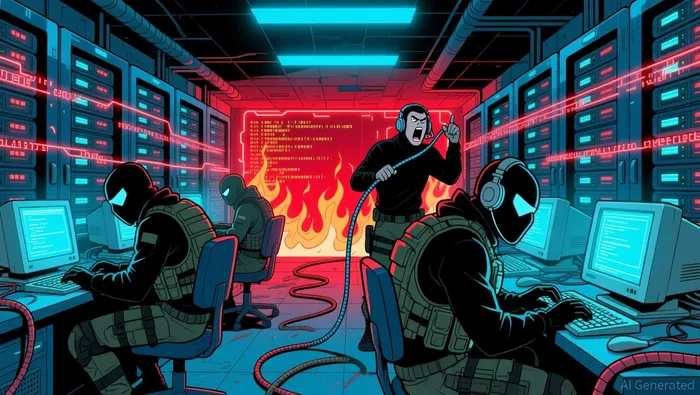 Spear phishing campaigns, a hallmark of Lazarus, often involve meticulously crafted social engineering to compromise high-value targets. In the Upbit case, the breach was attributed to unauthorized access to a hot wallet, a common vector for cyberattacks in the crypto space as reports indicate. A security expert cited by Yonhap noted that hackers frequently choose symbolic dates for their operations to "show off," suggesting the November 27 attack date was strategically selected according to the expert. This aligns with broader patterns observed in Lazarus' activities, where psychological and operational timing play critical roles in maximizing impact as analysis shows.
The incident underscores the urgent need for robust cybersecurity measures in the cryptocurrency industry. Blockchain analytics firms have repeatedly flagged the risks of inadequate anti-money-laundering (AML) controls, as seen in recent lawsuits against exchanges like Binance for failing to report transactions involving sanctioned entities according to legal filings. Meanwhile, companies such as GoPlus have demonstrated the value of advanced security tools, with their Token Security API processing over 700 million monthly calls in 2025 to detect vulnerabilities as reported. Experts recommend multi-layered defenses, including real-time transaction monitoring, employee training to recognize phishing attempts, and collaboration with threat intelligence platforms to stay ahead of evolving tactics as experts suggest.
North Korea's cyber aggression also intersects with its broader geopolitical strategies. Despite stringent domestic laws criminalizing foreign cultural influences, the regime continues to fund and deploy hacking groups to circumvent economic restrictions. Efforts by South Korean and U.S. civil society groups to broadcast uncensored news into North Korea have faced setbacks due to funding cuts and policy shifts, leaving a void in information warfare that cyberattacks now exploit as sources indicate.
As the crypto industry grapples with these threats, regulatory bodies and private firms are ramping up defenses. Grayscale's recent filing for a Zcash ETF, for instance, reflects growing institutional interest in privacy-focused cryptocurrencies, though it also raises concerns about potential misuse by malicious actors as the filing shows. Meanwhile, companies like Riot Platforms are expanding beyond BitcoinBTC-- mining into data center infrastructure, signaling a broader diversification that may mitigate risks associated with single-point vulnerabilities as industry reports indicate.

Stay ahead of the market.
Get curated U.S. market news, insights and key dates delivered to your inbox.






Comments
No comments yet