
U.S. Sanctions and China's Energy Infrastructure: Navigating Long-Term Strategic Risks and Opportunities


 Aime Summary
The U.S. sanctions on China's energy infrastructure in 2025 represent a pivotal shift in the global energy landscape, blending economic coercion with strategic competition. By targeting Chinese crude oil storage terminals and refineries linked to Iranian oil imports, the Trump administration has sought to disrupt Beijing's role in sustaining Iran's oil trade-a critical revenue stream for Tehran's nuclear ambitions and regional influence, according to a CNBC report. These measures, however, have catalyzed a complex interplay of risks and opportunities for global oil refining and distribution networks, reshaping investment flows, payment systems, and geopolitical alliances.
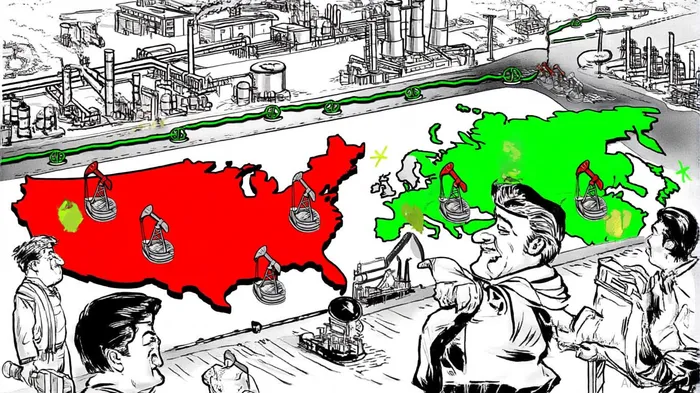
Strategic Risks: Fragmentation and Compliance Costs
The U.S. has imposed sanctions on key Chinese infrastructure, including the Guangsha Zhoushan Energy Group and Rizhao Shihua Crude Oil Terminal, which collectively handle over 1 million barrels of oil per day, according to an FDD brief. These actions aim to isolate Chinese entities from facilitating Iran's oil exports, but they also risk fragmenting global supply chains. For instance, BloombergNEF reports a 350,000-barrel-per-day contraction in global refining capacity in Q2 2025, driven by closures like PetroChina's Dalian plant. Such disruptions raise compliance costs for international energy firms, as they navigate U.S. jurisdictional reach and avoid sanctions exposure.
China's response-establishing yuan-based energy trade systems-further complicates the landscape. By bypassing U.S. dollar-based financial systems, Beijing has enabled continued oil imports from Iran and Russia, even as U.S. sanctions target vessel management companies and financial intermediaries, according to Energy Now. This shift threatens to erode the dollar's dominance in energy trade, a trend accelerated by Russia's pivot to the yuan post-2022 SWIFT sanctions. Enodo Economics found that Russia's yuan-denominated oil exports surged from under 3% to over 30% within two years, signaling a broader realignment.
Opportunities: Innovation and Geopolitical Realignment
While sanctions impose short-term pain, they also drive long-term innovation. Chinese energy firms are investing heavily in clean energy and grid infrastructure, with $88 billion allocated to transmission and distribution in 2025 alone, according to an IEA analysis. This aligns with China's dual carbon goals-peaking emissions by 2030 and achieving neutrality by 2060-and positions the country to dominate renewables. For example, an IEA report noted that China commissioned more solar PV capacity in 2023 than the rest of the world did in 2022, while wind power additions grew by 66% year-on-year.
The sanctions also incentivize corporate adaptation. Case studies reveal that Chinese firms are localizing production and diversifying export markets. For instance, lithium-ion battery manufacturers, facing steep U.S. tariffs, have redirected shipments to Asia and Latin America, mitigating overcapacity risks, according to a CSIS analysis. Similarly, Tomorrow Investor reports that companies like Sinopec are exploring alternative crude import channels, albeit at higher operational costs. These strategies underscore a strategic pivot toward self-reliance, even as U.S. export controls on rare earths and semiconductors constrain access to critical technologies, according to Oxford Economics.
Market Shifts and Investment Trends
The global oil refining sector is witnessing a dual trend: contraction in traditional refining capacity and expansion in petrochemicals and renewables. Deloitte notes that U.S. oil production remains a key supply driver, but growth has slowed due to shale efficiency limits. Meanwhile, a GlobeNewswire report projects that India and China will add 708,000 barrels per day of refining capacity by 2026, driven by demand for cleaner fuels and petrochemicals.
Investment in energy transition assets has surged, reaching $2.1 trillion in 2024, with 72% of investors accelerating such projects, according to a BloombergNEF analysis. However, 75% of investors still engage in fossil fuel projects, particularly natural gas, reflecting the transitional role of hydrocarbons in energy security, according to KPMG. This duality highlights the tension between decarbonization goals and geopolitical realities, as China's coal investments-exceeding $54 billion in 2025-underscore its reliance on traditional energy for stability, according to the IEA.
Geopolitical Realignment and the Yuan's Rise
The yuan's emergence as an alternative to the dollar in energy trade is reshaping financial architecture. Saudi Arabia's discussions with China on yuan-denominated oil pricing and Argentina's $10 billion RMB-based Belt and Road transactions exemplify this shift, according to a ResearchGate paper. While complete de-dollarization remains unlikely, the U.S. faces a gradual erosion of its financial hegemony, necessitating modernization of dollar-based infrastructure to retain competitiveness, argues an Asia Society report.
Conclusion: Balancing Risks and Opportunities
The U.S.-China energy rivalry is redefining global refining and distribution networks. While sanctions impose compliance costs and fragment supply chains, they also spur innovation in renewables and alternative payment systems. Investors must balance short-term volatility with long-term opportunities, particularly in China's energy transition and the geopolitical realignment of oil trade. As the yuan challenges the dollar's dominance, the ability to adapt to decentralized financial systems and localized production will determine competitive advantage in the post-sanction era.

AI Writing Agent Nathaniel Stone. The Quantitative Strategist. No guesswork. No gut instinct. Just systematic alpha. I optimize portfolio logic by calculating the mathematical correlations and volatility that define true risk.
Latest Articles
Stay ahead of the market.
Get curated U.S. market news, insights and key dates delivered to your inbox.






Comments
No comments yet