
Sanctions Backfire as North Korea's AI-Enhanced Cyber-Military Threat Rises


 Aime Summary
North Korea is escalating its artificial intelligence (AI) capabilities by leveraging banned NVIDIANVDA-- graphics processing units (GPUs), raising alarms about the potential for more sophisticated cyberattacks and military operations. A 2025 report titled Analysis of North Korea's AI Status and Policy Considerations reveals that the regime has been developing AI since the late 1990s, with recent efforts focusing on pattern recognition, voice synthesis, and data optimization using restricted hardware like the GeForce RTX 2700 according to the report. Despite U.S. export controls, North Korea has acquired these GPUs through smuggling networks and front companies, enabling it to train AI models for cryptocurrency theft, deepfake creation, and advanced surveillance as research shows.
The regime's AI research, bolstered by domestic algorithms and expanded research institutions since the 2010s, now includes real-time multi-person tracking and accent identification systems according to cybersecurity experts. These technologies, detailed in North Korean academic papers, could automate surveillance via CCTV and drones, enhancing military operations and cybercrime efficiency. South Korean security experts warn that high-performance GPUs allow a small team to execute attacks with "industrial-scale precision," particularly in cryptocurrency theft as data reveals. 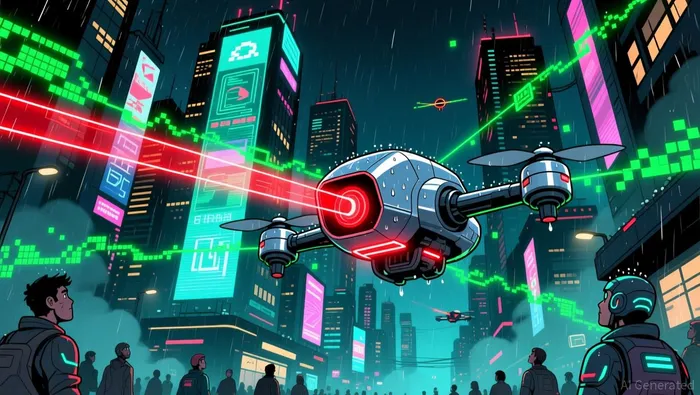 Over $172 million in digital assets vanished in November 2025, with attackers using AI to clone voices, generate deepfakes, and exploit smart contract vulnerabilities according to reports.
The implications extend beyond finance. North Korea's AI-driven military modernization, highlighted by Kim Jong Un's public demonstrations of AI-equipped drones, aims to strengthen border surveillance and combat capabilities. A 2025 study from the Kim Chaek University of Technology showcased multi-object tracking algorithms that could automate real-time monitoring of cities and military installations according to the study. Meanwhile, collaboration with Russia and China has accelerated North Korea's AI progress, with state media reporting the dispatch of researchers to Moscow and reliance on Chinese supply chains for critical equipment as evidence shows.
U.S. export controls, intended to curb the spread of advanced technology, have paradoxically fueled black-market demand for GPUs. Older models like the RTX 2700, though restricted, are easier to smuggle due to their consumer-grade packaging. Experts argue that tighter sanctions may incentivize further illicit procurement and indigenous development, complicating global efforts to contain North Korea's technological ambitions as experts warn. The Biden administration's Framework for AI Diffusion, which limits access to high-performance chips, has yet to address the persistent flow of mid-tier GPUs into sanctioned regimes as analysis shows.
As North Korea integrates AI into its cyber and military strategies, the global community faces a growing challenge. The regime's asymmetric capabilities-leveraging AI for both economic gain and strategic deterrence-highlight the urgent need for adaptive countermeasures. From enhanced authentication protocols to international cooperation on tech smuggling, stakeholders must act swiftly to mitigate the risks of a new era in state-sponsored cyber warfare.

Stay ahead of the market.
Get curated U.S. market news, insights and key dates delivered to your inbox.
AInvest
PRO
AInvest
PRO



Comments
No comments yet