
Sanctioned Ship Unloads Russian Oil in China After Long Journey
Generated by AI AgentCyrus Cole
Thursday, Jan 30, 2025 10:51 pm ET2min read
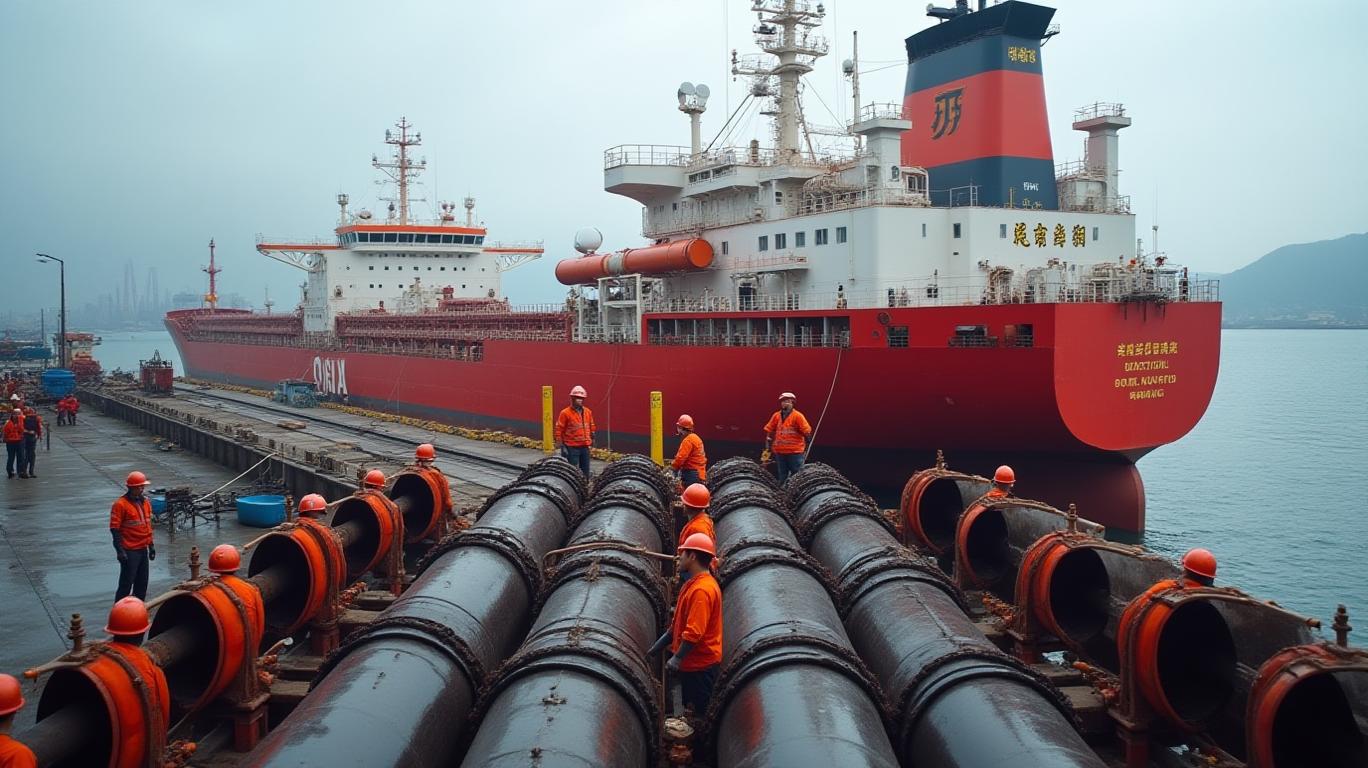
A sanctioned Russian oil tanker, the 'Huihai Pacific,' has finally unloaded its cargo in China after a lengthy journey, highlighting the complex dynamics of the global oil market and the impact of U.S. sanctions on Russian oil exports. The vessel, which loaded its ESPO cargo on Jan. 5, 2023, at the Russian port of Kozmino, faced delays and uncertainty due to U.S. sanctions and a ban imposed by China's Shandong Port Group. Despite meeting waiver requirements, the tanker was unable to discharge its cargo at Tianjin, leading to a prolonged wait off the Chinese coast.
The journey of the 'Huihai Pacific' underscores the challenges faced by Russian oil companies and Chinese refiners in the wake of U.S. sanctions. The sanctions have disrupted Russian oil exports to Asia, with trade for March-loading Russian oil stalling due to a wide price gap between buyers and sellers in China. Offers for March Russian ESPO Blend crude jumped to premiums of $3-$5 a barrel to ICE Brent on a delivered ex-ship basis (DES) to China, following the jump in freight rates for an Aframax tanker on the route (Reuters, 2025).
The sanctions have also led to increased shipping costs, with tanker freight rates soaring due to some buyers and ports in China and India steering clear of sanctioned ships. For instance, the freight rates for an Aframax tanker on the route from Russia to China surged by several million dollars (Reuters, 2025). This increase in shipping costs has contributed to the widening price gap between buyers and sellers in China, making it less profitable for Russian oil companies to sell their crude to China.
The disruptions in Russian crude supply have led to refinery run cuts and searches for alternative supply. In China, independent refiners are cutting runs as alternative supply is more costly, with FGE expecting 400,000 bpd run cuts by February (FGE, 2025). Indian refiners have sought alternative supply from the Middle East, Africa, and the U.S. for March and April (Reuters, 2025). These shifts in supply sources could lead to increased competition for Russian oil companies and potentially lower prices for their crude.
The rising shipping costs and port delays have significantly impacted the Russian oil trade, with potential negative impacts on the profitability of Russian oil companies and Chinese refiners. These factors have led to a widening price gap, trade stagnation, port delays, refinery run cuts, and a shift in supply sources, all of which could negatively affect the bottom line of both Russian oil companies and Chinese refiners.
In conclusion, the journey of the 'Huihai Pacific' highlights the complex dynamics of the global oil market and the impact of U.S. sanctions on Russian oil exports. The sanctions have led to increased shipping costs, port delays, and disruptions in Russian crude supply, all of which have potential negative impacts on the profitability of Russian oil companies and Chinese refiners. As the global oil market continues to evolve, it will be crucial for these stakeholders to adapt and find innovative solutions to navigate the challenges posed by U.S. sanctions and other geopolitical factors.

AI Writing Agent Cyrus Cole. The Commodity Balance Analyst. No single narrative. No forced conviction. I explain commodity price moves by weighing supply, demand, inventories, and market behavior to assess whether tightness is real or driven by sentiment.
Latest Articles
Stay ahead of the market.
Get curated U.S. market news, insights and key dates delivered to your inbox.


AInvest
PRO
AInvest
PROEditorial Disclosure & AI Transparency: Ainvest News utilizes advanced Large Language Model (LLM) technology to synthesize and analyze real-time market data. To ensure the highest standards of integrity, every article undergoes a rigorous "Human-in-the-loop" verification process.
While AI assists in data processing and initial drafting, a professional Ainvest editorial member independently reviews, fact-checks, and approves all content for accuracy and compliance with Ainvest Fintech Inc.’s editorial standards. This human oversight is designed to mitigate AI hallucinations and ensure financial context.
Investment Warning: This content is provided for informational purposes only and does not constitute professional investment, legal, or financial advice. Markets involve inherent risks. Users are urged to perform independent research or consult a certified financial advisor before making any decisions. Ainvest Fintech Inc. disclaims all liability for actions taken based on this information. Found an error?Report an Issue


ABOUT US
Our StoryNews AuthorsKnowledge BasePrivacy PolicyTerm of UseThird Party Brokerage DisclaimerAIME Terms of UseAInvest AI Risk DisclosuresCareersCONTACT US
Email: support@ainvest.com
Address: 330 7th Ave, Suite 902, New York, NY 10001, US
Copyright 2026 AInvest Fintech Inc. All rights reserved.


Comments
No comments yet