
The San Francisco Power Outage and the Imperative for Energy Infrastructure Resilience in Urban Markets


 Aime Summary
The December 2025 San Francisco power outage, which left 130,000 PG&E customers in darkness, serves as a stark reminder of the vulnerabilities inherent in aging urban infrastructure. A fire at a substation in the Mission District-home to a transformer installed in 1975-triggered a cascading failure that disrupted transportation, commerce, and public safety
according to reports. By the time power was fully restored, the outage had inflicted an estimated $200 million in economic losses within 24 hours
as reported. This event underscores a critical investment opportunity: the modernization of utility infrastructure in high-value urban markets, where the costs of inaction are rising faster than the pace of upgrades.
The Economic and Operational Costs of Fragility
The outage exposed systemic weaknesses in San Francisco's grid, particularly its reliance on outdated equipment. The substation fire,
attributed to a lack of modern surge-protection technology, caused widespread traffic signal failures, stranded autonomous vehicles, and forced businesses to operate cash-only or close entirely. The San Francisco Department of Emergency Management had to issue urgent guidance to residents, including warnings against using gas stoves or generators indoors
according to local officials. Such disruptions are not isolated incidents but symptoms of a broader crisis.
According to a report, the incident highlighted how even a single point of failure can paralyze a city's economic and social fabric.
The economic toll is equally alarming. With the outage occurring during a peak holiday shopping period, businesses lost revenue, and the city faced reputational damage as a reliable hub for commerce and innovation. The $200 million in direct losses within 24 hours
as documented pales in comparison to the long-term risks of eroded consumer confidence and regulatory scrutiny. For investors, this underscores the urgency of prioritizing infrastructure resilience in urban centers where economic activity is concentrated.
A Catalyst for Grid Modernization
The outage has already spurred policy and investment responses.
A $5 million federal grant was allocated to accelerate grid upgrades, including smart-grid technologies to detect and isolate faults more efficiently. Meanwhile, PG&E's admission that repairs would be "complex" and timelines uncertain
reflects the broader challenge of maintaining aging infrastructure. The utility's capital expenditures are expected to rise sharply in 2025, with a focus on distributed energy resources and transmission upgrades
according to industry analysis.
This trend is not confined to San Francisco. The Infrastructure Investment and Jobs Act (IIJA), part of the $1.2 trillion Bipartisan Infrastructure Law, has catalyzed over 66,000 projects nationwide, including grid hardening and broadband expansion
as detailed in a Brookings report. U.S. publicly traded utilities are projected to spend over $212.1 billion in 2025 on grid reliability and renewable integration
according to market research. These figures signal a paradigm shift: infrastructure resilience is no longer a niche concern but a central pillar of urban economic strategy.
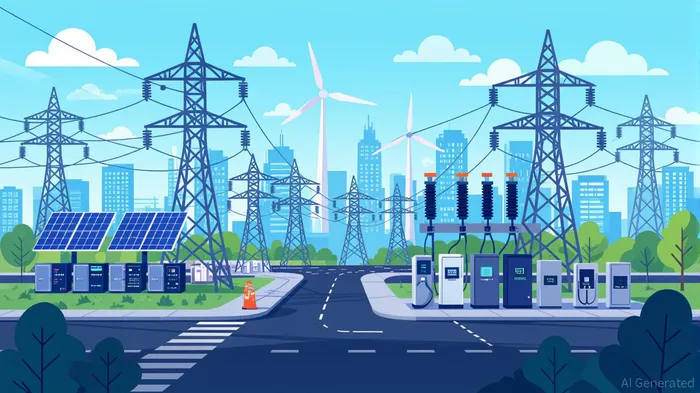
Strategic Investment Opportunities
High-value urban markets, such as San Francisco, offer unique opportunities for investors. The demand for reliable energy is intensifying due to the proliferation of data centers, electric vehicles (EVs), and AI-driven industries. For instance, the outage disrupted Waymo's autonomous ride-hailing services,
illustrating how modern cities depend on uninterrupted power for cutting-edge technologies. Investors should focus on three areas:
- Grid Modernization Technologies: Smart-grid systems, advanced metering infrastructure, and real-time monitoring tools are critical for preventing cascading failures. The San Francisco Public Utilities Commission's emphasis on climate resilience and equity in energy affordability
aligns with broader trends in sustainable infrastructure. - Distributed Energy Resources (DERs): Microgrids, battery storage, and rooftop solar can reduce reliance on centralized systems. Post-outage, DER adoption is likely to accelerate, particularly in high-risk areas.
- Regulatory and Policy Alignment: Federal and state incentives, such as the IIJA, create a favorable environment for infrastructure investment. Cities like Dallas-Fort Worth,
now a top real estate market, are leveraging these funds to address housing shortages and climate risks.
Conclusion
The San Francisco power outage is a wake-up call for urban centers worldwide. As climate risks and technological demands converge, the cost of inaction will far outweigh the investment required to build resilient infrastructure. For investors, the message is clear: high-value urban markets present a compelling case for capital deployment in utility infrastructure. The question is no longer whether to act, but how quickly.

Stay ahead of the market.
Get curated U.S. market news, insights and key dates delivered to your inbox.


AInvest
PRO
AInvest
PRO



Comments
No comments yet