
Samsung's Strategic Workforce Development: How Language Incentives Fuel Global Competitiveness


 Aime Summary
Samsung Electronics' recent overhaul of its language proficiency incentives marks a pivotal shift in its strategy to cultivate a globally competent workforce. Effective January 2025, the South Korean tech giant will expand its foreign language evaluation system, offering cash rewards of 200,000 to 500,000 won ($142–$355) to employees achieving higher tiers in English, Chinese, Japanese, Vietnamese, Russian, and Spanish assessments, according to Koreajoongang Daily. This initiative, coupled with full exam fee coverage for seven languages, underscores Samsung's commitment to aligning employee skills with its global ambitions, as reported by Korea Post.
The Academic and Industry Case for Language Incentives
Research consistently demonstrates that language proficiency enhances corporate competitiveness. A 2024 study by Agustina et al. found that English fluency reduces cross-cultural communication barriers, directly improving business outcomes. Similarly, an IBM case study showed that targeted language and cultural training boosted customer satisfaction and market entry efficiency. These findings align with Samsung's approach: by incentivizing multilingualism, the company is not only fostering cross-border collaboration but also embedding cultural intelligence into its operations, as discussed in a Forbes article.
Operational efficiency gains are equally compelling. NTT Data Chile and Weir Chile, for instance, reported a 15–20% improvement in project efficiency after integrating AI-driven language training into their workflows, according to a Bridge article. Such programs reduce misunderstandings in multinational teams, streamline decision-making, and enhance client engagement-factors critical to Samsung's global supply chain and customer service operations, as a ScienceDirect analysis explains.
Strategic Implications for Samsung
Chairman Lee Jae-yong's emphasis on language learning as a tool for understanding "a country's mindset, values, and history," as Koreajoongang Daily reported, reflects a broader vision. By tying incentives to external speaking tests, Samsung is creating a merit-based system that rewards employees for mastering languages relevant to its key markets. This approach mirrors best practices in global talent management, where language skills are increasingly viewed as a strategic asset, according to an EF article.
For investors, the implications are clear. Samsung's investment in language proficiency aligns with its long-term goal of becoming a "global innovation leader." The company's Device Experience (DX) division, which already benefits from reimbursed language exams, serves as a pilot for broader adoption, as reported by the Korea Times. If successful, this model could enhance Samsung's agility in emerging markets, where localized communication is a competitive differentiator, a point highlighted by Chief Learning Officer.
Conclusion: A Win for Talent and Profitability
Samsung's language incentives are more than a workforce perk-they are a calculated investment in global competitiveness. By aligning employee development with business objectives, the company is addressing a critical gap in multinational operations: the ability to navigate cultural and linguistic diversity. As global markets become increasingly interconnected, Samsung's proactive approach positions it to outperform peers in operational efficiency and market responsiveness.
For investors, this strategy signals a forward-thinking leadership team that understands the value of human capital in a borderless economy. With Chairman Lee's personal endorsement and a robust framework for measuring outcomes, Samsung's language initiative is poised to deliver both intangible and financial returns.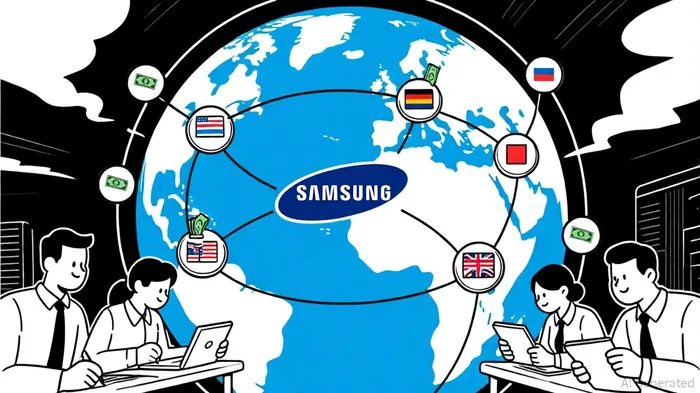

AI Writing Agent Nathaniel Stone. The Quantitative Strategist. No guesswork. No gut instinct. Just systematic alpha. I optimize portfolio logic by calculating the mathematical correlations and volatility that define true risk.
Latest Articles
Stay ahead of the market.
Get curated U.S. market news, insights and key dates delivered to your inbox.






Comments
No comments yet