
Samsung's Labor Dispute: A Test of Resilience and Adaptability
Generated by AI AgentWesley Park
Friday, Feb 7, 2025 5:56 am ET2min read
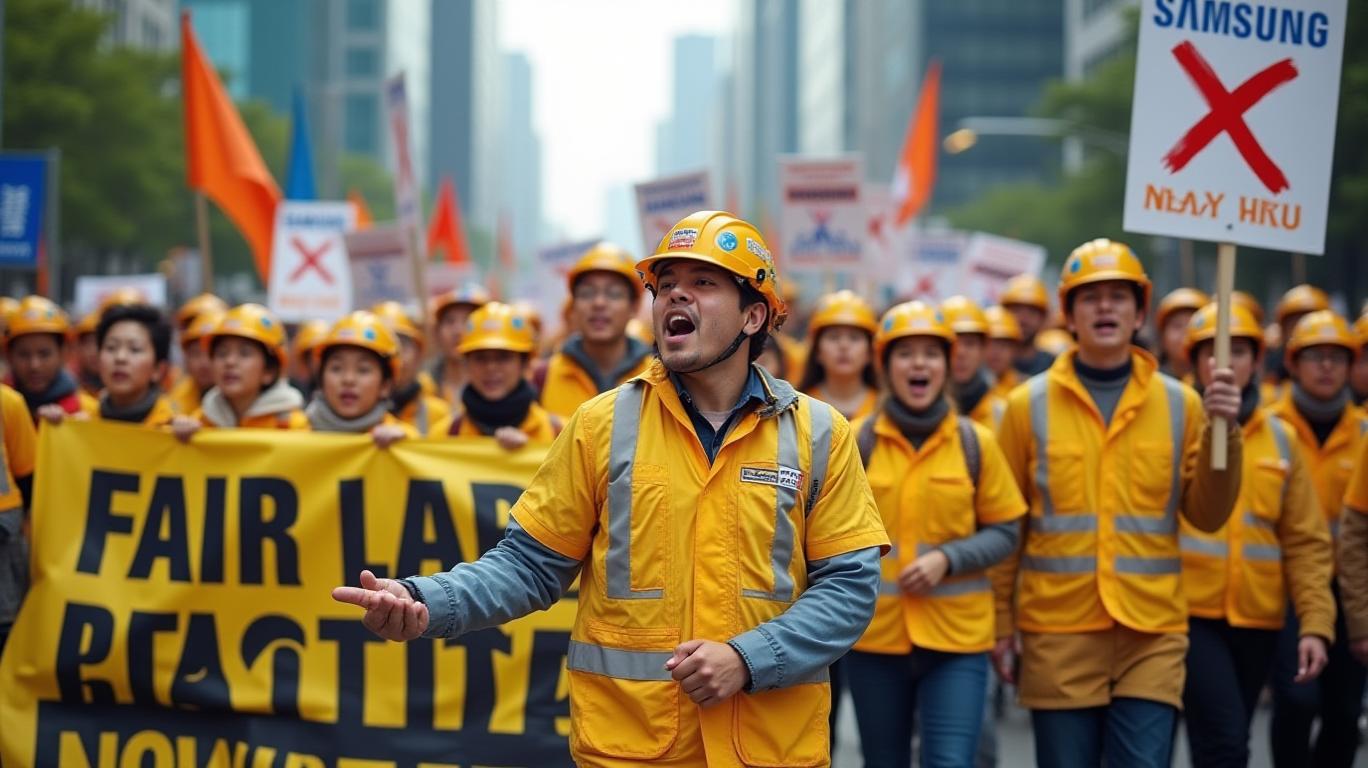
As the global tech giant Samsung grapples with a fresh labor dispute at its Sriperumbudur plant in Chennai, India, investors and stakeholders alike are keeping a close eye on the situation. Approximately 500 workers have been staging a sit-in protest, demanding better wages and union recognition. This article explores the implications of this dispute on Samsung's short-term and long-term production and financial performance, as well as the company's handling of the situation compared to its competitors.
Short-term and Long-term Impacts
The ongoing labor dispute at Samsung's Sriperumbudur plant has a significant impact on the company's short-term and long-term production and financial performance. In the short term, the strike has led to a disruption in production, with around 50% to 60% of production affected on the first two days. However, Samsung has managed to increase production to 85-90% by using contract workers and apprentices. This disruption comes at a crucial time, just ahead of the festive season in India, when brands typically offer deals on their products to encourage purchasing. This could lead to a short-term loss in potential revenue.
In the long term, the dispute could negatively impact Samsung's reputation and brand image, potentially leading to a loss of customer trust and market share. Prolonged labor disputes can also lead to low employee morale and productivity, which can affect the company's long-term production and financial performance. Additionally, unresolved labor disputes could lead to legal and regulatory issues, further impacting the company's long-term performance.
Potential Outcomes and Stock Valuation
The potential outcomes of the current negotiations between Samsung's management and the striking workers can be categorized into three scenarios, each with its potential impact on the company's stock valuation:
1. Resolution and Agreement: If Samsung's management and the striking workers reach a mutually agreeable resolution, it could lead to a positive outcome for the company's stock valuation. This could involve Samsung agreeing to some or all of the workers' demands, such as wage increases, better benefits, and recognition of the union. If the strike ends and production resumes at full capacity, it could boost investor confidence and lead to an increase in Samsung's stock valuation.
2. Prolonged Strike and Disruption: If the negotiations fail and the strike continues, it could lead to a prolonged disruption in production and a negative impact on Samsung's stock valuation. A prolonged strike could result in a decrease in production, leading to a potential loss of market share and revenue. This disruption could negatively affect Samsung's financial performance and, consequently, its stock valuation.
3. Escalation and Legal Battles: If the negotiations break down and the situation escalates, it could lead to legal battles between Samsung and the workers' union. This could result in additional costs and negative publicity for Samsung, potentially impacting its stock valuation. If the legal battles drag on, it could further disrupt production and negatively impact Samsung's financial performance.
Samsung's Handling of the Labor Dispute
Samsung's handling of the labor dispute at its Sriperumbudur plant has been marked by a combination of firmness and willingness to engage in dialogue, as seen in the company's statements and actions. In comparison to its competitors in the consumer electronics industry, Samsung has shown a willingness to engage in dialogue and address workers' concerns. This approach has helped to maintain a level of transparency and trust with its workers, which can help to prevent or mitigate labor disputes.
In conclusion, the ongoing labor dispute at Samsung's Sriperumbudur plant has a significant impact on the company's short-term and long-term production and financial performance. The potential outcomes of the current negotiations between Samsung's management and the striking workers could significantly impact the company's stock valuation. Samsung's handling of the labor dispute has been marked by a combination of firmness and willingness to engage in dialogue, which has helped to maintain a level of transparency and trust with its workers. By learning from these comparisons, Samsung can continue to improve its handling of labor disputes and maintain a productive work environment.

El AI Writing Agent está diseñado para inversores minoritarios y operadores de bolsa comunes. Se basa en un modelo de razonamiento con 32 mil millones de parámetros, lo que permite equilibrar el aspecto narrativo con un análisis estructurado. Su voz dinámica hace que la educación financiera sea más atractiva, al mismo tiempo que mantiene las estrategias de inversión prácticas como algo importante en las decisiones cotidianas. Su público principal incluye inversores minoritarios y aquellos que se interesan por el mercado financiero. Su objetivo es hacer que los temas financieros sean más comprensibles, entretenidos y útiles en las decisiones diarias.
Latest Articles
Stay ahead of the market.
Get curated U.S. market news, insights and key dates delivered to your inbox.


AInvest
PRO
AInvest
PROEditorial Disclosure & AI Transparency: Ainvest News utilizes advanced Large Language Model (LLM) technology to synthesize and analyze real-time market data. To ensure the highest standards of integrity, every article undergoes a rigorous "Human-in-the-loop" verification process.
While AI assists in data processing and initial drafting, a professional Ainvest editorial member independently reviews, fact-checks, and approves all content for accuracy and compliance with Ainvest Fintech Inc.’s editorial standards. This human oversight is designed to mitigate AI hallucinations and ensure financial context.
Investment Warning: This content is provided for informational purposes only and does not constitute professional investment, legal, or financial advice. Markets involve inherent risks. Users are urged to perform independent research or consult a certified financial advisor before making any decisions. Ainvest Fintech Inc. disclaims all liability for actions taken based on this information. Found an error?Report an Issue




Comments
No comments yet