
Samsung Heavy Industries' FLNG Venture in Mozambique: A Strategic Pivot to Global Energy Leadership
The $2.5 billion contract secured by Samsung Heavy Industries (SHI) to construct an offshore floating liquefied natural gas (FLNG) unit for Eni's Coral Norte project in Mozambique marks a pivotal moment for the company—and the global energy sector. This deal, set to begin production by late 2028, underscores SHI's dominance in FLNGFLNG-- technology while positioning Africa as a cornerstone of the next wave of energy infrastructure investments.
The FLNG Revolution: Why Mozambique Matters
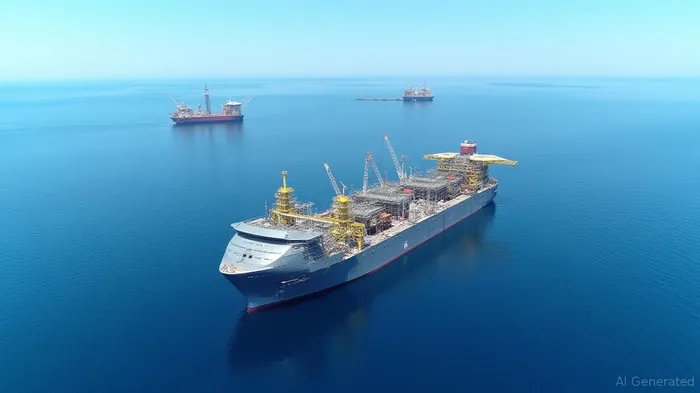
The Coral Norte project, part of Mozambique's Rovuma Basin—a reserve holding an estimated 180 trillion cubic feet of natural gas—will utilize SHI's proprietary FLNG technology to extract and liquefy gas directly at sea. This approach bypasses the need for onshore infrastructure, a critical advantage in regions like Cabo Delgado, where security challenges persist. The facility will produce 3.55 million tonnes of LNG annually, a capacity that aligns with global demand for flexible, low-carbon energy solutions.
The strategic value of FLNG extends beyond cost efficiency. By reducing reliance on fixed infrastructure, FLNG units enable the exploitation of remote or smaller gas fields, unlocking reserves that would otherwise remain stranded. For investors, this technology represents a scalable solution to bridging the gapGAP-- between energy demand and supply in a decarbonizing world.
Samsung's Competitive Edge: Market Share and Geopolitical Tailwinds
SHI's 55% global FLNG market share is no accident. The company's standardized designs—like the MLF-N and MLF-O models—offer enhanced cargo capacity (up to 245,000 m³) and operational resilience in deep-sea conditions. These innovations, paired with geopolitical shifts such as U.S. sanctions on Chinese shipyards, have created a tailwind for Korean firms like SHI.
As of early 2025, SHI's order backlog for LNG carriers alone stood at 84 vessels ($19.1 billion), a figure that grows with projects like the $1.5 billion Cedar LNG venture in Canada. This diversification into eco-friendly maritime infrastructure positions SHI to capitalize on the global transition to cleaner fuels.
Africa's Energy Ascendancy: Mozambique as a Microcosm
Mozambique's Rovuma Basin is a linchpin in Africa's LNG ambitions. Deloitte estimates the country's gas reserves could generate $100 billion in revenue over their lifespan—a windfall that could transform its economy. SHI's role in Coral Norte aligns with broader trends: Africa's LNG exports are projected to surge from 15 million to 175 million tons annually by 2040 (African Energy Chamber).
However, risks linger. Security concerns in Cabo Delgado and financing hurdles for projects like TotalEnergies' Area 1 LNG carriers require close monitoring. Yet, recent signals—such as TotalEnergies' renewed interest in renegotiating contracts at higher prices—suggest investor confidence is rebounding.
Investment Implications: A Blueprint for Long-Term Gains
For investors, SHI's African venture is a bellwether for two trends: the FLNG boom and Africa's energy renaissance. Key takeaways:
- FLNG as a Growth Catalyst: SHI's first-mover advantage in FLNG, coupled with its standardized designs, offers a moat against competitors. Investors should monitor its pipeline of potential projects in Suriname, Argentina, and beyond.
- Geopolitical Arbitrage: Sanctions on Chinese shipyards have opened doors for SHI, but U.S.-Korea trade dynamics and LNG demand from Asia/Europe will shape its trajectory.
- Africa's LNG Play: Mozambique's success could spur similar projects in Senegal, Mauritania, and Namibia, creating ancillary opportunities in engineering, logistics, and financing.
The Bottom Line
Samsung Heavy Industries' Coral Norte deal is more than a contract—it's a strategic masterstroke. By leveraging FLNG technology and Africa's resource wealth, SHI is staking its claim as a leader in the energy transition. For investors, this positions the company as a key beneficiary of the LNG boom, with upside potential tied to global decarbonization efforts and Africa's economic rise.
Consider:
- Long positions in SHI or its stock (ticker: 010140.KS) for exposure to FLNG demand.
- ETFs tracking global energy infrastructure (e.g., ICLN for clean energy, or PAEF for African equities).
- Monitor LNG price trends and geopolitical developments in the Rovuma Basin for near-term catalysts.
In a world hungry for reliable, low-emission energy, SHI's African venture is a blueprint for the future.

Stay ahead of the market.
Get curated U.S. market news, insights and key dates delivered to your inbox.
AInvest
PRO
AInvest
PRO



Comments
No comments yet