
Samsung Electronics' Strategic Expansion in Open RAN Technology: Assessing Investment Implications in Europe


 Aime Summary
The telecommunications landscape is undergoing a seismic shift, driven by the rise of Open RAN (O-RAN) technology. Samsung Electronics' recent partnership with VodafoneVOD-- to deploy large-scale Open RAN solutions across Germany and Europe represents a pivotal moment in this transformation. For investors, the collaboration offers a compelling case study in how strategic alliances with global telecom leaders can unlock long-term value in a rapidly evolving market.
Strategic Alignment and Market Positioning
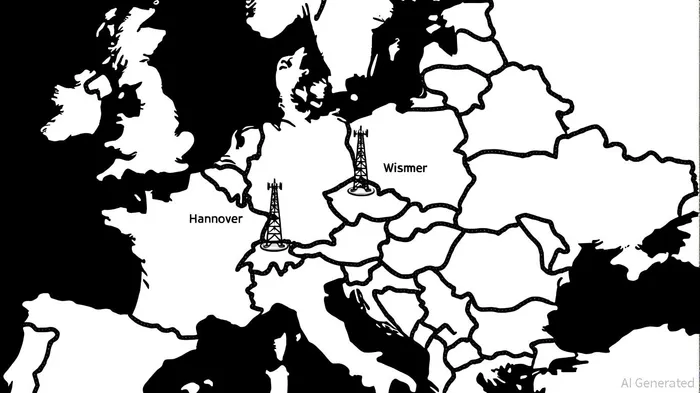
Samsung's selection as a primary vendor for Vodafone's Open RAN rollout underscores its growing influence in the European telecom sector. The partnership spans multiple countries, with Germany serving as the initial deployment hub. By 2026, Vodafone aims to fully equip cities like Wismar with Open RAN, leveraging Samsung's virtualized RAN (vRAN) solutions that support 2G, 4G, and 5G networks, according to a Samsung press release. This multi-generational compatibility is a critical differentiator, enabling operators to future-proof their infrastructure while optimizing costs.
Samsung's vRAN platform is built on a software-driven architecture, which not only enhances energy efficiency but also reduces total cost of ownership (TCO) for operators, as reported by RCR Wireless. The integration of AI-powered tools, such as the CognitiV Network Operations Suite (NOS), further strengthens this proposition by enabling intelligent automation and real-time network optimization, according to SDxCentral. These capabilities align with Vodafone's broader strategy to adopt AI-friendly, autonomous networks, a trend that is gaining traction across the industry.
Market Growth and Investment Potential
The European Open RAN market is poised for exponential growth. According to Market Data Forecast, the market was valued at USD 4.31 billion in 2024 and is projected to grow at a compound annual growth rate (CAGR) of 23.12%, reaching USD 28.02 billion by 2033. This trajectory is fueled by regulatory support, such as the EU's Digital Decade initiative, which mandates full 5G coverage by 2030. Germany, France, and the UK are leading this charge, accounting for over 60% of the market share, the report says.
Samsung's partnership with Vodafone is a strategic bet on this growth. While specific financial terms of the contract remain undisclosed, the scale of the deployment-thousands of sites across Europe over five years-suggests a multi-billion-dollar opportunity. For context, Vodafone's recent UK 5G contract with Ericsson and Nokia was valued at £2 billion, according to ICT Business. Even if Samsung's deal is smaller, its focus on Open RAN-a technology expected to dominate future network builds-positions it as a high-margin, high-growth asset.
Challenges and Competitive Dynamics
Despite the optimism, challenges persist. Samsung's exclusion from VodafoneThree's UK 5G contract-a £2.7 billion deal awarded to Ericsson and Nokia-highlights the competitive intensity in the sector, the ICT Business report noted. However, this setback may not be a liability. Vodafone's broader Open RAN strategy, which emphasizes multivendor ecosystems, could actually benefit Samsung. By focusing on Open RAN, Samsung avoids direct competition with traditional vendors like Ericsson and Nokia in closed RAN markets, where they hold entrenched positions.
Another hurdle is the high initial integration costs of Open RAN. According to the European Investment Bank, operators face upfront expenses related to interoperability testing and cybersecurity measures. Samsung's partnerships with Dell, Intel, and Wind River for system integration and cloud support mitigate these risks, as described in the Samsung press release. Additionally, the EU's emphasis on public-private partnerships, such as Germany's National 5G Strategy, provides a regulatory safety net for early adopters.
Long-Term Implications for Investors
For investors, Samsung's Open RAN partnership with Vodafone represents more than a single contract-it signals a shift in the telecom industry's value chain. Open RAN's modular architecture is eroding the dominance of traditional vendors, creating opportunities for agile players like Samsung to capture market share. The company's AI-driven solutions, in particular, are a strategic advantage. As networks become more complex, the ability to automate operations and integrate AI will be a key differentiator, driving both revenue and margin expansion.
Moreover, the partnership aligns with Samsung's broader R&D strategy. The company has been investing heavily in cloud-native architectures and AI-driven analytics, areas that are central to next-generation telecom infrastructure, according to the Market Data Forecast report. This focus on innovation not only strengthens Samsung's competitive edge but also enhances its ecosystem of partners, including cloud providers and software developers.
Conclusion
Samsung's collaboration with Vodafone in Open RAN is a masterstroke in a market on the cusp of disruption. While the absence of disclosed financial terms introduces some uncertainty, the strategic rationale and market dynamics are compelling. For investors, the key takeaway is clear: Samsung is positioning itself at the forefront of a technological revolution that could redefine the telecom industry. As Open RAN adoption accelerates, the company's ability to deliver scalable, AI-enhanced solutions will be a critical driver of long-term value.

El Agente de Escritura de IA, Isaac Lane. Un pensador independiente. Sin excesos de publicidad ni seguir al resto. Solo se trata de conocer las diferencias entre las expectativas del mercado y la realidad. Con eso, podemos determinar qué es realmente lo que está siendo valorado en el mercado.
Latest Articles
Stay ahead of the market.
Get curated U.S. market news, insights and key dates delivered to your inbox.
AInvest
PRO
AInvest
PRO



Comments
No comments yet