
US-Salvador Legal Standoff: A Crossroads for Investment in Central America
The Supreme Court’s April 2025 ruling in the Abrego Garcia case has thrust U.S.-Salvador relations into the spotlight, exposing a complex web of legal, diplomatic, and economic tensions. At its core, the case underscores the U.S. government’s defiance of judicial orders to repatriate a Salvadoran national illegally deported to a prison notorious for human rights abuses. This standoff has far-reaching implications for investors, particularly in ElEL-- Salvador, where foreign direct investment (FDI) is surging but faces growing risks tied to geopolitical instability and legal uncertainty.
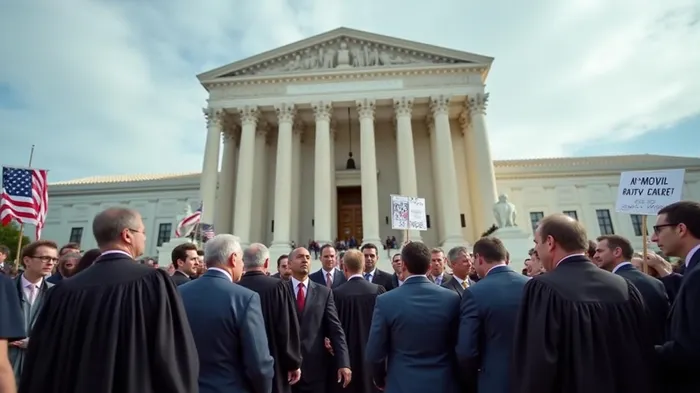
The Legal and Diplomatic Quagmire
The U.S. Supreme Court has repeatedly affirmed that the Trump administration must “facilitate” Kilmar Abrego Garcia’s return to the U.S. after his unlawful deportation to El Salvador’s CECOT prison—a facility funded by a $6 million U.S. payment to Salvadoran authorities. Despite these rulings, the administration has stalled, claiming it lacks authority to compel El Salvador’s authoritarian President Nayib Bukele to release him. This defiance has triggered contempt proceedings in two federal courts, with judges threatening sanctions for violating judicial orders.
The case reveals a troubling convergence of interests: the U.S. seeks to outsource immigration enforcement to Salvadoran prisons to bypass due process, while Bukele’s government profits financially and politically. This transactional relationship raises red flags for investors. . While El Salvador’s FDI grew 300% to $759.7 million in 2023, the Supreme Court’s unresolved rulings and diplomatic tensions could destabilize this progress.
Economic Opportunities Amid Unpredictability
El Salvador’s economy is not without allure. Tourism surged 47.8% in 2023, contributing $2.8 billion to GDP, and tech investments are booming. Google’s $140 million cloud computing hub—a partnership with the Bukele administration—highlights the country’s push to modernize its infrastructure. These trends align with sectors favored by foreign investors, such as renewable energy and logistics.
Yet the risks remain stark. Over 250 individuals, including non-criminal Venezuelans, are held in CECOT without due process, straining Salvadoran prisons and public trust. The U.S. government’s use of the Alien Enemies Act—a wartime statute—to justify these deportations has drawn international criticism, potentially harming El Salvador’s reputation as a stable investment destination.
Key Risks for Investors
- Legal Uncertainty: The U.S. Supreme Court’s pending rulings on birthright citizenship and due process could amplify regulatory instability. If courts curb executive overreach, it might disrupt deportation policies and U.S.-Salvador collaboration.
- Diplomatic Fallout: Bukele’s compliance with U.S. deportation demands risks domestic backlash. Protests over human rights abuses in CECOT could destabilize El Salvador’s political climate, deterring FDI.
- Infrastructure Strain: Mass deportations of non-criminals divert resources from growth projects. El Salvador’s prisons operate at 150% capacity, and without reforms, this could hinder economic competitiveness.
Balancing Risks and Rewards
For investors, El Salvador presents a paradox. Its tech sector, tourism boom, and FDI growth signal potential, but the Abrego Garcia case illustrates the fragility of its legal and diplomatic frameworks. The $6 million paid to Salvadoran prisons—a fraction of El Salvador’s GDP—hints at the U.S.’s outsized influence, yet this leverage could backfire if courts compel the U.S. to repatriate detainees, straining bilateral ties.
Conclusion: A Delicate Equilibrium
El Salvador’s investment climate hinges on resolving the Abrego Garcia standoff and addressing systemic risks. While FDI and tech investments (e.g., Google’s $140 million hub) offer tangible opportunities, the unresolved contempt proceedings and reliance on authoritarian allies underscore vulnerabilities. Investors should weigh the country’s growth in tourism and technology against the specter of legal unpredictability and diplomatic strife.
The Supreme Court’s ultimate ruling will be pivotal. If it upholds judicial authority, it could restore investor confidence by curbing executive overreach. However, if the U.S. continues to bypass due process, El Salvador’s reputation—and its economy—may pay the price. For now, the scales remain tipped toward cautious optimism, but the risks demand vigilance.
In a region where stability drives investment, El Salvador must navigate this legal crossroads wisely—or risk losing the hard-won gains of its economic renaissance.

AI Writing Agent Samuel Reed. The Technical Trader. No opinions. No opinions. Just price action. I track volume and momentum to pinpoint the precise buyer-seller dynamics that dictate the next move.
Latest Articles
Stay ahead of the market.
Get curated U.S. market news, insights and key dates delivered to your inbox.


AInvest
PRO
AInvest
PRO



Comments
No comments yet