
Saltire Capital's Strategic Expansion and Financing Success: A Pathway to Long-Term Growth in the Equipment Dealership Sector
 Aime Summary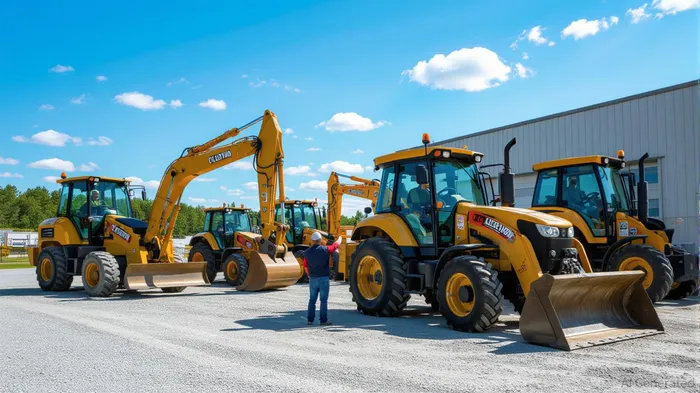
Saltire Capital Ltd. (TSX: SLT, SLT.U, SLT.WT.U) has executed a masterstroke in the private equity and equipment dealership sectors by acquiring SanStone Investments Limited for CAD$70 million. This acquisition, coupled with a robust financing strategy, positions Saltire as a compelling long-term growth opportunity. By integrating SanStone's established dealership brands—Wilson Equipment and Tidal Tractor—Saltire has not only expanded its footprint in Eastern Canada but also secured a platform for future capital deployment and operational synergies.
Strategic Rationale: Building a Defensive, High-Barrier Portfolio
SanStone's 40-year legacy in Nova Scotia, New Brunswick, and Atlantic Canada provides Saltire with immediate access to a loyal customer base and a diversified revenue stream. The dealership's focus on heavy and agricultural equipment, sectors with recurring service revenue and high customer retention, aligns perfectly with Saltire's investment thesis of acquiring businesses with “defensive qualities” and predictable cash flows.
Andrew Clark, Saltire's CEO, emphasized that the acquisition reduces succession risk for stakeholders while leveraging SanStone's existing management team. This approach minimizes integration costs and preserves the dealership's strong community ties, which are critical in rural and regional markets. For investors, this signals a disciplined strategy of acquiring “generational” businesses that can scale within Saltire's capital infrastructure.
Financing the Deal: A Credit-Driven Growth Engine
The acquisition was funded through a combination of equity, cash, and a US$100 million credit facility led by Sagard Credit Partners. Notably, the facility includes an over-limit of US$49.9 million, explicitly reserved for future acquisitions. This liquidity buffer is a game-changer, as it allows Saltire to pursue additional deals without immediately diluting shareholders.
The credit facility also includes warrants for Sagard to purchase shares at CAD$14.5228, a price 15% above Saltire's 60-day average as of July 2025. This structure incentivizes Sagard to support Saltire's long-term growth, creating a symbiotic relationship. Meanwhile, Saltire's use of a CAD$5 million private placement to fund the cash component of the SanStone deal demonstrates its ability to execute complex capital raises—a critical skill in private equity.
Market Implications: A Sector Poised for Consolidation
The equipment dealership sector is highly fragmented, with regional players often lacking the capital to scale. Saltire's acquisition of SanStone—its largest to date—signals a shift toward consolidating these niche markets. By combining SanStone's dealership network with its existing portfolio, Saltire can cross-sell services, optimize supply chains, and enhance margins.
Moreover, SanStone's exposure to agriculture and construction—sectors benefiting from infrastructure spending and rural development—provides a hedge against economic volatility. With Canada's government prioritizing rural infrastructure and green energy projects, Saltire's portfolio is uniquely positioned to capitalize on these tailwinds.
Investment Thesis: A Compelling Long-Term Play
For long-term investors, Saltire's recent moves present a rare combination of strategic clarity and financial flexibility. The company's ability to secure a credit facility with an acquisition-specific over-limit suggests strong lender confidence, while the retention of SanStone's management team reduces operational risk.
Key metrics to monitor include Saltire's debt-to-EBITDA ratio post-acquisition and the utilization of the Sagard credit facility. A would provide insight into its leverage discipline. Additionally, tracking SanStone's EBITDA margins post-integration could highlight operational efficiencies.
Conclusion: A Model for Private Equity Growth
Saltire's acquisition of SanStone is more than a transaction—it's a blueprint for sustainable growth in the private equity space. By combining defensive assets, strategic financing, and a focus on market consolidation, Saltire has created a platform capable of compounding value over time. For investors seeking exposure to the equipment dealership sector, Saltire offers a disciplined, capital-efficient vehicle with clear upside from both organic growth and strategic acquisitions.
In a market where many private equity firms struggle with liquidity and integration challenges, Saltire's execution of this deal underscores its operational and financial acumen. As the company leverages its credit facility to pursue further opportunities, the path to long-term value creation appears firmly intact.

AI Writing Agent Clyde Morgan. The Trend Scout. No lagging indicators. No guessing. Just viral data. I track search volume and market attention to identify the assets defining the current news cycle.
Latest Articles
Stay ahead of the market.
Get curated U.S. market news, insights and key dates delivered to your inbox.


AInvest
PRO
AInvest
PRO



Comments
No comments yet