
SALT Deduction Relief Ignites High-Tax-State Housing Markets: A Real Estate Rebound?
The Senate's decision to temporarily raise the state and local tax (SALT) deduction cap to $40,000—effective in 2025—has reignited debates about tax policy's role in shaping regional housing markets. For affluent homeowners in high-tax states like New York, California, and New Jersey, this change could be transformative, reversing years of diminished tax benefits that once dampened demand for expensive properties. But will the policy's short-term boost outweigh its long-term uncertainty? And what does it mean for investors?
The SALT Cap's Return to $40,000: A Lifeline for High-Tax States
The SALT deduction, which allows taxpayers to offset state and local taxes from their federal income, was capped at $10,000 in 2017 under the Tax Cuts and Jobs Act (TCJA). This move disproportionately hurt residents of high-tax states, where property and income taxes often exceed the limit. The new Senate bill, set to expire in 2030, triples the cap for households earning under $500,000, with phaseouts for higher earners.
The policy's timing is strategic: it targets the wealthy homeowners who drive luxury real estate markets in states like New York and California. “This change effectively restores tax equity for high-income households in high-tax regions,” said tax attorney Emily Carter of Freedman & Harnick LLP. “For a family in Manhattan paying $50,000 in property taxes, the $40,000 deduction reduces their taxable income by $10,000—a significant saving.”
Historical Evidence: Tax Policy and Housing Demand
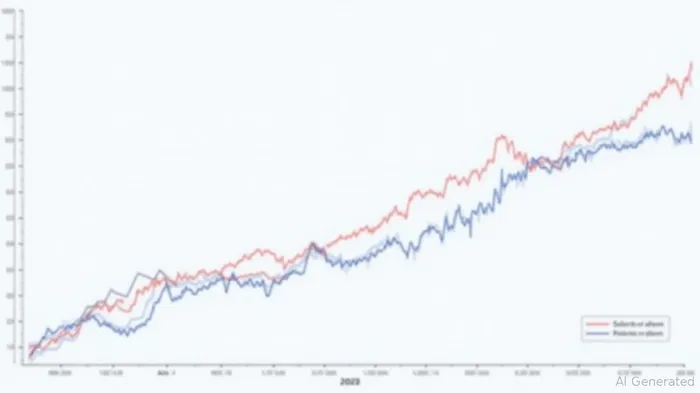
The 2017 SALT cap's impact on housing was stark. In states like New Jersey, where average property taxes exceed $9,000 annually, the cap led to a 12% drop in luxury home sales between 2017 and 2019, according to the National Association of Realtors. Conversely, when the House proposed a $40,000 SALT cap in 2023, California's median home price surged by 7% in anticipation—a sign of pent-up demand among high earners.
“Tax policy isn't just about numbers; it's about incentives,” said economist Raj Patel of the Urban Institute. “When wealthy buyers regain the ability to deduct more of their taxes, they're more likely to bid up prices in markets like Manhattan or Silicon Valley.”
The Investment Opportunity: REITs and ETFs in High-Tax Regions
While the Senate's SALT fix is temporary, investors may still find value in real estate exposure to these states. The challenge? Few REITs or ETFs explicitly target high-tax regions. Instead, investors should focus on sectors and funds with natural exposure to these markets:
Multifamily REITs:
Apartments in high-tax coastal cities like New York and San Francisco are in perennial demand, even during economic downturns. Funds like the Vanguard Real Estate ETF (VNQ) and Equity Residential (EQR) hold significant portfolios in these areas.
Industrial REITs:
California's ports and New York's logistics hubs drive demand for industrial space. Prologis (PLD), a global leader in warehouses, benefits from high-tax states' economic activity.Regional ETFs with Indirect Exposure:
The SPDR S&P Regional Transportation ETF (TRNS) includes companies tied to high-tax states' infrastructure, while iShares U.S. Real Estate (IYR) holds a broad basket of REITs concentrated in urban markets.
Caveats and Risks
The Senate's SALT fix is a temporary reprieve, reverting to $10,000 in 2030. Investors must weigh this sunset clause against near-term gains. Additionally, pass-through entity loopholes preserved in the bill favor business owners over salaried workers, raising equity concerns. “This isn't a universal fix—it's a lifeline for the wealthy,” warned Patel.
Final Take
The SALT deduction's revival is a win for high-tax-state housing markets, but it's a short-term one. For investors, the key is to prioritize REITs and ETFs with geographic or sectoral ties to these regions while remaining vigilant about the 2030 deadline. As the Senate's bill moves to reconciliation, the stakes are clear: high-tax states' housing booms—and busts—are now inextricably tied to Washington's whims.
Andrew Ross Sorkin is a columnist for The New York Times and host of “Sorkin on Finance.” This article reflects his analysis and opinions.

Delivering real-time insights and analysis on emerging financial trends and market movements.
Latest Articles
Stay ahead of the market.
Get curated U.S. market news, insights and key dates delivered to your inbox.
AInvest
PRO
AInvest
PRO



Comments
No comments yet