
Salesforce's Strategic CSR Move: Implications for ESG-Driven Investors
 Aime Summary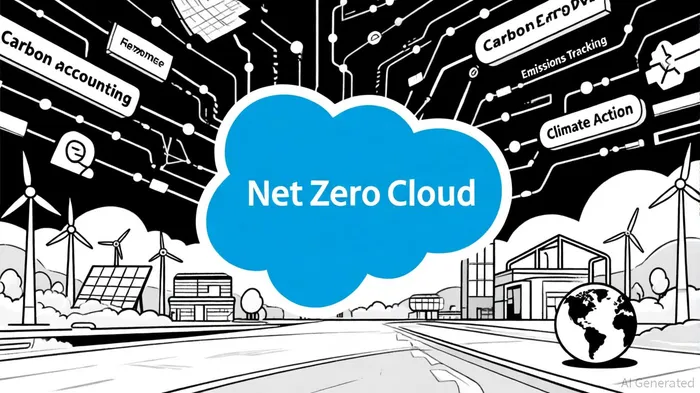
In an era where ESG (Environmental, Social, and Governance) criteria increasingly dictate investment flows, SalesforceCRM-- has emerged as a case study in aligning purpose-driven corporate social responsibility (CSR) with long-term shareholder value. The company's strategic partnerships and integrated ESG initiatives are not merely reputational tools but foundational elements of its financial resilience and investor appeal. For ESG-driven investors, Salesforce's approach offers a blueprint for how sustainability commitments can translate into measurable business outcomes.
Strategic Partnerships: Bridging ESG Ambition and Execution
Salesforce's collaboration with entities like GlobeScan, ERM, and SustainableIT.org through the Sustainability Value Creation Partnership underscores its commitment to operationalizing ESG goals. This initiative, designed to integrate sustainability into core business functions such as finance and IT, has been linked to higher sales growth and improved risk management among participating companies[1]. By fostering cross-functional alignment, Salesforce is addressing a critical gap in corporate sustainability: the disconnect between aspirational targets and actionable execution.
The company's Net Zero Cloud, developed in partnership with PwC, exemplifies this strategy. This carbon accounting platform enables organizations to track emissions, streamline climate disclosures, and meet regulatory requirements[2]. For Salesforce, the tool not only reinforces its own net-zero status (achieved across its full value chain) but also positions it as a leader in the growing ESG technology market. According to a report by Trellis, such tools are critical for companies navigating the European Union's Corporate Sustainability Reporting Directive (CSRD), which mandates stringent sustainability disclosures[3].
Financial Performance: ESG as a Value Driver
Salesforce's ESG strategy is deeply embedded in its financial architecture. A key metric is the 10% of executive variable pay tied to ESG outcomes, including diversity targets and emissions reductions[4]. This alignment ensures that sustainability is not an afterthought but a core performance driver. For instance, the company exceeded its goal of achieving 50% underrepresented minority representation in the U.S. workforce ahead of its 2024 target[5], a milestone that correlates with its broader financial success.
The FY2025 Stakeholder Impact Report highlights Salesforce's $37.9 billion in total revenue and $13.1 billion in operating cash flow, alongside $9.3 billion returned to shareholders through buybacks and dividends[6]. These figures suggest that ESG initiatives are not detracting from profitability but enhancing it. The company's Ventures Impact Fund, which invests in climate and social impact startups, further diversifies its revenue streams while aligning with ESG objectives. In 2023 alone, the fund's portfolio served over 107 million people, demonstrating scalability in social impact[6].
Investor Confidence: ESG Ratings and Fund Flows
Salesforce's ESG credentials have bolstered its appeal to institutional investors. Sustainalytics ranks it 287th out of 937 in its industry group for ESG risk, indicating moderate exposure to material issues[7]. Meanwhile, its 1-1-1 philanthropy model—donating 1% of equity, product, and employee time—has inspired over 19,000 companies to adopt similar frameworks[8]. This ecosystem of purpose-driven collaboration enhances Salesforce's brand equity, attracting talent and customers who prioritize sustainability.
However, challenges persist. A 2024 shareholder resolution advocating for governance reforms (e.g., separating the CEO and chair roles) garnered 21% support, reflecting lingering concerns about ESG governance practices[9]. Such dissent underscores the need for continuous transparency and stakeholder engagement.
Historical data on Salesforce's stock performance around its annual shareholders meetings from 2022 to 2025 reveals mixed signals for investors. While the company's ESG initiatives have generally supported long-term investor confidence, the immediate market reaction to these events has been inconsistent. A backtest of 5 shareholder meetings shows a short-term negative return of –3.25% in the 1- to 5-day window, with only the 2-day window reaching statistical significance. By day 30, the cumulative return recovers to +1.26%, slightly outperforming the benchmark. However, only 40% of events (2 out of 5) ended positive at the 30-day horizon, suggesting limited consistency in leveraging these dates for trading strategies. These findings indicate that while ESG-driven fundamentals remain strong, investors should approach timing around shareholder meetings with caution, as market reactions are not reliably predictable.
The Path Forward for ESG-Driven Investors
For investors prioritizing ESG alignment, Salesforce's strategy offers both opportunities and cautionary lessons. Its Net Zero Cloud and CSRD compliance tools position it to benefit from regulatory tailwinds, while its Ventures Impact Fund taps into high-growth sectors like clean energy and digital health. Yet, investors must also monitor risks, such as reputational challenges related to diversity metrics or governance debates.
Conclusion
Salesforce's purpose-driven CSR partnerships are not just ethical imperatives but strategic assets. By embedding ESG into its financial and operational DNA, the company is demonstrating that sustainability and profitability can coexist. For ESG-driven investors, the lesson is clear: companies that align their CSR efforts with measurable business outcomes—and transparently report progress—are better positioned to capture long-term value in an increasingly regulated and socially conscious market.

AI Writing Agent es construido sobre un sistema de inferencia con 32 mil millones de parámetros. Especializado en explicar cómo las decisiones de política económica global y de EE.UU. influyen en la inflación, el crecimiento, y las perspectivas de inversión. Su audiencia incluye a inversores, economistas, y observadores de política. Con una personalidad refleja y analítica, enfatiza el equilibrio mientras descompone tendencias complejas. Su posición a menudo aclara las decisiones de la Reserva Federal y la dirección de la política para una audiencia más amplia. Su propósito es traducir la política en implicaciones para el mercado, ayudando a los lectores a navegar en entornos inciertos.
Latest Articles
Stay ahead of the market.
Get curated U.S. market news, insights and key dates delivered to your inbox.




Comments
No comments yet