
Saks Global Faces Bankruptcy Amid Debt Miss and Luxury Retail Struggles
 Aime Summary
- Saks Global is preparing to file for bankruptcy after missing a $100 million debt payment tied to its acquisition of Neiman Marcus according to reports.
- The company is in talks with creditors to secure financing for the bankruptcy process and has explored options like selling a minority stake in Bergdorf Goodman and offloading real estate as reports indicate.
- Saks has struggled with weak demand for luxury goods due to rising inflation and a weakening labor market, which have suppressed discretionary spending according to a business report.
- A potential Chapter 11 filing would mark a dramatic turn for the luxury retail giant, which merged Saks Fifth Avenue and Neiman Marcus to compete with rivals like Nordstrom and Macy's according to industry analysis.
- The sale of the Neiman Marcus Beverly Hills site is part of Saks Global's broader strategy to raise cash amid a looming $100 million debt payment deadline as reported by local media.
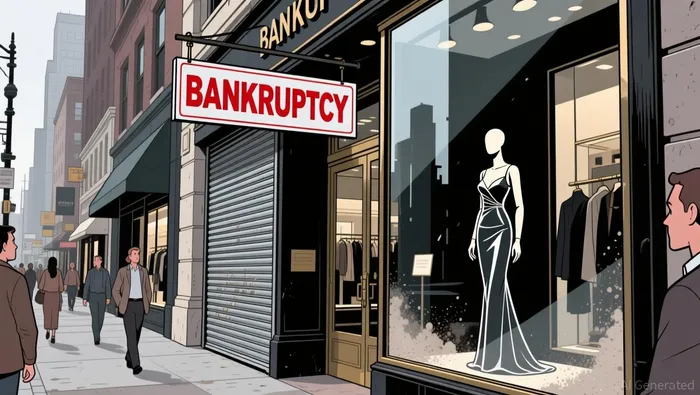
Saks Global, the parent company of iconic luxury retailers Saks Fifth Avenue and Neiman Marcus, is facing a financial reckoning after missing a $100 million debt payment tied to its $2.7 billion acquisition of Neiman Marcus. The company is now reportedly preparing to file for Chapter 11 bankruptcy in the coming weeks, according to multiple reports as detailed in financial publications. This development marks a significant shift for the once-glitzy brand that has long catered to high-net-worth consumers and Hollywood elite. The missed payment and growing financial pressures have raised questions about Saks' ability to maintain its dominance in the luxury retail market.
Saks Global is not a stranger to debt. The acquisition of Neiman Marcus in 2024 was largely funded by a mix of equity from Amazon and Authentic Brands Group, as well as $2.2 billion in senior secured notes and an asset-based credit facility. However, the integration of the two high-end brands has been challenging. Sales have been sluggish, and rising inflation has curtailed discretionary spending on luxury goods. In addition, the company has been delayed in payments to vendors, which has led to gaps in product availability at its flagship stores. The situation has only worsened as Saks has continued to close underperforming locations, including a San Francisco Saks store and a Dallas Neiman Marcus flagship as reported by financial outlets.
To mitigate its financial strain, Saks has taken a number of steps. In August 2025, it completed a $600 million debt restructuring and exchanged $2.2 billion in senior secured notes. The company has also tried to raise capital through asset sales, including the recent sale of the land beneath its Beverly Hills Neiman Marcus store as reported by business news sources. It has also explored the sale of a minority stake in luxury retailer Bergdorf Goodman to reduce its overall debt load. However, these efforts have not been enough to address the company's mounting obligations. The recent failure to meet its $100 million interest payment deadline is now signaling that a formal bankruptcy filing may be the only remaining option according to industry observers.
The broader retail landscape has also contributed to Saks Global's troubles. The rise of e-commerce and brand-owned stores has disrupted traditional department store models, leading to a shift in customer expectations and shopping behavior. Retailers that have failed to adapt to this shift—especially those with high overhead and outdated supply chains—have struggled to remain profitable. Saks, like many of its peers, has faced growing pressure to cut costs and improve efficiency. This has included store closures and a renewed focus on digital initiatives. Yet, these moves have not yet translated into a meaningful recovery in sales or profitability.
What Does Saks' Debt Miss Mean for Retail Investors?
The situation at Saks Global is a cautionary tale for investors in the luxury retail space. The company's struggles highlight the challenges of competing in a market that is being rapidly reshaped by digital innovation and shifting consumer behavior. While Saks has long been a symbol of high-end retail, its recent financial difficulties suggest that even established brands are not immune to the pressures of modern commerce. For investors, the key questions are whether Saks can survive this period of instability and what the broader implications are for the luxury retail sector.
Saks Global's potential bankruptcy filing is particularly noteworthy because of its size and scale. As one of the largest luxury retailers in the U.S., its failure could have ripple effects across the industry. It may also signal to other retailers that they need to take more aggressive steps to modernize their operations and reduce costs. The company's creditors, including Wall Street banks and private equity firms, will also be watching closely to see how the situation unfolds and whether they can recover a meaningful portion of their investment.
Why Is Saks Global Sinking Into Bankruptcy Amid a Luxury Boom?
While the luxury retail market has been growing in recent years, Saks Global appears to be bucking the trend. One reason for this divergence is its high debt load, which has made it difficult for the company to invest in new growth opportunities. In addition, Saks has faced significant challenges in adapting its supply chain and customer service model to meet the expectations of today's shoppers. Many consumers now expect seamless online and in-store experiences, fast delivery, and personalized service—areas where Saks has struggled to keep up with its competitors.
Another factor contributing to Saks' decline is the rise of direct-to-consumer (DTC) brands and e-commerce platforms. These models have allowed luxury brands to bypass traditional retailers and connect directly with consumers, often at lower price points. This has eroded the role of department stores like Saks and Neiman Marcus in the luxury retail ecosystem. As a result, Saks has seen its market share decline, even as the overall luxury market has grown.
The coming months will be critical for Saks Global. If the company does file for bankruptcy, it will need to work closely with its creditors to develop a viable restructuring plan. This could involve further store closures, asset sales, and a renewed focus on its most profitable segments. It could also mean a shift in strategy toward a more digital-centric business model. For now, investors are watching closely to see whether Saks can navigate this challenging period and emerge stronger on the other side.

Quédese al tanto de las últimas noticias de Wall Street en tiempo real.
Latest Articles
Stay ahead of the market.
Get curated U.S. market news, insights and key dates delivered to your inbox.


AInvest
PRO
AInvest
PRO



Comments
No comments yet