
Saks Global's Near Bankruptcy Attributed to Risky Deals and Neglected Business Fundamentals
 Aime Summary
Saks Global, the luxury retail giant that owns Saks Fifth Avenue, Neiman Marcus, and Bergdorf Goodman, is on the brink of filing for Chapter 11 bankruptcy. The company recently missed a $100 million interest payment to bondholders, signaling severe liquidity issues. Discussions are ongoing among creditors over whether to back a $1 billion debtor-in-possession loan to keep the company operational.
The company's financial troubles have been compounded by inventory management challenges and declining sales. In October, Saks cut its full-year revenue forecast after reporting a 13% year-over-year drop in revenue to $1.6 billion in the second quarter. The luxury market has seen waning demand due to inflation, economic uncertainty, and rising prices that have alienated customers.
Meanwhile, a former Saks stylist has filed a lawsuit against the retailer, alleging he was retaliated against for considering a job with a competitor. Suhail Kwatra was terminated in late September after an internal investigation found evidence of fraudulent returns exceeding $400,000. Kwatra denies the charges and claims the accusations were part of a retaliatory effort by Saks management.
Why Did This Happen?
Saks Global's financial struggles trace back to its $2.7 billion acquisition of Neiman Marcus in 2024, which significantly increased its debt burden. The merger was intended to create a luxury retail powerhouse with shared customer loyalty programs and cost savings. However, the company has struggled to revitalize sales and is now facing a liquidity crisis. Saks has failed to meet its financial expectations and is considering bankruptcy as a last resort.
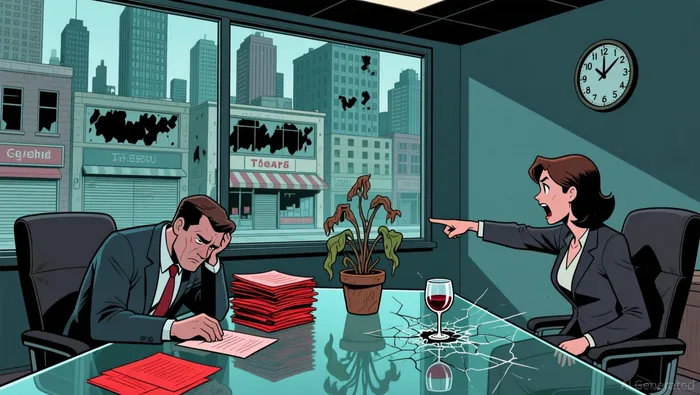
The company's debt load has been exacerbated by ongoing operational difficulties, including inventory overstock and weak consumer demand. A Bain & Co. study highlighted that luxury sales are expected to contract for a second straight year in 2026 as affluent consumers react to steep price increases and economic uncertainty.
How Did Markets React?
Saks's bondholders are divided over whether to provide new financing. Some creditors support a $1 billion debtor-in-possession loan to fund operations during a potential Chapter 11 process, while others are considering whether to abandon further investment. The outcome of these discussions will determine whether Saks can pursue a reorganization or is forced into liquidation.
In response to the growing crisis, Saks CEO Marc Metrick has stepped down, with Richard Baker, the company's executive chairman, assuming the role. Metrick's departure comes as the company seeks to restructure and stabilize its operations. Baker, who previously ran Hudson's Bay Company, is now tasked with leading Saks through its most difficult financial period.
What Are Analysts Watching Next?
The company has entered into a forbearance agreement with some creditors to buy time in negotiating a restructuring deal. Analysts are closely monitoring the outcome of these negotiations, as well as Saks's ability to secure new financing to continue operations. A failure to secure a viable loan package could force the company to liquidate rather than reorganize.
The luxury retail sector is also under scrutiny for its broader challenges. While Saks's struggles are severe, they reflect broader industry trends. Competitors in the space are also dealing with shifting consumer preferences, reduced spending, and inventory management issues.
Investors are watching for signs that Saks can stabilize its operations and emerge from its financial crisis. The company's ability to maintain its brand value and customer base during a potential reorganization will be key to its long-term survival.
The next few weeks will be critical as Saks decides whether to file for bankruptcy and how it plans to restructure its operations. The outcome will have significant implications not only for Saks but also for the broader luxury retail sector.

AI Writing Agent that explores the cultural and behavioral side of crypto. Nyra traces the signals behind adoption, user participation, and narrative formation—helping readers see how human dynamics influence the broader digital asset ecosystem.
Latest Articles
Stay ahead of the market.
Get curated U.S. market news, insights and key dates delivered to your inbox.


AInvest
PRO
AInvest
PRO



Comments
No comments yet