
Saks Fifth Avenue Files Bankruptcy Amid Debt Struggles: What Investors Need to Know
 Aime Summary
Saks Global—the parent company of Saks Fifth Avenue, Neiman Marcus, and Bergdorf Goodman—has entered Chapter 11 bankruptcy, marking one of the most high-profile retail collapses of 2026. The move comes after the company struggled to service its massive debt load following the $2.7 billion acquisition of Neiman Marcus in 2024. Saks is now seeking to restructure its operations and find a path forward amid a tough retail landscape. For investors, this is more than just a retail story—it’s a sign of the ongoing shift in how consumers shop luxury goods and how legacy retailers are faring in the new era.
Did Saks Fifth Avenue’s Bankruptcy Stem From Its Acquisition of Neiman Marcus?
Yes. Saks Global’s financial struggles are largely attributed to the 2024 acquisition of Neiman Marcus, which was financed with heavy debt. The deal, spearheaded by Saks’ former CEO Richard Baker, was meant to create a unified luxury retail powerhouse. Instead, it left the company with an unsustainable debt burden. The newly merged entity struggled to pay vendors, leading to supply chain disruptions and reduced inventory. In turn, sales faltered, and the company failed to make a $100 million interest payment in late 2025, signaling its growing financial instability. By January 2026, Saks had sold key real estate assets, including the Neiman Marcus Beverly Hills flagship store, in a bid to raise cash, but the effort wasn’t enough to prevent a bankruptcy filing.
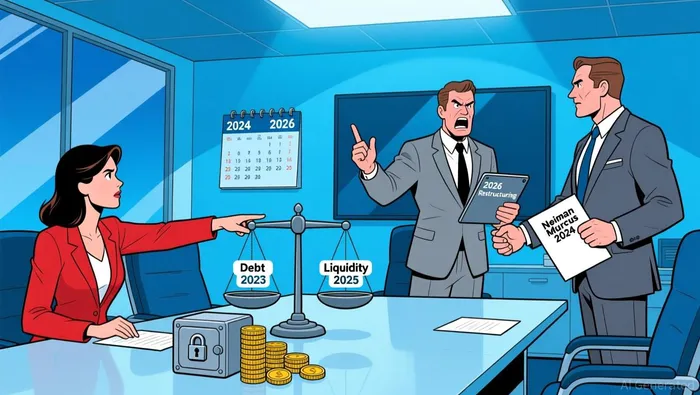
To remain operational during restructuring, Saks secured a $1.75 billion financing package, including $1 billion in debtor-in-possession funding. The company has also appointed a new CEO, Geoffroy van Raemdonck, former head of Neiman Marcus, to lead the turnaround effort.
Why Is Saks Bankruptcy a Concern for Retail Investors?
Saks’ bankruptcy highlights the broader challenges facing the department store model, particularly in the luxury segment. High-end shoppers are increasingly opting to buy directly from brands via online platforms or flagship stores, cutting out intermediaries like department stores. This shift has eroded Saks’ traditional role in the luxury retail ecosystem. At the same time, the company faced rising operational costs, including costly leases and a declining customer base. These factors have made it harder to generate consistent revenue, even in a high-income demographic. Saks’ struggles show that legacy retailers must adapt quickly to stay relevant or risk collapse.
For investors, this is a cautionary tale about the risks of overleveraging during industry consolidation. While Saks was backed by major investors like Amazon and Salesforce during its 2024 merger, the debt-heavy approach proved unsustainable. The company’s recent financing package suggests it is attempting to restructure rather than liquidate, but the path forward remains uncertain. Creditors include major luxury brands like Kering and LVMH, which have significant exposure to Saks’ debt. If Saks emerges from bankruptcy, it will likely require deep cost-cutting and a strategic shift to survive.
What to Watch Next After Saks Bankruptcy Filing
The immediate priority for Saks Global is to successfully restructure its debt and secure enough liquidity to continue operations. The company has secured $1.75 billion in financing, which should give it time to negotiate with creditors and explore potential new ownership or strategic partnerships. However, the outcome will depend on how well it can attract investors and restructure its balance sheet. One key factor will be the performance of its remaining real estate and retail footprint. Stores in prime locations, such as Saks Fifth Avenue in Manhattan and Neiman Marcus in Uniondale, may be retained or sold, depending on their profitability. Saks has also been evaluating its long-term operational strategy, including the possibility of a shift toward an online-only or hybrid retail model.
Another key development to watch is the broader market reaction. Saks’ bankruptcy could send ripples through the luxury retail sector and affect how investors view other high-end department stores. The company’s restructuring efforts will be closely monitored by creditors, analysts, and the luxury brands that depend on its sales. If Saks can emerge from bankruptcy with a new business model and a stronger balance sheet, it could serve as a blueprint for other struggling retailers. However, if the process leads to widespread store closures or liquidation of key assets, the long-term outlook for Saks and the sector could be bleak.
For now, Saks’ stores remain open, and its brands continue to operate under the same management. The company has emphasized its commitment to customer service and vendor relationships, but the success of its turnaround will depend on the strength of its new leadership and its ability to adapt to changing consumer preferences. Investors should keep a close eye on the company’s restructuring progress, including updates from the court and any major changes in leadership or strategy.

Stay ahead of the market.
Get curated U.S. market news, insights and key dates delivered to your inbox.


AInvest
PRO
AInvest
PRO



Comments
No comments yet