
Safety Standards and Market Risks in Consumer Goods Manufacturing: Investor Implications of the HydroTech Hose Recall and Regulatory Gaps
 Aime Summary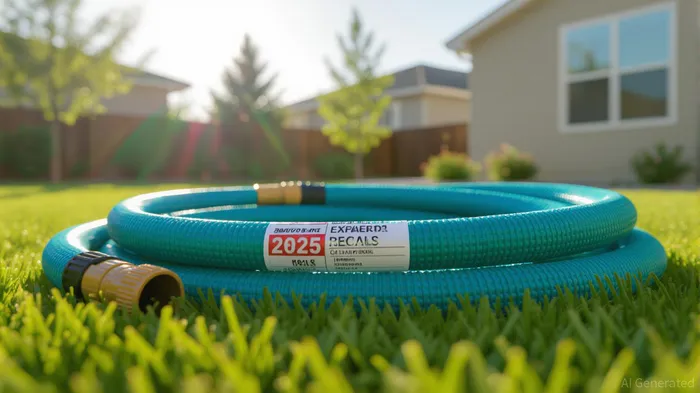
The HydroTech Hose Recall of 2025 has become a defining case study in the intersection of product safety, regulatory oversight, and investor risk. With 3.6 million units recalled due to bursting incidents that caused 29 injuries—including temporary hearing loss and minor trauma—this event has exposed critical vulnerabilities in the consumer goods sector. For investors, the recall underscores a broader truth: safety standards are no longer just compliance checkboxes; they are strategic assets that can make or break a company's valuation.
The HydroTech Case: A Cautionary Tale
Winston Products, the Ohio-based importer of HydroTech hoses, faces estimated losses exceeding $100 million. These costs include refunds, legal settlements, and reputational damage. The root cause—a defect in the inner plastic strain relief—was identified through post-manufacturing checks, not pre-market testing. This highlights a systemic issue: the U.S. Consumer Product Safety Commission (CPSC) operates on a reactive model, unlike the FDA's rigorous pre-market scrutiny for pharmaceuticals. While the CPSC's swift action helped mitigate penalties, the incident reveals a gap in proactive oversight, particularly for low-cost, high-volume consumer goods.
The recall also amplified risks for insurers. Companies like ChubbCB-- (CB) and Travelers (TRV) are recalibrating underwriting standards, potentially raising premiums by 10–15% for high-risk sectors.
Regulatory Gaps: A Global Shift in Risk
The HydroTech recall is not an isolated incident. It mirrors global trends where regulatory frameworks are struggling to keep pace with technological and supply chain complexities. The EU's General Product Safety Regulation (GPSR), which took effect in December 2024, mandates stricter compliance, including real-time traceability and direct consumer notifications during recalls. These measures increase operational costs but also create a competitive edge for companies with robust compliance infrastructures.
Meanwhile, the rise of e-commerce and AI-driven quality control is reshaping risk profiles. Companies leveraging blockchain-based traceability or AI defect detection—such as those investing in digital product passports—are better positioned to avoid costly recalls. Conversely, firms reliant on reactive testing face higher liability exposure.
Investor Implications: Safety as a Core Competency
For investors, the HydroTech case is a wake-up call. Here's how to assess risk and opportunity:
Prioritize Transparency and Proactive Compliance
Companies with AI-driven quality control, real-time supply chain monitoring, or blockchain traceability are less likely to face catastrophic recalls. For example, retailers like Home DepotHD-- (HD) and WalmartWMT-- (WMT), which sold the HydroTech hoses, now face reputational risks that could impact their stock valuations. Investors should scrutinize their compliance frameworks and innovation pipelines.Watch ESG and Governance Metrics
Regulatory trends, such as the EU's emphasis on repairability and sustainability, are pushing companies to integrate ESG into their core strategies. Firms with strong ESG scores and transparent governance are better insulated against product liability crises.Evaluate Insurance Exposure
Insurers like AllstateALL-- (ALL) and Travelers (TRV) are recalibrating risk models. Investors should monitor how these adjustments affect premium growth and underwriting margins.Historical Parallels: Lessons from Past Crises
The Takata airbag recall (costing $20 billion) and Samsung's Galaxy Note 7 fiasco (costing $5 billion) show that delayed responses to safety flaws can lead to prolonged stock underperformance. The HydroTech recall, while smaller in scale, reinforces the same principle: transparency and speed in addressing defects are critical for preserving shareholder value.
Strategic Investment Advice
- Avoid Companies with Weak Safety Records: Firms with a history of recalls or opaque compliance practices are high-risk.
- Invest in Compliance Innovation: Look for companies adopting AI, blockchain, or digital product passports to mitigate safety risks.
- Monitor Regulatory Developments: The EU's GPSR and U.S. CPSC updates will shape market dynamics. Firms adapting quickly to these changes will gain a competitive edge.
The HydroTech recall is a microcosm of a larger transformation in the consumer goods sector. As regulatory scrutiny intensifies and consumer expectations evolve, product safety will become a defining factor in corporate health. For investors, the message is clear: safety is not just a regulatory obligation—it's a strategic investment.
In the end, the companies that thrive will be those that treat safety as a core competency, not an afterthought. The market is rewarding innovation and transparency, while penalizing complacency. As the HydroTech case shows, the cost of ignoring these trends is no longer just financial—it's existential.

Delivering real-time insights and analysis on emerging financial trends and market movements.
Latest Articles
Stay ahead of the market.
Get curated U.S. market news, insights and key dates delivered to your inbox.
AInvest
PRO
AInvest
PRO



Comments
No comments yet