
Sable Offshore (SOC) Plunges 28.86% Amid Regulatory Scrutiny and Debt Crisis
 Aime Summary
Sable Offshore Corp (SOC) plunged 28.86% in pre-market trading on Nov 17, 2025, marking its most severe single-day decline in recent history. This sharp drop follows weeks of volatility amid deteriorating fundamentals and regulatory scrutiny.
The company faces a dire financial position with a -209.56% ROE and a debt-to-equity ratio of 2.58. Q2 2025 results revealed a $128 million net loss and $754 million negative working capital. Technical analysis highlights a bearish trend, with prices collapsing from $6.05 to $4.50 amid declining volumes. Key support at $4.21 and resistance near $6.05 define critical price levels for near-term action.
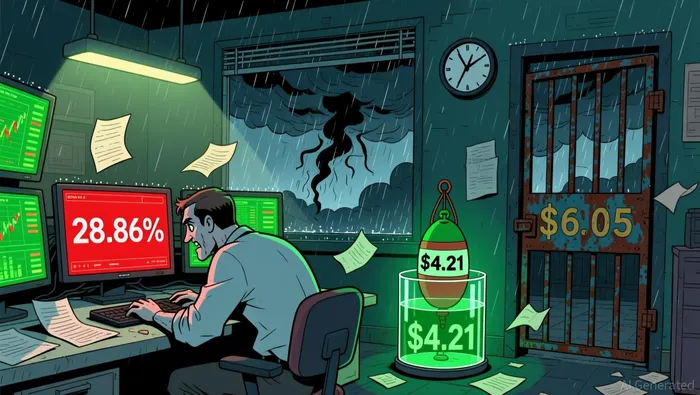
Recent catalysts include compliance issues in California and a $1.7 billion floating storage initiative. A proposed $200 million equity raise triggered an 8% selloff earlier in November. While Roth Capital maintains a Buy rating, analysts caution against short-term headwinds from operational inefficiencies and liquidity constraints. The stock's asset turnover ratio of zero underscores systemic operational challenges.
Backtesting suggests a short-selling strategy below $4.21 could capitalize on the established downtrend. Traders should monitor $6.05 resistance for potential reversal signals. Position sizing should account for the stock's extreme volatility and leverage risks inherent in its 2.58 debt-to-equity profile. A stop-loss above $4.50 may be prudent given the asset turnover weakness.

Get the scoop on pre-market movers and shakers in the US stock market.
Latest Articles
Stay ahead of the market.
Get curated U.S. market news, insights and key dates delivered to your inbox.
AInvest
PRO
AInvest
PRO



Comments
No comments yet