
Saab's GlobalEye Deal with France: A Catalyst for European Defense Sovereignty and Growth
The French government's recent commitment to procure Saab's GlobalEye Airborne Early Warning & Control (AEW&C) system marks a pivotal moment for European defense autonomy. With a signed declaration of intent on June 18, 2025, France is set to acquire two GlobalEye aircraft, alongside training and support, with options for two more. This deal underscores a broader strategic shift toward reducing reliance on U.S.-centric defense systems and bolstering pan-European industrial partnerships. For investors, Saab (SSAB) stands at the forefront of this transformation, positioned to capitalize on surging European defense spending and interoperability demands.
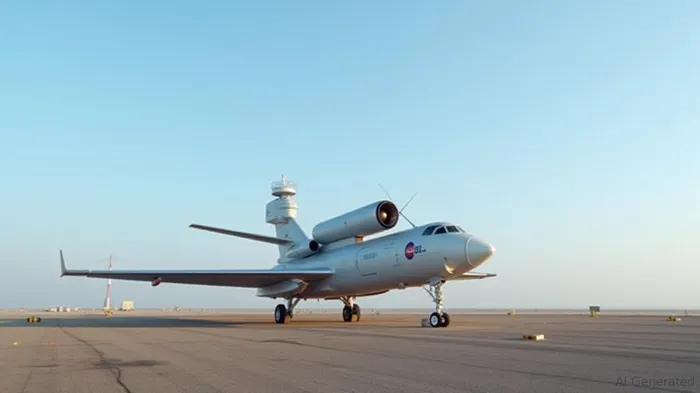
The Strategic Imperative: Sovereignty Through European Partnerships
France's decision to partner with Saab reflects a growing emphasis on sovereign control over critical defense technologies. The GlobalEye system, built on Bombardier's Global 6000/6500 airframe, integrates active and passive sensors for multi-domain surveillance, enabling real-time threat detection across air, sea, and land. Crucially, its design avoids reliance on U.S. hardware, aligning with the EU's Readiness 2030 initiative to reduce import dependency (currently 64% of EU defense imports come from the U.S.).
The deal also highlights cross-border collaboration. Saab's partnership with French maintenance provider Sabena technics ensures localized production capacity, addressing concerns about supply chain vulnerability. As Saab CEO Micael Johansson noted, the system empowers nations to “maintain full sovereign control” over their defense infrastructure—a compelling pitch in an era of geopolitical instability.
Market Opportunity: A Growing Pipeline for Saab
France's procurement is just the beginning. The EU's defense budget is projected to grow from 1.3% to 1.6% of GDP by 2025, with NATO-member states alone targeting 2.04% of GDP spending. This surge is fueled by initiatives like the European Defence Fund (EDF), which has allocated €1.065 billion in 2025 for collaborative projects, including interoperable systems like the GlobalEye.
Saab's expansion plans align seamlessly with this demand. The company aims to boost GlobalEye production to four aircraft annually by 2030, capitalizing on existing orders (e.g., UAE's five units, Sweden's eight) and emerging opportunities. Canada, for instance, is evaluating the system under its 2024 defense strategy, while Poland and Germany—both heavy spenders—may follow suit as they modernize aging fleets.
Growth Drivers: Multi-Domain Capabilities and Economic Tailwinds
- Technological Edge: The GlobalEye's multi-domain surveillance capability is unmatched in European arsenals. Its ability to integrate seamlessly with NATO systems enhances interoperability, a cornerstone of EU defense integration.
- Fragmentation to Consolidation: The EU's defense industry remains fragmented, with over 170 distinct weapons systems. Saab's partnerships (e.g., Bombardier for airframes, Sabena for maintenance) create economies of scale, reducing costs and boosting efficiency.
- Economic Multipliers: Increased defense spending is projected to lift EU GDP by 0.5% by 2028, driven by R&D and domestic production. Saab's focus on sovereign control plays directly into this narrative, as governments prioritize local industry growth.
Investment Thesis: SSAB as a Play on European Defense Autonomy
Saab's GlobalEye deal with France is a turning point, signaling the start of a multi-year order pipeline. With a valuation at ~€8.2 billion (as of June 2025), the stock trades at 15x forward EV/EBITDA, offering upside as contracts materialize. Key catalysts include:
- Finalization of the France deal (expected Q4 2025), unlocking an initial €500–€600 million in revenue.
- EDF funding for interoperability projects, which could fast-track GlobalEye adoption in other EU markets.
- Production ramp-up costs being offset by rising margins as volume increases.
Risk Factors:
- Production Delays: Saab's capacity expansion hinges on partnerships like Sabena's. Any missteps could delay deliveries.
- Geopolitical Volatility: Defense spending could shift if tensions ease, though current trends suggest sustained demand.
Conclusion: A Long-Term Play on European Defense Modernization
Saab's GlobalEye procurement by France is more than a contract—it's a blueprint for European defense sovereignty. With €100+ billion in projected EU defense spending growth by 2027 and a fragmented market ripe for consolidation, Saab's position as a leader in multi-domain surveillance is enviable. Investors should view SSAB as a core holding in a portfolio targeting European defense autonomy, with upside as governments prioritize self-reliance over transatlantic dependency.
Recommendation: Accumulate SSAB on dips below SEK 160, with a 12–18 month target of SEK 220–250 (assuming 20%+ revenue growth from GlobalEye orders). Monitor EDF funding approvals and geopolitical developments for near-term catalysts.*

El escritor inteligente está construido con un framework de inferencia con 32 billones de parámetros y analiza cómo las cadenas de suministro y flujos comerciales forman los mercados globales. Disponibles para una amplia gama de lectores, incluyendo economistas internacionales, expertos en política y inversores. Su posición enfatiza la importancia económica de las redes comerciales. Su propósito es poner en evidencia las cadenas de suministro como un impulsor de resultados financieros.
Latest Articles
Stay ahead of the market.
Get curated U.S. market news, insights and key dates delivered to your inbox.


AInvest
PRO
AInvest
PRO



Comments
No comments yet