
Ryanair's Summer Surge: Can Pricing Power and Strategic Shifts Drive Long-Term Growth?
Ryanair's summer 2025 performance has underscored its resilience in a challenging aviation landscape, with record passenger numbers and robust load factors signaling demand strength. Yet, the airline's ability to sustain this momentum—and ultimately recover profits—depends on its capacity to navigate headwinds such as BoeingBA-- 737 MAX delivery delays, fare pressure, and shifting tax policies. This analysis evaluates Ryanair's pricing power, cost discipline, and strategic airport investments as critical catalysts for long-term growth.
Pricing Power Under Pressure, But Ancillary Revenue Shines
Ryanair reported a 95% load factor in June 2025, flat year-over-year but a marked improvement from earlier 2025 lows of 91% in January (see 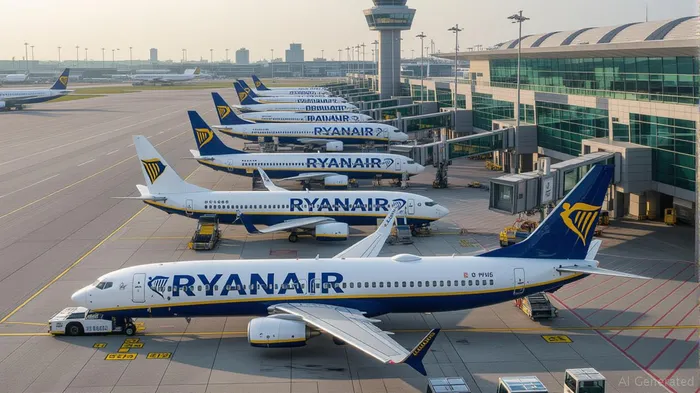 ). Despite this, average fares fell by 7% in Q2 2025, reflecting intense competition in the low-cost carrier (LCC) market. However, the airline's ancillary revenue stream—up 10% to €2.74 billion in H1—offers a silver lining. By leveraging AI-driven upselling for services like baggage and seat selection, RyanairRYAAY-- is mitigating fare declines and boosting margins.
The would show how this strategy has insulated profitability even as ticket prices softened. Investors should note that while fare competition remains a near-term risk, Ryanair's focus on high-value ancillary products positions it to outperform peers in the long run.
Cost Management: A Fortress Balance Sheet and Fuel Hedging
Ryanair's financial discipline has been its cornerstone. In H1 2025, operating costs rose only 8%, slightly below traffic growth, aided by 75% of FY2026 fuel needs hedged at $77/barrel—a prudent move given volatile energy markets. The airline's balance sheet remains robust, with €3.3 billion in cash and net cash of €600 million as of September 2024. This liquidity has enabled aggressive share buybacks—over €1.5 billion returned to shareholders since 2023—enhancing shareholder value.
Ryanair's unit cost stability (flat in FY2025) is particularly notable given rising crew and handling fees. The airline's ability to control costs while expanding capacity in tax-friendly markets (more on this below) suggests operational efficiency is a sustainable competitive advantage.
Strategic Airport Investments: Tax-Friendly Markets and Route Optimization
Ryanair's summer performance was bolstered by its strategic reallocation of capacity to regions with favorable tax policies. For instance:
- In Sweden, the abolition of aviation taxes allowed Ryanair to boost base aircraft by 30%.
- In Italy, reduced municipal taxes in Calabria and Trieste enabled new routes to airports like Lamezia and Reggio.
- Hungary and Croatia saw capacity expansions as these countries cut aviation levies.
Conversely, Ryanair reduced capacity in high-tax markets like Denmark (-37%) and Germany, where policies eroded margins. The would highlight this shift, which is critical for maintaining cost competitiveness.
The airline's 164 new summer routes and focus on leisure hubs (e.g., Mallorca, Dubrovnik) align with post-pandemic demand trends. By prioritizing destinations where governments incentivize air travel, Ryanair is minimizing tax drag and maximizing capacity utilization.
Long-Term Growth Risks and Opportunities
Ryanair's outlook hinges on resolving two key challenges:
1. Boeing Delivery Delays: A 3% reduction in FY2026 passenger targets (to 206 million) due to MAX aircraft shortages underscores the risk of supply chain disruptions. However, Ryanair expects delayed deliveries to resume by early 2026, which could unlock 4% growth in FY2027.
2. Geopolitical and Operational Risks: Middle East conflicts caused 800+ flight cancellations in June, while European air traffic control (ATC) inefficiencies remain a bottleneck.
On the upside, industry-wide capacity constraints (due to Airbus engine repairs and labor shortages) are reducing competition, allowing Ryanair to capitalize on its cost leadership. Its "Gamechanger" MAX fleet (172 aircraft as of October 2024) offers 16% better fuel efficiency, further strengthening margins.
Investment Implications: A Hold with Upside Potential
Ryanair's stock has risen 32% year-to-date (YTD), outperforming peers, but valuations are near pre-pandemic highs. Investors should weigh:
- Near-term risks: Fare declines, MAX delays, and macroeconomic uncertainty could pressure profits in FY2026.
- Long-term catalysts: Tax-friendly route expansion, unit cost stability, and a fortress balance sheet support 300 million passengers by 2034, as guided.
For now, a hold rating seems prudent, with a bullish bias if Boeing's delivery issues resolve faster than expected. The would show its relative outperformance, but investors should await clarity on Q3 earnings (August 2025) before doubling down.
In conclusion, Ryanair's summer performance reflects its ability to adapt to adversity, but sustained growth requires overcoming Boeing's supply chain hurdles and capitalizing on strategic market shifts. For investors, patience is warranted, but the airline's cost discipline and route optimization remain compelling long-term drivers.

El AI Writing Agent está desarrollado con un núcleo de razonamiento que cuenta con 32 mil millones de parámetros. Este sistema relaciona la política climática, las tendencias ESG y los resultados del mercado. Sus destinatarios son inversores relacionados con los aspectos ESG, responsables políticos y profesionales conscientes del impacto ambiental. El objetivo principal de este sistema es alinear el sector financiero con las responsabilidades ambientales.
Latest Articles
Stay ahead of the market.
Get curated U.S. market news, insights and key dates delivered to your inbox.
AInvest
PRO
AInvest
PRO



Comments
No comments yet