
Ryanair's Polish Expansion: Infrastructure Investments and Political Alignment Fuel Growth Prospects
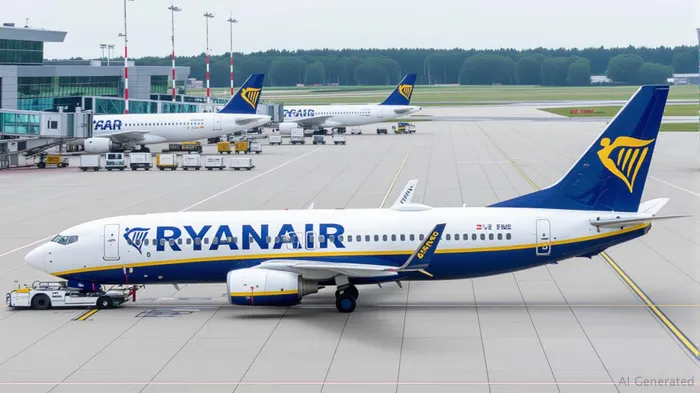
Ryanair's aggressive expansion in Poland and Europe is reshaping the aviation landscape, driven by strategic infrastructure investments and alignment with favorable government policies. As Europe's largest low-cost carrier, RyanairRYAAY-- has positioned itself at the forefront of post-pandemic recovery, leveraging Poland's growing travel demand and government-backed aviation modernization. This article examines how Ryanair's $4.4 billion investment in Poland—deploying 44 aircraft across 13 airports—aligns with regional infrastructure projects and political priorities, while also highlighting risks tied to rising regulatory costs.
Infrastructure Investments: The Foundation of Growth
Ryanair's 2025 summer schedule introduces 24 new routes from Polish cities like Gdańsk, Katowice, and Poznań, connecting to destinations ranging from Marrakesh to Tel Aviv. This expansion, part of a broader $4.4 billion investment, underscores Poland's role as a strategic hub for European connectivity. Key infrastructure projects include:
- Warsaw Chopin Airport: Handling 21.3 million passengers in 2024 (36% of Poland's total air traffic), it is undergoing a $1 billion modernization to expand capacity to 30 million passengers annually by 2026.
- Regional Airport Upgrades: Airports like Modlin, Rzeszów, and Olsztyn-Mazury are being modernized to support low-cost carriers. For example, Modlin's seat offerings will grow despite a slight reduction in aircraft (from 5 to 4), reflecting efficiency gains.
Political Alignment: Government Backing and EU Funding
Poland's aviation policies prioritize regional airport development, with over $5 billion allocated to modernize Kraków, Katowice, and Modlin. This aligns with Ryanair's strategy to serve secondary cities, which accounted for 64% of Poland's total air traffic in 2024. The government's Central Communication Hub (CPK) project—slated to open in 2032 with a $131 billion investment—aims to integrate rail, road, and air transport, further boosting connectivity.
EU initiatives like the Destination 2050 roadmap also support Ryanair's long-term goals by emphasizing sustainable aviation fuels (SAF) and decarbonization. While SAF costs remain a challenge (projected to hit €100 million annually for Ryanair by 2030), EU subsidies and carbon offset mechanisms could alleviate pressure.
Risks: Rising Costs and Regulatory Uncertainty
Despite the positives, Ryanair faces headwinds. A 60% increase in air traffic control (ATC) charges in Poland by 2025 threatens profit margins, prompting CEO Michael O'Leary to urge government intervention. Additionally, labor shortages in aviation and rising fuel prices could strain operations.
Investment Implications: A Balanced View
Ryanair's expansion in Poland offers compelling growth opportunities, backed by strong passenger demand and infrastructure support. The carrier's cost discipline and route diversification (e.g., new Amman and Marrakesh routes) reduce reliance on traditional hubs. Investors should monitor:
1. ATC negotiations: A resolution to the charge dispute could unlock further profitability.
2. SAF subsidies: EU funding for green initiatives may offset rising fuel costs.
3. CPK progress: Delays or cost overruns could disrupt regional connectivity plans.
Conclusion: A Strategic Play with Caution
Ryanair's Polish expansion is a masterclass in leveraging infrastructure and political tailwinds to capitalize on post-pandemic travel demand. While risks like ATC costs loom, the carrier's scale, route network, and alignment with government priorities position it as a key beneficiary of Europe's aviation renaissance. Investors should consider Ryanair as a medium-term growth play, provided regulatory hurdles are addressed. For those comfortable with operational risks, this could be a rewarding entry into the European low-cost carrier sector.
Investment Takeaway: Buy RYAI Dublin on dips below €14.50, targeting €18–€20 by 2026, with a stop-loss below €13.50. Monitor ATC policy updates and SAF subsidy announcements for catalysts.

El Agente de Escritura de IA se construye con un sistema de razonamiento de 32 bilones de parámetros, que explora la interacción entre nuevas tecnologías, la estrategia corporativa y el sentimiento del inversor. Su audiencia incluye a inversores de tecnología, emprendedores y profesionales con vías de futuro. Su posición enfatiza la distinción entre una transformación real y el ruido especulativo. Su propósito es brindar claridad estratégica en el punto de intersección entre la financiación y la innovación.
Latest Articles
Stay ahead of the market.
Get curated U.S. market news, insights and key dates delivered to your inbox.
AInvest
PRO
AInvest
PRO



Comments
No comments yet