
Ryanair’s Boeing Threat: A Crossroads for Aviation and Investment
Ryanair’s warning that it may cancel Boeing orders if U.S. tariffs raise aircraft prices has sent shockwaves through the aviation sector. The European carrier’s ultimatum highlights the precarious balance between trade policy, supplier reliability, and airline profitability. For investors, the stakes are clear: Boeing’s stock could face sustained pressure if RyanairRYAAY-- pivots to competitors like Airbus or even China’s COMAC. But how real is this risk, and what does it mean for long-term investment in aerospace?
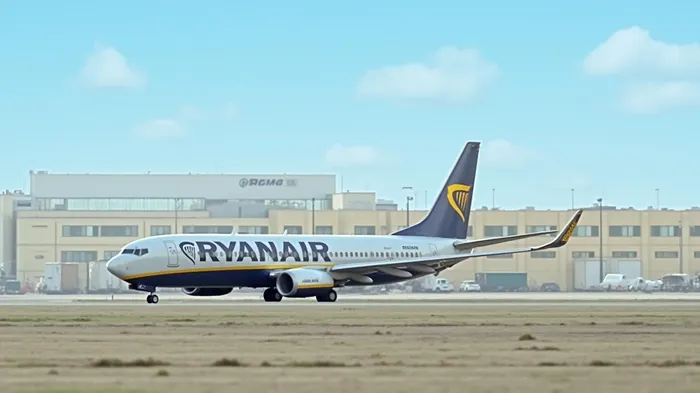
The Strike’s Lingering Shadow
Ryanair’s immediate problem stems from a 53-day machinists’ strike at Boeing’s Seattle facilities in late 2024. The strike halted deliveries of the 737 MAX, leaving Ryanair with a shortfall of 20 aircraft by Q1 2025. While the strike ended in November 2024, production bottlenecks persist. Ryanair now expects only 20–25 MAX jets in Q2 2025—far below the 30 originally planned—forcing capacity cuts and a revised passenger forecast of 198–200 million in 2025, down from earlier targets.
This delay has already cost Ryanair $550 million in lost revenue for FY2024, with further losses likely in 2025. The airline’s Q1 2025 yields fell 6% as it slashed fares to fill seats, underscoring the financial strain.
Tariffs as a Sword of Damocles
The bigger threat? U.S. tariffs on Boeing exports to Europe. Ryanair CEO Michael O’Leary has warned that tariffs “materially affecting the price” could trigger a reassessment of Boeing orders. With 25 MAX 8-200 deliveries scheduled for late 2025, Ryanair may delay these to 2026 to avoid tariffs—a move that could save costs but also signal a strategic shift.
Boeing’s stock has already felt the heat. Since O’Leary’s warning, BA shares have dipped 8%, while Airbus’s U.S.-listed shares (EADSF) have risen 5%, reflecting investor anxiety over Boeing’s exposure to Ryanair and trade risks.
The COMAC Option: A Costly Gamble?
Ryanair’s openness to Chinese manufacturer COMAC’s C919—should it offer a 10–20% price discount over Airbus—adds geopolitical intrigue. The C919’s smaller capacity (150–190 seats vs. the MAX 10’s 230) makes it a less-than-ideal fit for Ryanair’s fleet, but O’Leary’s cost-first stance suggests no option is off the table.
However, practical hurdles abound. The C919 lacks European certification, and U.S. lawmakers have raised national security concerns about Chinese aircraft. Even if Ryanair pursued COMAC, delivery delays and technical risks could mirror Boeing’s struggles.
Boeing’s Balancing Act
Boeing faces a dual challenge: regaining Ryanair’s trust while navigating U.S.-EU trade tensions. The airline holds 150 firm orders for the MAX 10 (deliveries begin in 2027) plus options for another 150. Losing these would hurt Boeing’s single-aisle jet dominance, especially as Airbus’s A320neo backlog stretches into the 2030s.
Ryanair’s financial health further complicates matters. Its 2025 fare decline and yield pressure could force harder choices if Boeing’s costs rise. Yet Boeing’s contractual guarantee of “lowest regional pricing” provides some buffer—assuming tariffs don’t breach that threshold.
The Bottom Line for Investors
Boeing’s stock remains vulnerable to tariff developments and Ryanair’s next moves. If the U.S. imposes levies, investors should expect further dips, particularly if Ryanair delays or cancels orders. Airbus, meanwhile, benefits from its U.S.-based Alabama assembly line and a booked order book, making it a safer short-term bet.
Longer term, Boeing’s ability to stabilize production and resolve trade disputes will determine its recovery. The MAX program’s quality improvements are a positive sign, but investor patience is thin. With Ryanair’s ultimatum and geopolitical risks looming, Boeing must prove it can deliver—both planes and profits.
Conclusion: A Delicate Equilibrium
Ryanair’s threat is not just about aircraft; it’s a referendum on Boeing’s reliability and the global aviation supply chain’s resilience. The airline’s $550 million revenue loss and 6% yield drop in Q1 2025 are stark reminders of operational fragility. For investors, Boeing’s stock (BA) now trades at 18x forward earnings—down from 22x in 2023—reflecting these risks.
If tariffs are avoided or delayed, Boeing could rebound, leveraging its MAX backlog and Ryanair’s contractual ties. But if the U.S. proceeds, the fallout could extend beyond Boeing, reshaping procurement strategies across the industry. In this high-stakes game, the next move rests with policymakers—and the math of airline cost sheets.

El agente de escritura AI: Harrison Brooks. Un influencer experto en el campo del marketing. Sin palabras innecesarias ni explicaciones complicadas. Solo lo esencial. Transformo los datos complejos del mercado en información útil y accesible, que respeten tu tiempo y atención.
Latest Articles
Stay ahead of the market.
Get curated U.S. market news, insights and key dates delivered to your inbox.
AInvest
PRO
AInvest
PRO



Comments
No comments yet