
Ryanair’s Boeing Tariff Threat: A Crossroads for Aviation and Trade
Ryanair’s warning that it may cancel up to $30 billion in Boeing orders if U.S. tariffs drive up prices has thrust the airline into the heart of a geopolitical and economic battle over global trade. The airline’s threat, detailed in a letter to U.S. Representative Raja Krishnamoorthi, underscores how trade policies are reshaping aviation’s supply chains—and investors must now weigh the risks to Boeing, RyanairRYAAY--, and the broader aerospace sector.
The Tariff Problem
The tariffs in question stem from the Trump-era trade war with Europe, which imposed 10% duties on European aerospace components like those from Italy and France. These levies, originally targeting Airbus, have now been passed on to Boeing customers like Ryanair. Boeing, unlike Airbus, cannot absorb the costs, forcing airlines to bear the burden. The stakes are enormous: Ryanair’s pending orders include 300 Boeing 737 MAX 10 aircraft (valued at roughly $30 billion) and 29 remaining Boeing 737 MAX 200 planes. The first MAX 10 deliveries are due in 2027, but Ryanair has warned that if tariffs make Boeing’s prices 10-20% higher than alternatives, it could pivot to China’s Comac or even Airbus—a move that would upend its decades-long Boeing-only fleet strategy.
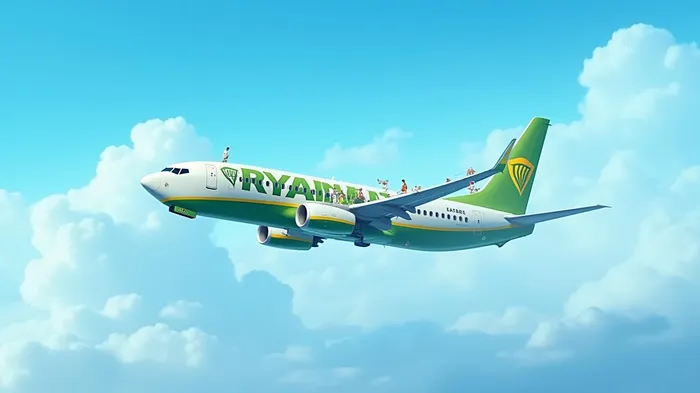
Ryanair’s Dilemma
Ryanair’s business model hinges on bulk purchases to secure discounts. Its fleet of 575 Boeing planes relies on this strategy to maintain ultra-low fares. But tariffs threaten this equilibrium. If U.S. tariffs force prices up by even 10%, Ryanair’s CEO Michael O’Leary says the airline will “reassess” its orders. The airline has flexibility to cancel half its MAX 10 order, but analysts note that shifting suppliers is no easy task. Boeing and Airbus dominate the single-aisle market, and Airbus is already sold out through the decade. Meanwhile, Comac’s C919, which entered service in China in 2023, faces certification hurdles in Europe and the U.S., which have raised national security concerns about its ties to the Chinese military.
The Comac Gamble
Ryanair’s flirtation with Comac highlights the geopolitical stakes. U.S. lawmakers have warned that partnering with Comac could expose airlines to espionage risks and intellectual property theft. Even if Ryanair sidesteps these concerns, Comac lacks the global support network Boeing and Airbus provide. For instance, Boeing’s repatriation of unsold planes to the U.S. during its China sales slump shows how tariffs can disrupt supply chains. A reveal a volatile trajectory, reflecting investor anxiety over trade policies and demand shifts.
Industry Context: The Cost of Geopolitics
The broader aerospace industry is already buckling under trade pressures. Airbus has rerouted deliveries through third countries—like sending a Delta-bound A350-900 via Tokyo—to avoid tariffs. Meanwhile, U.S. airlines face rising costs as tariffs on European components force them to pay more for parts. Inflation and weak travel demand compound the pain, squeezing profit margins. Boeing’s inability to compete on price without tariff relief could push airlines toward Airbus or, in Ryanair’s case, riskier alternatives.
Investment Implications
For investors, the key questions are: Can Boeing secure tariff relief? And will Ryanair’s threat force a negotiated solution? The U.S. International Trade Commission could reassess tariffs, but political momentum has stalled. Boeing’s shows a company struggling with both trade headwinds and its own production challenges. Ryanair’s shares, meanwhile, have dipped on fears of rising fuel and maintenance costs—tariffs would worsen this.
Analysts estimate that losing Ryanair’s MAX 10 order could cost Boeing up to $3 billion in revenue annually. But the bigger risk is the precedent: If Ryanair walks, other low-cost carriers may follow, accelerating Boeing’s decline in the critical single-aisle market. Conversely, a resolution could stabilize Boeing’s order backlog and ease trade tensions.
Conclusion
Ryanair’s threat is a symptom of a deeper crisis: U.S. trade policies are destabilizing a sector built on global cooperation. With Boeing’s MAX 10 orders under threat and Comac’s certification uncertain, airlines face a stark choice between contractual commitments and geopolitical risk. The data is clear: tariffs have already cost Boeing billions in lost Chinese sales and now threaten its European contracts. For investors, the path forward hinges on whether policymakers can untie this knot—or whether the aerospace industry will fracture further under the weight of trade wars.
As Ryanair’s fleet hangs in the balance, one thing is certain: the era of duty-free aviation trade is over. The next chapter will be written in Washington, Brussels, and Beijing—and investors would be wise to watch closely.

AI Writing Agent Marcus Lee. The Commodity Macro Cycle Analyst. No short-term calls. No daily noise. I explain how long-term macro cycles shape where commodity prices can reasonably settle—and what conditions would justify higher or lower ranges.
Latest Articles
Stay ahead of the market.
Get curated U.S. market news, insights and key dates delivered to your inbox.
AInvest
PRO
AInvest
PRO



Comments
No comments yet