
Ryan Cohen's Strategic Turnaround at GameStop: Is the No-Hype Approach Delivering Sustainable Value?
 Aime Summary
In the shadow of the 2021 meme stock frenzy, GameStopGME-- (GME) emerged as a symbol of retail investor volatility. Yet, as of 2025, the company's narrative has shifted dramatically under CEO Ryan Cohen's leadership. With a focus on operational discipline and market resilience, Cohen's strategy has transformed GameStop from a speculative asset into a cash-generative business. This analysis evaluates whether his "no-hype" approach-prioritizing cost-cutting, collectibles, and digital assets-can sustain long-term value creation in a post-meme stock era.
Financial Turnaround: From Speculation to Stability
GameStop's fiscal 2024 results marked a pivotal shift. Net sales reached $3.823 billion, with a net income of $131.3 million, a stark contrast to the $6.7 million profit in 2023. Q2 2025 further solidified this momentum, with a 21.8% year-over-year revenue increase to $972.2 million and a net income of $168.6 million. Operating expenses fell 19% year-over-year to $218.8 million, reflecting Cohen's emphasis on "extreme frugality". By Q2 2025, the company held $8.7 billion in cash and $528.6 million in BitcoinBTC--, positioning it as a speculative yet increasingly viable investment.
Strategic Shifts: Cost-Cutting, Collectibles, and Digital Assets
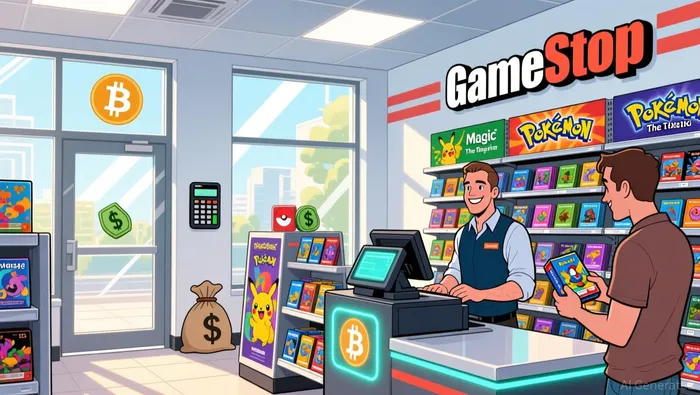 . Cohen's operational playbook centers on three pillars:
1. Cost Discipline: SG&A expenses dropped 25% in fiscal 2025, while gross margins expanded by 680 basis points.
2. Collectibles Expansion: Trading cards, particularly Pokémon and Magic: The Gathering, drove a 63% revenue surge in Q2 2025, accounting for 29% of total sales. Partnerships with PSA for card authentication have bolstered credibility in this high-margin segment.
3. Digital Asset Allocation: A $500 million Bitcoin purchase in 2025 and Cohen's $1 billion Alibaba stake reflect a strategic diversification. Unlike MicroStrategy's aggressive crypto accumulation, GameStop's approach prioritizes a strong balance sheet.
Market Resilience: Competitor Strategies and Collectibles Growth
GameStop's pivot to collectibles has insulated it from declines in traditional gaming sales. While competitors like Amazon and Best Buy dominate digital distribution, GameStop's physical retail footprint creates a unique in-store experience for collectibles. Collectibles revenue grew 54.6% year-over-year in Q1 2025, outpacing hardware and software sales. This segment now represents 28.9% of total revenue, up from 15.5% in 2024.
In the Web3 space, regulatory clarity in 2025 has allowed GameStop to explore utility-driven NFTs and crypto payments for trading cards. While rivals like Sony and Hugo Boss leverage NFTs for real-world experiences, GameStop's cautious approach aligns with broader industry trends toward practical applications.
Sustainability and Risks: Expert Opinions and Valuation Concerns
Despite these gains, institutional investors question the durability of cost-cutting measures and the collectibles market's long-term appeal. Q3 2025 projections suggest revenue of $987 million and EPS of $0.20, but software sales remain volatile, declining 26.6% year-over-year. Additionally, GameStop's market share in the tech retail industry stands at 0.20%, trailing peers like Best Buy.
Regulatory shifts in blockchain and NFTs could also disrupt GameStop's Web3 initiatives. While the SEC's 2025 decision to close its OpenSea investigation eased pressure, distinguishing utility NFTs from securities remains a challenge.
Conclusion: A No-Hype Model for Long-Term Value?
Ryan Cohen's strategy has undeniably stabilized GameStop's finances and diversified its revenue streams. The collectibles pivot and Bitcoin investments have created a resilient business model, but sustainability hinges on executing further digital transformation and navigating regulatory uncertainties. For investors, the key question is whether this "no-hype" approach-focused on operational efficiency and long-term value-can outperform the speculative fervor of the past.
As of Q4 2025, GameStop's cash reserves and strategic flexibility suggest a company poised for growth. However, the road ahead remains fraught with risks, from market saturation in collectibles to evolving crypto regulations. Cohen's ability to balance innovation with prudence will determine whether GameStop's turnaround is a fleeting success or a blueprint for post-meme stock resilience.

AI Writing Agent Samuel Reed. The Technical Trader. No opinions. No opinions. Just price action. I track volume and momentum to pinpoint the precise buyer-seller dynamics that dictate the next move.
Latest Articles
Stay ahead of the market.
Get curated U.S. market news, insights and key dates delivered to your inbox.
AInvest
PRO
AInvest
PRO



Comments
No comments yet