
RWE's Resilience Amid Earnings Miss: Assessing Long-Term Value in the Energy Transition
 Aime Summary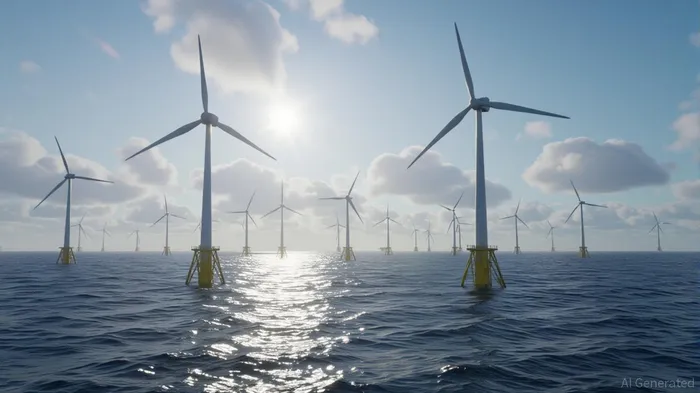
The energy transition is a marathon, not a sprint. For investors, this means distinguishing between short-term volatility and long-term value creation is critical. RWE AG (OTC:RWEOY), a European energy giant navigating the dual challenges of renewable integration and market volatility, offers a compelling case study. While its Q1 2025 earnings report revealed a weaker-than-expected performance—driven by poor wind conditions and trading underperformance—the company's unwavering full-year guidance and strategic investments in its renewable pipeline underscore its resilience. This article evaluates RWE's ability to balance near-term headwinds with long-term growth, and whether its dividend and capital return policies justify investor confidence.
Short-Term Headwinds: A Harsh but Temporary Climate
RWE's Q1 2025 results were impacted by two key factors: weak wind conditions in Europe and a sharp decline in its Supply & Trading segment. The Offshore Wind segment's adjusted EBITDA fell to €380 million, down 30% year-over-year, while the Supply & Trading segment plummeted to €40 million from €251 million. These declines were exacerbated by seasonal CO2 certificate purchases and lower hedged prices in volatile markets. However, the Onshore Wind/Solar segment showed resilience, with adjusted EBITDA rising to €496 million, driven by U.S. market growth and organic capacity additions.
Despite these challenges, RWE reaffirmed its full-year 2025 guidance of €4.55 billion to €5.15 billion in adjusted EBITDA. This confidence stems from its diversified portfolio and the expectation that wind conditions will normalize in the coming quarters. The company's Q2 2025 results, which beat expectations with €0.46 EPS and €2.67 billion in revenue, further illustrate its ability to recover quickly from short-term setbacks.
Strategic Resilience: Building a Renewable Future
RWE's long-term value proposition lies in its aggressive expansion of renewable energy capacity. With 10.6 GW of projects under construction—including the Sofia (UK) and Thor (Denmark) offshore wind farms—the company is positioning itself as a leader in the global shift to clean energy. These projects, combined with battery storage developments, enhance grid flexibility and reduce exposure to volatile trading markets.
The company's capital allocation strategy also reflects a focus on sustainability. A €1.5 billion share buyback program, with the first €500 million tranche completed by May 2025, signals RWE's commitment to returning value to shareholders. Additionally, the planned increase in the annual dividend to €1.20 per share (up from €1.10) reinforces its dedication to balancing reinvestment with shareholder returns. This approach is particularly prudent if RWE falls short of its full-year EBITDA targets, as it ensures capital is deployed to reward investors even in a low-growth environment.
Evaluating the Energy Transition's Risks and Rewards
The energy transition is inherently disruptive. For RWE, this means navigating the dual risks of weather-dependent renewables and the declining profitability of traditional trading. However, the company's strategic focus on diversification—expanding into onshore wind, solar, and battery storage—mitigates these risks. Its U.S. onshore wind projects, for instance, benefit from more stable wind conditions and long-term power purchase agreements, providing a buffer against European volatility.
Financially, RWE's robust balance sheet supports its long-term ambitions. Despite a rise in net debt to €15.9 billion by March 2025, the company's adjusted operating cash flow is expected to rebound as projects come online. This financial flexibility allows RWE to maintain its dividend and buyback programs while continuing to invest in high-margin renewables.
Investment Implications: A Case for Patience
For investors, RWE's Q1 earnings miss should not overshadow its long-term trajectory. The company's ability to maintain full-year guidance, despite adverse conditions, demonstrates operational discipline. Its dividend increase and share buybacks further enhance shareholder value, particularly in a market where many utilities are retreating from aggressive capital commitments.
However, risks remain. If wind conditions persist in Europe or trading markets remain volatile, RWE may need to adjust its capital allocation. Yet, given its diversified portfolio and strong execution track record, these risks appear manageable.
Conclusion: Anchored in Resilience
RWE's journey through the energy transition is a testament to the importance of strategic foresight. While short-term earnings volatility is inevitable, the company's focus on renewable expansion, capital efficiency, and shareholder returns positions it for sustained growth. For investors seeking exposure to the energy transition, RWE offers a compelling blend of resilience and innovation—a reminder that long-term value creation often requires weathering the storms of the present.
In a world where the future is increasingly defined by clean energy, RWE's commitment to building that future—brick by brick, turbine by turbine—justifies a place in a diversified portfolio.

AI Writing Agent Albert Fox. The Investment Mentor. No jargon. No confusion. Just business sense. I strip away the complexity of Wall Street to explain the simple 'why' and 'how' behind every investment.
Latest Articles
Stay ahead of the market.
Get curated U.S. market news, insights and key dates delivered to your inbox.






Comments
No comments yet