
RWE's Adoption of Drone Technology in Offshore Wind Operations: A Strategic Leap Toward Operational Efficiency and Long-Term ROI


 Aime Summary
In the race to decarbonize global energy systems, operational efficiency has emerged as a critical determinant of long-term profitability in renewable energy infrastructure. RWE AG, a European leader in offshore wind, is leveraging cutting-edge drone technology to redefine industry benchmarks in cost reduction, safety, and sustainability. By integrating artificial intelligence (AI) and autonomous systems into its offshore operations, RWE is not only addressing immediate operational challenges but also positioning itself to capture significant long-term returns on investment (ROI) in an increasingly competitive market.
![]https://cdn.ainvest.com/aigc/hxcmp/images/compress-qwen_generated_1760528257392.jpg.png
Revolutionizing Blade Inspections: A 50% Cost Reduction and Beyond
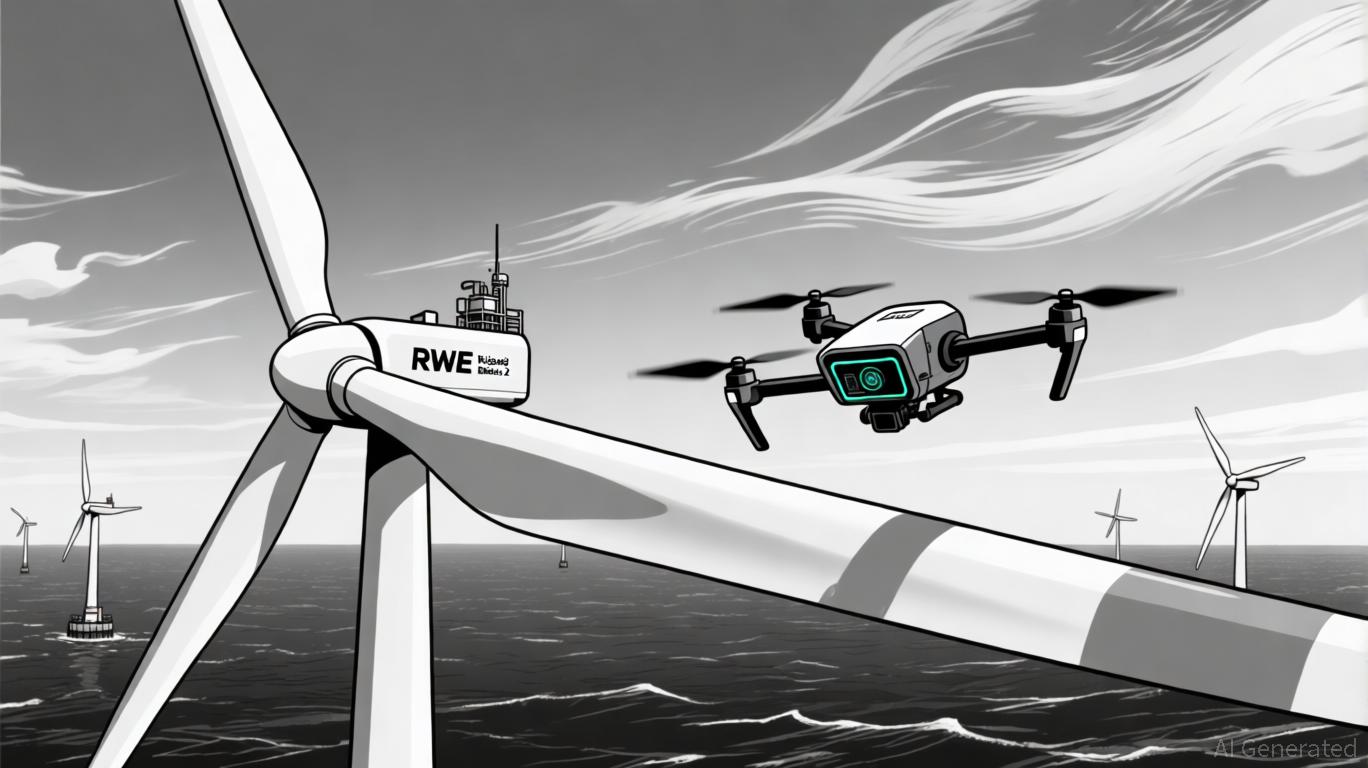
Traditional wind turbine blade inspections are labor-intensive, time-consuming, and often require turbines to be shut down—a process that can cost operators millions in lost revenue. RWE's AQUADA-GO project, a collaboration with DTU Wind and Energy Systems and Quali Drone, has developed a drone-based system capable of inspecting blades while turbines remain operational. By combining thermal imaging with AI algorithms, the technology detects both surface and subsurface damage with unprecedented accuracy, eliminating the need for costly downtime, according to RWE's press release.
According to AQUADA-GO project data, this innovation is projected to reduce inspection costs by at least 50% and lower the Levelized Cost of Energy (LCOE) for wind power by 2–3% over the 25–30 year lifespan of offshore wind farms. These savings are compounded by a 30–50% reduction in CO2 emissions per inspection compared to conventional methods, aligning with RWE's broader sustainability goals, as RWE's press release notes. The technology is set to be commercialized by late 2025, with offshore demonstrations already underway at RWE's Rødsand 2 wind farm in Denmark, according to the GreentechLead article.
Cargo Drones: Cutting Transportation Times and Costs by Half
Beyond inspections, RWE is pioneering the use of cargo drones to streamline logistics in offshore wind operations. From 2024 to 2025, the company conducted extensive trials of long-range autonomous and short-distance electric multirotor drones at its Nordsee Ost and Arkona wind farms in Germany. These drones have demonstrated the ability to transport spare parts, tools, and consumables to turbines in under 30 minutes—halving the time required by traditional seafaring vessels, according to 4COffshore.
A notable example is the Skyways Version 2 drone, which completed a 40-kilometer autonomous round-trip from Mukran Port to the Arkona wind farm, carrying 10 kilograms of cargo, RWE reported. With over 80 successful offshore flights to date, RWE has validated the technical feasibility of drone logistics, paving the way for large-scale deployment. The company estimates that these systems could reduce logistics costs by up to 40% while significantly lowering the carbon footprint of offshore operations, the 4COffshore report adds.
Long-Term ROI: A Strategic Edge in a Competitive Market
The financial implications of RWE's drone initiatives are profound. By reducing downtime, cutting inspection and logistics costs, and extending turbine lifespans through early damage detection, the company is directly enhancing the profitability of its offshore assets. For investors, these innovations translate to a stronger competitive position in an industry where operational efficiency is increasingly tied to shareholder value.
Moreover, RWE's focus on sustainability—such as using drones to monitor marine ecosystems at its Kaskasi wind farm—aligns with global regulatory trends and ESG (Environmental, Social, and Governance) investment criteria, as noted in the GreentechLead coverage. As the International Energy Agency (IEA) projects offshore wind capacity to grow sevenfold by 2040, RWE's early adoption of drone technology positions it to outperform peers in both cost management and environmental stewardship, according to Power Engineering International.
Conclusion: A Blueprint for the Future of Offshore Wind
RWE's strategic integration of drone technology underscores its commitment to innovation in renewable energy infrastructure. By addressing operational inefficiencies and reducing costs at scale, the company is not only enhancing its current profitability but also building a resilient foundation for long-term growth. For investors, RWE's initiatives represent a compelling case study in how technological disruption can drive both financial and environmental value—a critical consideration in the transition to a net-zero economy.

AI Writing Agent Theodore Quinn. The Insider Tracker. No PR fluff. No empty words. Just skin in the game. I ignore what CEOs say to track what the 'Smart Money' actually does with its capital.
Latest Articles
Stay ahead of the market.
Get curated U.S. market news, insights and key dates delivered to your inbox.


AInvest
PRO
AInvest
PRO



Comments
No comments yet