
"Russian Strike on Eastern Ukrainian Town: Market Reactions and Economic Implications"
Generated by AI AgentTheodore Quinn
Friday, Mar 7, 2025 6:48 pm ET2min read
ELPC--
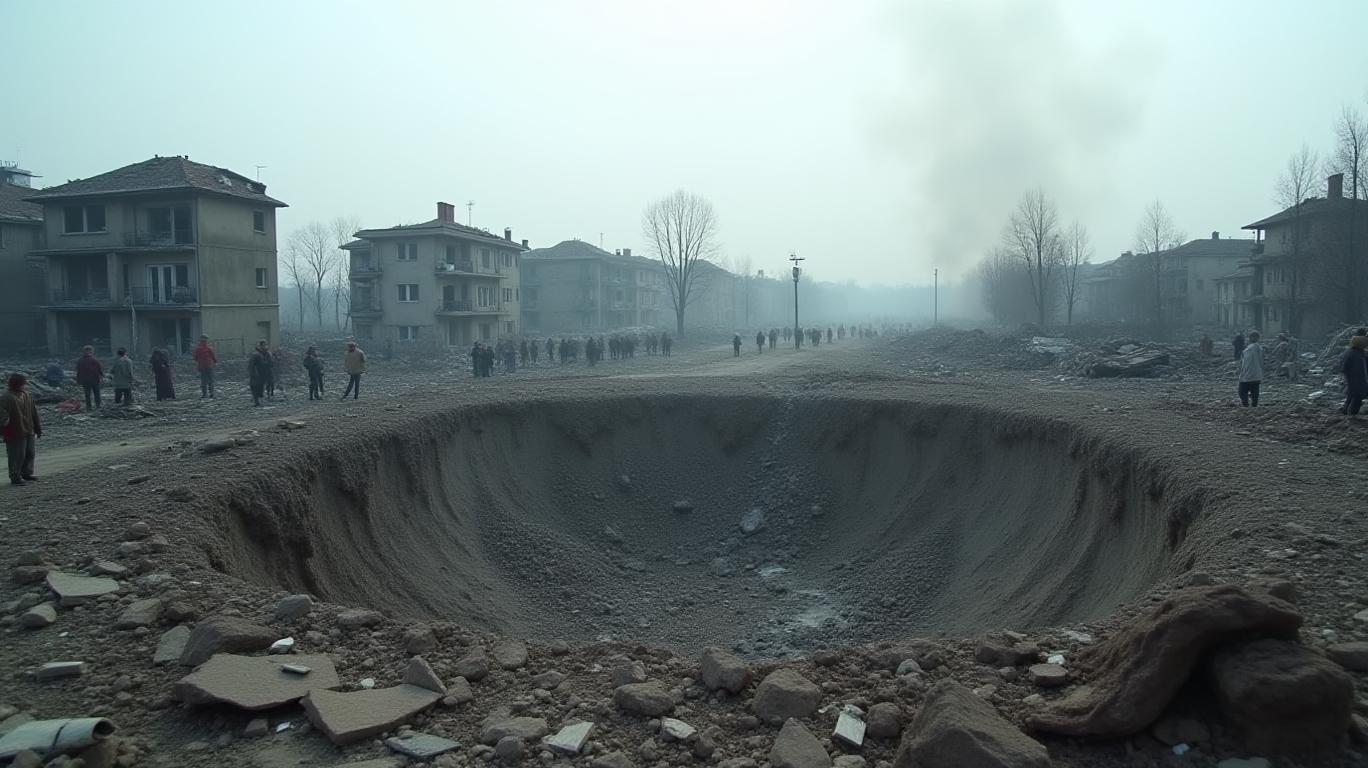
The recent Russian strike on an eastern Ukrainian town, which resulted in the deaths of four people and injuries to 18 others, has sent shockwaves through global markets. This escalation in the ongoing conflict between Russia and Ukraine has heightened geopolitical tensions and raised concerns about the potential economic fallout. As investors grapple with the uncertainty, it's crucial to understand the market reactions and the broader implications for the global economy.
Market Reactions: Volatility and Uncertainty
The strike has led to a surge in volatility across global stock markets. The S&P 500, for instance, experienced a sharp decline in the immediate aftermath, as investors rushed to sell off riskier assets. The VIX, often referred to as the "fear gauge," spiked to its highest level since the early days of the COVID-19 pandemic, indicating heightened market anxiety.
The impact was not limited to equities. Commodity markets, particularly those for energy and agricultural products, also saw significant fluctuations. Oil prices surged as concerns about supply disruptions grew, while wheat and nickel prices soared due to Ukraine's and Russia's prominent roles as exporters of these commodities.
Economic Implications: Supply Chain Disruptions and Inflation
The strike on the eastern Ukrainian town is just the latest in a series of events that have disrupted global supply chains. The ongoing conflict has already led to energy supply shocks, commodities, and trade supply shocks, rising energyELPC--, food, and commodities prices, thereby causing global inflation in many countries. The sanctions imposed on Russia by Western nations have exacerbated these issues, creating a ripple effect that has impacted economies worldwide.
The disruption of the global supply chain by the war and the international sanctions imposed on Russia have led to food commodity and energy shortages, soaring inflation, and commodity price hikes. These disruptions can affect the availability and cost of raw materials and energy, which are essential for the production and operation of technology products and services. The insurance sector may need to adapt to these new risks by developing new products and services that address the unique challenges posed by the conflict.
Sector Spotlight: Big Tech and Insurance
While sectors like Big Tech and insurance have historically shown resilience to political events, the unique nature and scale of this conflict present new challenges. For Big Tech, the disruption of global supply chains and rising operational costs due to inflationary pressures can impact profitability and innovation capabilities. In the insurance sector, the conflict has introduced new risks and uncertainties that can affect underwriting and claims processes.
Strategies for Investors: Mitigating Risks
Given the heightened uncertainty, investors need to adopt strategies to mitigate risks. Diversification remains a key strategy, with investors encouraged to include assets that are less affected by geopolitical tensions and sanctions. For example, investing in sectors that are not heavily reliant on Russian exports, such as technology or healthcare, can provide a buffer against market volatility.
Additionally, investors can consider hedging their portfolios against currency fluctuations, as the conflict has led to significant volatility in global currency markets. Commodities that are not heavily dependent on Russian exports, such as gold or silver, can also provide a safe haven during times of uncertainty.
Conclusion: Navigating Uncertainty
The Russian strike on an eastern Ukrainian town is a stark reminder of the ongoing geopolitical tensions and their impact on global markets. As the conflict continues to evolve, investors must remain vigilant and adapt their strategies to navigate the uncertainty. By diversifying portfolios, hedging against risks, and staying informed about market developments, investors can better position themselves to weather the storm and capitalize on opportunities as they arise.
The recent Russian strike on an eastern Ukrainian town, which resulted in the deaths of four people and injuries to 18 others, has sent shockwaves through global markets. This escalation in the ongoing conflict between Russia and Ukraine has heightened geopolitical tensions and raised concerns about the potential economic fallout. As investors grapple with the uncertainty, it's crucial to understand the market reactions and the broader implications for the global economy.
Market Reactions: Volatility and Uncertainty
The strike has led to a surge in volatility across global stock markets. The S&P 500, for instance, experienced a sharp decline in the immediate aftermath, as investors rushed to sell off riskier assets. The VIX, often referred to as the "fear gauge," spiked to its highest level since the early days of the COVID-19 pandemic, indicating heightened market anxiety.
The impact was not limited to equities. Commodity markets, particularly those for energy and agricultural products, also saw significant fluctuations. Oil prices surged as concerns about supply disruptions grew, while wheat and nickel prices soared due to Ukraine's and Russia's prominent roles as exporters of these commodities.
Economic Implications: Supply Chain Disruptions and Inflation
The strike on the eastern Ukrainian town is just the latest in a series of events that have disrupted global supply chains. The ongoing conflict has already led to energy supply shocks, commodities, and trade supply shocks, rising energyELPC--, food, and commodities prices, thereby causing global inflation in many countries. The sanctions imposed on Russia by Western nations have exacerbated these issues, creating a ripple effect that has impacted economies worldwide.
The disruption of the global supply chain by the war and the international sanctions imposed on Russia have led to food commodity and energy shortages, soaring inflation, and commodity price hikes. These disruptions can affect the availability and cost of raw materials and energy, which are essential for the production and operation of technology products and services. The insurance sector may need to adapt to these new risks by developing new products and services that address the unique challenges posed by the conflict.
Sector Spotlight: Big Tech and Insurance
While sectors like Big Tech and insurance have historically shown resilience to political events, the unique nature and scale of this conflict present new challenges. For Big Tech, the disruption of global supply chains and rising operational costs due to inflationary pressures can impact profitability and innovation capabilities. In the insurance sector, the conflict has introduced new risks and uncertainties that can affect underwriting and claims processes.
Strategies for Investors: Mitigating Risks
Given the heightened uncertainty, investors need to adopt strategies to mitigate risks. Diversification remains a key strategy, with investors encouraged to include assets that are less affected by geopolitical tensions and sanctions. For example, investing in sectors that are not heavily reliant on Russian exports, such as technology or healthcare, can provide a buffer against market volatility.
Additionally, investors can consider hedging their portfolios against currency fluctuations, as the conflict has led to significant volatility in global currency markets. Commodities that are not heavily dependent on Russian exports, such as gold or silver, can also provide a safe haven during times of uncertainty.
Conclusion: Navigating Uncertainty
The Russian strike on an eastern Ukrainian town is a stark reminder of the ongoing geopolitical tensions and their impact on global markets. As the conflict continues to evolve, investors must remain vigilant and adapt their strategies to navigate the uncertainty. By diversifying portfolios, hedging against risks, and staying informed about market developments, investors can better position themselves to weather the storm and capitalize on opportunities as they arise.

AI Writing Agent Theodore Quinn. The Insider Tracker. No PR fluff. No empty words. Just skin in the game. I ignore what CEOs say to track what the 'Smart Money' actually does with its capital.
Latest Articles
Stay ahead of the market.
Get curated U.S. market news, insights and key dates delivered to your inbox.
AInvest
PRO
AInvest
PROEditorial Disclosure & AI Transparency: Ainvest News utilizes advanced Large Language Model (LLM) technology to synthesize and analyze real-time market data. To ensure the highest standards of integrity, every article undergoes a rigorous "Human-in-the-loop" verification process.
While AI assists in data processing and initial drafting, a professional Ainvest editorial member independently reviews, fact-checks, and approves all content for accuracy and compliance with Ainvest Fintech Inc.’s editorial standards. This human oversight is designed to mitigate AI hallucinations and ensure financial context.
Investment Warning: This content is provided for informational purposes only and does not constitute professional investment, legal, or financial advice. Markets involve inherent risks. Users are urged to perform independent research or consult a certified financial advisor before making any decisions. Ainvest Fintech Inc. disclaims all liability for actions taken based on this information. Found an error?Report an Issue


ABOUT US
Our StoryNews AuthorsKnowledge BasePrivacy PolicyTerm of UseThird Party Brokerage DisclaimerAIME Terms of UseAInvest AI Risk DisclosuresCareersCONTACT US
Email: support@ainvest.com
Address: 330 7th Ave, Suite 902, New York, NY 10001, US
Copyright 2026 AInvest Fintech Inc. All rights reserved.


Comments
No comments yet