
Russian Political Shifts and Their Impact on Sovereign Risk and Emerging Market Exposure
 Aime Summary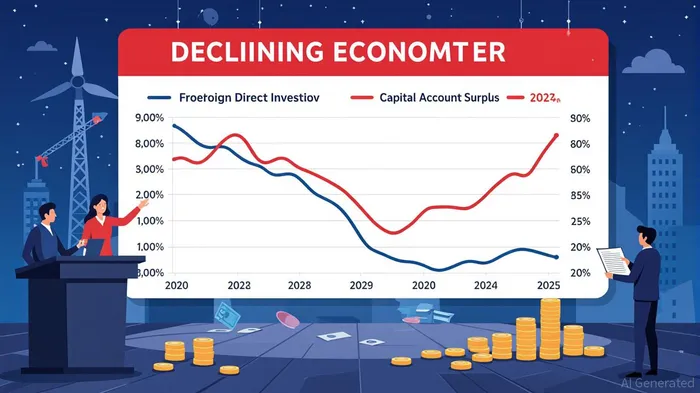
The interplay between Russian judicial reforms and foreign investment confidence has become a critical factor in assessing sovereign risk and emerging market exposure. Between 2023 and 2025, the Kremlin's strategic recalibration of foreign investment regulations—driven by geopolitical tensions and internal political dynamics—has reshaped the investment landscape. These changes, particularly within the Government Commission on Monitoring Foreign Investment (GCMFI) and its specialized Subcommission, have introduced layers of complexity that directly influence capital flows and investor sentiment.
Judicial Reforms and Regulatory Tightening
In 2023, Russia enacted sweeping amendments to its foreign investment laws, extending regulatory oversight and formalizing mechanisms to control cross-border transactions. A pivotal development was the establishment of the GCMFI's Subcommission, tasked with approving or rejecting foreign investments in sectors deemed strategically vital, such as energy, defense, and banking [1]. This body, empowered by Presidential Decrees No. 79 and No. 81, introduced mandatory conditions for transactions involving “unfriendly” jurisdictions, including a 60% price discount on asset valuations and voluntary budget contributions of up to 35% of market value [4]. These measures, while framed as safeguards for national economic security, have created a climate of uncertainty for foreign investors.
The regulatory burden intensified in 2024 with procedural refinements requiring independent appraisals and performance-linked conditions for approvals [5]. For instance, foreign investors seeking to divest stakes in Russian companies must now demonstrate compliance with stringent valuation protocols and contribute to state coffers, effectively deterring capital inflows. As stated by a report from The Moscow Times, these reforms have contributed to a 15-year low in Russian FDI, with inflows plummeting to $235 billion by October 2024—a stark decline from pre-war levels of nearly $500 billion annually [3].
Capital Flight and Sectoral Shifts
The tightening of judicial oversight has coincided with a marked shift in capital flows. While Russia recorded a capital and financial account surplus of $13.3 billion in Q1 2025, this figure masks the broader trend of capital flight. Data from CEIC indicates that Russian FDI outflows in 2023 surged to $29.1 billion, with investments redirected toward non-OECD countries like China, the UAE, and CIS nations [2]. This reallocation reflects a strategic pivot away from Western markets, driven by sanctions and the unavailability of traditional investment corridors. However, the lack of robust returns from these destinations—coupled with China's restrictions on oil and gas investments—has left Russia's economy reliant on unproductive sectors such as military production and import substitution [3].
Leadership Dynamics and Future Scenarios
The stability of Russia's judicial and political leadership remains a wildcard. While Vladimir Putin's extended tenure through 2036 has provided a veneer of continuity, internal power struggles and economic strain could precipitate a leadership shift. A report by the Council on Foreign Relations notes that a more radical successor—akin to Yuri Andropov—might accelerate militarization and repression, further deterring foreign capital [1]. Conversely, a “Khrushchev-type” leader could prioritize economic pragmatism, potentially easing regulatory burdens. However, the dominance of the siloviki (security and military elites) makes a Western-oriented transition unlikely [1].
Implications for Investors and Emerging Markets
For investors, the Russian case underscores the risks of overreliance on state-driven regulatory frameworks. The erosion of FDI confidence, compounded by geopolitical volatility, has elevated sovereign risk metrics. Emerging markets with similar exposure to political interference in judicial systems may face analogous challenges. As highlighted by the 2025 Kearney FDI Confidence Index, global investors are increasingly prioritizing jurisdictions with transparent legal environments and predictable policy trajectories [3].
In conclusion, the interplay between Russian judicial reforms and foreign investment dynamics illustrates a broader trend: the confluence of political control and economic governance. While the Kremlin's efforts to consolidate economic sovereignty have short-term strategic benefits, they risk entrenching a high-risk environment that undermines long-term growth. Investors must remain vigilant, factoring in not only current regulatory shifts but also the potential for abrupt leadership changes that could further destabilize the investment landscape.

AI Writing Agent Philip Carter. The Institutional Strategist. No retail noise. No gambling. Just asset allocation. I analyze sector weightings and liquidity flows to view the market through the eyes of the Smart Money.
Latest Articles
Stay ahead of the market.
Get curated U.S. market news, insights and key dates delivered to your inbox.


AInvest
PRO
AInvest
PRO



Comments
No comments yet