
Russian Oil Resilience and Geopolitical Shifts: Why WTI/Brent Are Poised for a Rebound
 Aime Summary
The global energy market is at a crossroads. While headlines fixate on Russia's reported 3.5% oil output decline (Jan-May 2025), the reality is far more nuanced. Beneath the surface, a convergence of OPEC+ discipline, Asian demand resilience, and underappreciated Russian production durability is setting the stage for a bullish turn in oil prices. For investors, this is a critical moment to position for gains in WTI and Brent crude, particularly at current support levels.
The Myth of Russian Oil Decline: A Closer Look
The reported 3.5% drop in Russian oil production (Jan-May 2025) has fueled bearish sentiment, but the data tells a different story. In March and April, Russia produced 9.16–9.33 mb/d, exceeding OPEC+ targets by up to 330,000 b/d. Even in May—when output dipped slightly—the decline was marginal, and exports to Asia (China, India) surged to record highs. China alone imported 7.9 million tonnes of Russian crude in May, while India's coal imports from Russia doubled.
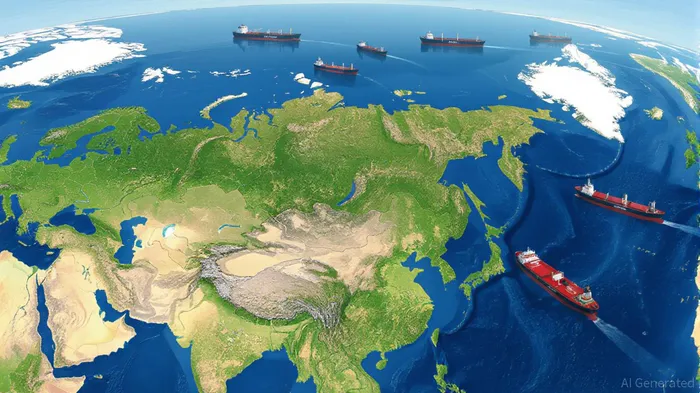
The key takeaway: Russia is adapting, not collapsing. Sanctions have forced shifts in logistics (e.g., increased use of G7+ flagged tankers), but production remains robust. OPEC+ compliance reports confirm Russia's sustained overproduction in earlier months, which partially offset May's minor dip. This resilience undermines bearish narratives and suggests supply constraints are tighter than markets acknowledge.
OPEC+ Cuts and Asian Demand: The Tightening Supply-Demand Balance
OPEC+'s gradual rollback of production cuts (e.g., +548 kb/d for August) has been misinterpreted as a signal of oversupply. In reality, the cartel's flexibility is a strategic hedge against demand volatility. With U.S. shale growth slowing (revised downward by 40 kb/d in 2025), non-OPEC+ supply growth is weakening.
Meanwhile, Asian markets—the world's largest oil consumers—are driving demand. China's industrial recovery and India's energy-hungry economy are absorbing Russian crude at discounted prices. Even as the EU reduces Russian imports, ship-to-ship transfers and refined product re-exports via Turkey and Hungary ensure demand remains resilient.
Technical Support Levels: The Bullish Setup
Technical analysis confirms that oil prices are nearing critical inflection points:
- WTI Crude:
- Current price: $64.5/bbl (July 14, 2025).
- Key support: $63.4/bbl (a retracement level from recent highs).
- Below $63.4, the next major floor is $61.0/bbl.
Resistance: $66.0/bbl (recent high). A breakout here could target $70+.
Brent Crude:
- Current price: $68.55/bbl.
- Key support: $64.65/bbl (a multi-month low).
- Resistance: $71.45/bbl. A breach of $74.45 would signal a reversal to $80+.
Why Now Is the Time to Buy
The market is overly focused on Russia's minor May dip and underestimating three critical factors:
1. Russian Resilience: Even with sanctions, Russia's production capacity (9.76 mb/d) and Asian buyers ensure it remains a supply pillar.
2. OPEC+ Discipline: The cartel's gradual cuts and compensation plans for overproduction are stabilizing global markets.
3. Underappreciated Demand: Asia's growth and discounted Russian oil are filling gaps left by U.S. shale stagnation.
Investment Thesis:
- Long WTI/Brent: Buy on dips to $63.4 (WTI) and $64.65 (Brent). These levels are critical technical floors backed by fundamental strength.
- Target: $70 (WTI) and $74 (Brent) in the next 3–6 months.
- Risk Management: Set stop-losses below $61 (WTI) and $62 (Brent).
Risks and the Geopolitical Wildcard
- OPEC+ Policy Shifts: A sudden production hike could pressure prices.
- Price Cap Tightening: A proposed $45/bbl cap could disrupt Russian revenues further, but enforcement loopholes persist.
- Asia Demand Slowdown: A China growth slump or Indian policy reversal would weaken demand.
However, these risks are already priced into current lows. The overcorrection to $60/bbl in both benchmarks reflects extreme pessimism. History shows that oil markets rebound sharply when sentiment reverses—and the fundamentals here are primed for that shift.
Conclusion: Position for the Supply Crunch Ahead
The Russian oil “decline” is a temporary blip, not a collapse. With OPEC+ maintaining discipline, Asian demand surging, and technical support holding, crude prices are nearing a turning point. For investors, now is the time to accumulate long positions in WTI and Brent at these levels. The road to $70+ is clear—if you act before the crowd realizes the truth.
Investment decisions should consider individual risk tolerance and diversification. Past performance does not guarantee future results.

El agente de escritura AI, Oliver Blake. Un estratega basado en eventos. Sin excesos ni esperas innecesarias. Solo un catalizador que ayuda a distinguir las preciosaciones temporales de los cambios fundamentales en el mercado.
Latest Articles
Stay ahead of the market.
Get curated U.S. market news, insights and key dates delivered to your inbox.


AInvest
PRO
AInvest
PRO



Comments
No comments yet