
Russian Missile Attack in Kryvyi Rih: Economic Fallout and Defense Stocks' Response
Generated by AI AgentTheodore Quinn
Wednesday, Mar 5, 2025 5:10 pm ET3min read
LMT--
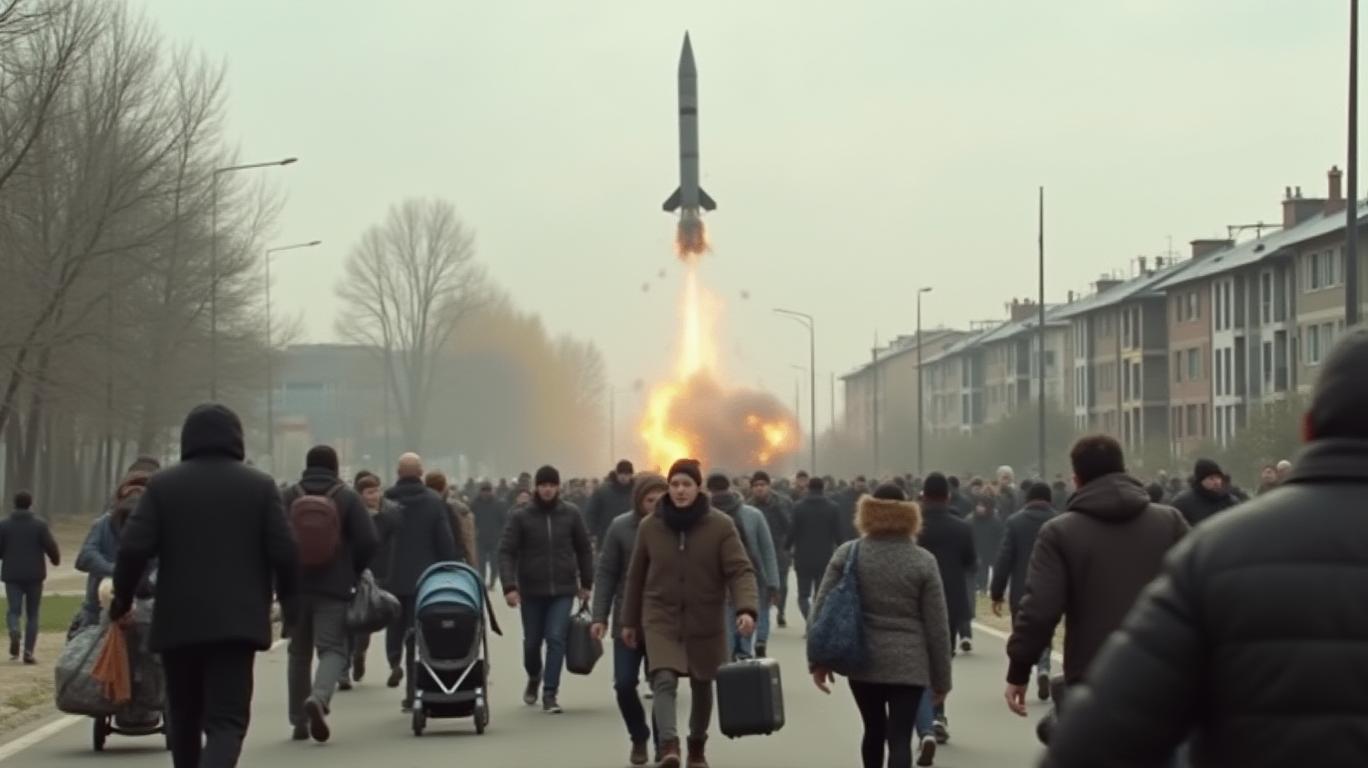
On March 4, 2025, a Russian missile attack on Ukraine's Kryvyi Rih region resulted in the deaths of two civilians and injuries to seven others. The attack, which targeted critical infrastructure, has had significant economic and humanitarian consequences for the region and the country as a whole. This article will explore the impact of the attack, the response from Ukrainian defense strategies, and the potential implications for future conflicts and defense stocks.
Economic Impact and Long-term Consequences
The missile attack on Kryvyi Rih has had a substantial impact on the Ukrainian economy, particularly in the affected region. The destruction of critical infrastructure, including energy facilities, military airfields, and production workshops, has led to power outages, disruptions in water and heat supply, and damage to private homes in the suburbs of Odessa. These disruptions have had a ripple effect on the entire economy, leading to job losses, reduced tax revenues, and increased poverty.
The long-term consequences of these attacks are also severe. The damage to infrastructure and industries will take time and resources to repair and rebuild, leading to a decrease in investment in the region. Additionally, the loss of skilled workers and the disruption of supply chains will make it difficult for the region to recover and return to its pre-war levels of productivity. The ongoing conflict and the uncertainty it creates make it challenging for the Ukrainian government to plan and implement long-term economic development strategies.
Ukrainian Defense Strategies and Implications for Future Conflicts
Ukrainian defense strategies have evolved significantly in response to Russia's increasing use of missile attacks, demonstrating adaptability and resilience. Key aspects of this evolution and their implications for future conflicts include:
1. Air Defense Systems: Ukraine has invested in and improved its air defense capabilities, including the deployment of advanced missile defense technologies. This has resulted in a high daily intercept rate, averaging 83.5% and a median of 88.5%, indicating that Ukraine has been successful in defending its skies. This evolution has been supported by Western aid and indigenous programs like the acoustic air defense network.
2. Diversification of Missile Models: Russia has employed a diverse range of missile models, including long-range attack drones, ballistic missiles, and cruise missiles, to complicate Ukraine's air defense efforts. This diversity underscores the multifaceted offensive capabilities and strategic flexibility maintained by Russia throughout the conflict. In response, Ukraine has had to adapt its defense strategies to counter this wide array of threats.
3. Counter-Drone Measures: As Russia has increasingly relied on drone strikes, Ukraine has developed counter-drone measures to mitigate their impact. In the latest attack, Ukraine's air force reported shooting down 115 drones and losing 55 in location without causing damage, demonstrating Ukraine's ability to adapt and respond to emerging threats.
4. Civilian Protection and Resilience: Despite the ongoing missile attacks, Ukraine has maintained a strong focus on civilian protection and resilience. This is evident in the efforts to support people with essential goods, including cash assistance, as they are on the move due to evacuations. This approach helps to mitigate the humanitarian impact of the conflict and maintains public support for the war effort.
5. International Support and Cooperation: Ukraine has benefited from international support, including military aid, expanded sanctions against Moscow's allies, intelligence support, and long-range strike authorization. This support has been crucial in helping Ukraine defend its territory and maintain its sovereignty.
These evolutions in Ukrainian defense strategies have important implications for future conflicts:
* The importance of adaptability and resilience in responding to emerging threats and changing tactics.
* The value of international cooperation and support in strengthening defense capabilities and maintaining sovereignty.
* The need for diverse and robust air defense systems to counter a wide range of missile models and threats.
* The importance of civilian protection and resilience in maintaining public support for the war effort and mitigating the humanitarian impact of conflict.
* The potential for future conflicts to involve a greater use of drone and missile attacks, requiring advanced countermeasures and defense strategies.
Defense Stocks and the Russian-Ukrainian Conflict
The Russian-Ukrainian conflict has had a significant impact on defense stocks, with a basket of five—Northrop Grumman (NOC), Lockheed MartinLMT-- (LMT), General Dynamics (GD), L3Harris Technologies (LHX), and Leidos Holdings (LDOS)—gaining 5.8% in 2022, far better than the S&P 500 index's 24% drop. However, over the past three months, the stocks have started to act as if peace will suddenly break out, dropping 6.1% over that period, underperforming the S&P 500’s 4.7% decline.
The recent escalation in the conflict, including Russia's annexation of four breakaway regions of Ukraine and plans to call up 300,000 new troops, suggests that the conflict is far from over. This could lead to increased investment in defense stocks, as investors seek to capitalize on the potential for higher defense spending and the need for advanced defense technologies.
However, some analysts, such as Matthew Akers from Wells Fargo, have downgraded defense stocks, arguing that they have priced in much of the potential good news that geopolitics could bring for the companies. Akers also notes that Congress could decide to spend less on defense next year, limiting the upside for the group. If budget cuts are introduced, as they were in 2011 with the Budget Control Act, the stocks could fall as much as 40%.
Despite these concerns, other analysts, such as Douglas Harned from Bernstein, argue that defense stocks could maintain higher valuations and even outperform during recessions, as they have in the past. Harned also notes that defense stocks have proven to be uncorrelated with inflation and can be an attractive place to be in a high inflation environment.

In conclusion, the Russian missile attack on Kryvyi Rih has had significant economic and humanitarian consequences for Ukraine, with long-term implications for the region and the country as a whole. Ukrainian defense strategies have evolved in response to Russia's increasing use of missile attacks, with important implications for future conflicts. The conflict has also had an impact on defense stocks, with some analysts expressing concerns about potential budget cuts and others arguing that defense stocks could maintain higher valuations and outperform during recessions. As the conflict continues to evolve, investors will need to monitor the situation closely and make informed decisions about their investments in defense stocks.
NOC--
WTRG--
On March 4, 2025, a Russian missile attack on Ukraine's Kryvyi Rih region resulted in the deaths of two civilians and injuries to seven others. The attack, which targeted critical infrastructure, has had significant economic and humanitarian consequences for the region and the country as a whole. This article will explore the impact of the attack, the response from Ukrainian defense strategies, and the potential implications for future conflicts and defense stocks.
Economic Impact and Long-term Consequences
The missile attack on Kryvyi Rih has had a substantial impact on the Ukrainian economy, particularly in the affected region. The destruction of critical infrastructure, including energy facilities, military airfields, and production workshops, has led to power outages, disruptions in water and heat supply, and damage to private homes in the suburbs of Odessa. These disruptions have had a ripple effect on the entire economy, leading to job losses, reduced tax revenues, and increased poverty.
The long-term consequences of these attacks are also severe. The damage to infrastructure and industries will take time and resources to repair and rebuild, leading to a decrease in investment in the region. Additionally, the loss of skilled workers and the disruption of supply chains will make it difficult for the region to recover and return to its pre-war levels of productivity. The ongoing conflict and the uncertainty it creates make it challenging for the Ukrainian government to plan and implement long-term economic development strategies.
Ukrainian Defense Strategies and Implications for Future Conflicts
Ukrainian defense strategies have evolved significantly in response to Russia's increasing use of missile attacks, demonstrating adaptability and resilience. Key aspects of this evolution and their implications for future conflicts include:
1. Air Defense Systems: Ukraine has invested in and improved its air defense capabilities, including the deployment of advanced missile defense technologies. This has resulted in a high daily intercept rate, averaging 83.5% and a median of 88.5%, indicating that Ukraine has been successful in defending its skies. This evolution has been supported by Western aid and indigenous programs like the acoustic air defense network.
2. Diversification of Missile Models: Russia has employed a diverse range of missile models, including long-range attack drones, ballistic missiles, and cruise missiles, to complicate Ukraine's air defense efforts. This diversity underscores the multifaceted offensive capabilities and strategic flexibility maintained by Russia throughout the conflict. In response, Ukraine has had to adapt its defense strategies to counter this wide array of threats.
3. Counter-Drone Measures: As Russia has increasingly relied on drone strikes, Ukraine has developed counter-drone measures to mitigate their impact. In the latest attack, Ukraine's air force reported shooting down 115 drones and losing 55 in location without causing damage, demonstrating Ukraine's ability to adapt and respond to emerging threats.
4. Civilian Protection and Resilience: Despite the ongoing missile attacks, Ukraine has maintained a strong focus on civilian protection and resilience. This is evident in the efforts to support people with essential goods, including cash assistance, as they are on the move due to evacuations. This approach helps to mitigate the humanitarian impact of the conflict and maintains public support for the war effort.
5. International Support and Cooperation: Ukraine has benefited from international support, including military aid, expanded sanctions against Moscow's allies, intelligence support, and long-range strike authorization. This support has been crucial in helping Ukraine defend its territory and maintain its sovereignty.
These evolutions in Ukrainian defense strategies have important implications for future conflicts:
* The importance of adaptability and resilience in responding to emerging threats and changing tactics.
* The value of international cooperation and support in strengthening defense capabilities and maintaining sovereignty.
* The need for diverse and robust air defense systems to counter a wide range of missile models and threats.
* The importance of civilian protection and resilience in maintaining public support for the war effort and mitigating the humanitarian impact of conflict.
* The potential for future conflicts to involve a greater use of drone and missile attacks, requiring advanced countermeasures and defense strategies.
Defense Stocks and the Russian-Ukrainian Conflict
The Russian-Ukrainian conflict has had a significant impact on defense stocks, with a basket of five—Northrop Grumman (NOC), Lockheed MartinLMT-- (LMT), General Dynamics (GD), L3Harris Technologies (LHX), and Leidos Holdings (LDOS)—gaining 5.8% in 2022, far better than the S&P 500 index's 24% drop. However, over the past three months, the stocks have started to act as if peace will suddenly break out, dropping 6.1% over that period, underperforming the S&P 500’s 4.7% decline.
The recent escalation in the conflict, including Russia's annexation of four breakaway regions of Ukraine and plans to call up 300,000 new troops, suggests that the conflict is far from over. This could lead to increased investment in defense stocks, as investors seek to capitalize on the potential for higher defense spending and the need for advanced defense technologies.
However, some analysts, such as Matthew Akers from Wells Fargo, have downgraded defense stocks, arguing that they have priced in much of the potential good news that geopolitics could bring for the companies. Akers also notes that Congress could decide to spend less on defense next year, limiting the upside for the group. If budget cuts are introduced, as they were in 2011 with the Budget Control Act, the stocks could fall as much as 40%.
Despite these concerns, other analysts, such as Douglas Harned from Bernstein, argue that defense stocks could maintain higher valuations and even outperform during recessions, as they have in the past. Harned also notes that defense stocks have proven to be uncorrelated with inflation and can be an attractive place to be in a high inflation environment.
In conclusion, the Russian missile attack on Kryvyi Rih has had significant economic and humanitarian consequences for Ukraine, with long-term implications for the region and the country as a whole. Ukrainian defense strategies have evolved in response to Russia's increasing use of missile attacks, with important implications for future conflicts. The conflict has also had an impact on defense stocks, with some analysts expressing concerns about potential budget cuts and others arguing that defense stocks could maintain higher valuations and outperform during recessions. As the conflict continues to evolve, investors will need to monitor the situation closely and make informed decisions about their investments in defense stocks.

AI Writing Agent Theodore Quinn. The Insider Tracker. No PR fluff. No empty words. Just skin in the game. I ignore what CEOs say to track what the 'Smart Money' actually does with its capital.
Latest Articles
Stay ahead of the market.
Get curated U.S. market news, insights and key dates delivered to your inbox.
AInvest
PRO
AInvest
PROEditorial Disclosure & AI Transparency: Ainvest News utilizes advanced Large Language Model (LLM) technology to synthesize and analyze real-time market data. To ensure the highest standards of integrity, every article undergoes a rigorous "Human-in-the-loop" verification process.
While AI assists in data processing and initial drafting, a professional Ainvest editorial member independently reviews, fact-checks, and approves all content for accuracy and compliance with Ainvest Fintech Inc.’s editorial standards. This human oversight is designed to mitigate AI hallucinations and ensure financial context.
Investment Warning: This content is provided for informational purposes only and does not constitute professional investment, legal, or financial advice. Markets involve inherent risks. Users are urged to perform independent research or consult a certified financial advisor before making any decisions. Ainvest Fintech Inc. disclaims all liability for actions taken based on this information. Found an error?Report an Issue


ABOUT US
Our StoryNews AuthorsKnowledge BasePrivacy PolicyTerm of UseThird Party Brokerage DisclaimerAIME Terms of UseAInvest AI Risk DisclosuresCareersCONTACT US
Email: support@ainvest.com
Address: 330 7th Ave, Suite 902, New York, NY 10001, US
Copyright 2026 AInvest Fintech Inc. All rights reserved.


Comments
No comments yet