
Russian Fighter Jets Activity Near Alaska: What Retail Investors Should Know
 Aime Summary
NORAD recently scrambled U.S. fighter jets to intercept Russian military aircraft in the Alaskan Air Defense Identification Zone (ADIZ). Such operations are routine and not considered a direct threat to U.S. or Canadian sovereignty. The Russian aircraft included Tu-95 bombers, Su-35s, and an A-50 spy plane, all escorted out of the ADIZ by F-16s, F-35s, and refueling tankers. These events reflect standard aerospace defense procedures and are not uncommon given the strategic importance of the Bering Strait and Alaskan airspace. For investors, these developments underscore broader defense spending trends and U.S.-Russia military dynamics in 2026.
Russian fighter jets and bombers routinely operate near Alaska, drawing U.S. and Canadian interceptors to monitor and ensure national security. Recent incidents in February 2026 highlight this recurring pattern, with NORAD dispatching aircraft to escort Russian planes out of the Alaskan ADIZ. For investors and market observers, these operations signal sustained U.S. military preparedness and offer insights into defense spending, aerospace demand, and geopolitical tensions. Here's a breakdown of what's happening and why it matters.
What Happens When Russian Fighter Jets Enter the Alaskan ADIZ?
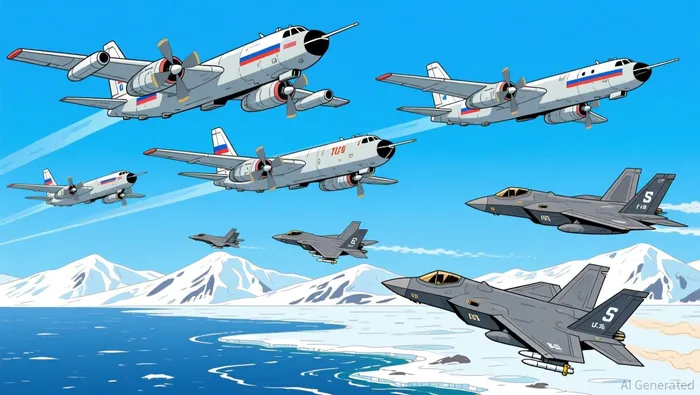
The Alaskan Air Defense Identification Zone is a designated stretch of international airspace near U.S. and Canadian borders. It operates as a buffer for national security, requiring aircraft to identify themselves and comply with specific protocols. When Russian military aircraft enter this zone—whether it's bombers like the Tu-95 or fighter jets like the Su-35— typically responds by deploying its own fighter jets and surveillance planes for identification and escort.
In February 2026, NORAD intercepted five Russian aircraft, , , , off Alaska's western coast. These aircraft remained in international airspace and did not breach U.S. or Canadian sovereign borders. NORAD emphasized that the activity was routine and not a security threat. The U.S. typically uses F-16s, F-35s, and E-3s for these operations, along with refueling tankers like the KC-135 to extend reach and endurance. These missions are part of a long-standing aerospace defense protocol designed to monitor and deter potential threats according to .
How Often Do These Incidents Occur, and What's the Impact on Defense Spending?
NORAD intercepts Russian aircraft multiple times a year, particularly in the Alaskan and Aleutian regions. These operations are part of a larger, strategic effort to monitor Russian airpower and ensure U.S. and Canadian airspace remains secure. , NORAD reported multiple similar incidents involving Russian Tu-95s and Su-35s. , according to .
While the U.S. maintains that these activities are not seen as provocative, they do contribute to a broader context of military deterrence and readiness. For investors, this means increased demand for military assets, particularly fighter jets and surveillance platforms. The F-35 program, KC-135 refueling fleet, and E-3 AWACS surveillance aircraft are all key beneficiaries of this ongoing activity. These trends suggest sustained spending on air superiority and defense readiness, especially in a year when global military tensions are expected to remain high.
Why Should Investors Care About Russian Fighter Jet Activity in the ADIZ?
For retail investors, these incidents may seem like geopolitical theater. However, they often have real-world implications for defense stocks, aerospace companies, and broader market sentiment. Each interception involves real costs—fuel, personnel, maintenance, and technology. These operational demands translate into long-term contracts and procurement opportunities for defense firms like Lockheed MartinLMT-- (LMT), BoeingBA-- (BA), and Raytheon Technologies (RTX). The F-35, KC-135, and E-3 aircraft used in these missions are all produced or maintained by major U.S. defense contractors.
Moreover, these operations reflect a strategic shift in global air defense. Russia has been increasingly aggressive in its military aviation activity near U.S. and NATO territories. This trend, combined with Russian and Chinese joint missions in 2024, signals a potential escalation in international military posturing. For investors, this means watching for further defense budget increases, especially in aerospace and surveillance sectors. Additionally, investors should consider how these patterns might affect stock prices for companies like Kratos Defense & Security SolutionsKTOS-- (KRTS), which provides surveillance and drone systems, or Northrop GrummanNOC-- (NOC), a key player in stealth and satellite systems according to .
What's Next for U.S.-Russian Aerospace Dynamics in 2026?
As 2026 progresses, expect more of the same from Russian aircraft near Alaska. NORAD has not indicated any change in its monitoring or response protocols, and the Alaskan ADIZ remains a key point of tension. The Bering Strait, in particular, is a strategic corridor for military flights, and Russia's continued use of it could lead to more frequent intercepts. Analysts will be watching for signs of escalation, but for now, the U.S. military and its allies remain focused on maintaining deterrence without conflict.
Investors should also keep an eye on the potential for increased defense procurement. With the U.S. maintaining a strong posture in the Pacific and Arctic regions, it's likely that demand for advanced fighter jets, surveillance systems, and refueling capabilities will remain robust. Companies that provide these services, particularly those with contracts through the Air Force or NORAD, may see increased funding and operational contracts in the coming months.
What Should Investors Track Moving Forward?
To stay ahead of market developments related to Russian fighter jet activity, investors should monitor several key indicators. First, watch for NORAD reports and press releases on intercepts and aerospace operations. These often precede defense budget updates or procurement announcements. Second, track defense spending bills and congressional hearings related to U.S. military readiness. These can provide insight into potential contract opportunities for aerospace and defense companies. Third, follow global geopolitical developments, especially those involving Russia and China. If either country increases its presence in the Alaskan or Aleutian regions, it could signal a broader strategic shift with market implications.
For now, these intercepts remain a routine part of U.S.-Russian aerospace relations. But as global tensions persist, the economic and strategic significance of these operations is likely to grow. .

Stay ahead of the market.
Get curated U.S. market news, insights and key dates delivered to your inbox.


AInvest
PRO
AInvest
PRO



Comments
No comments yet