
Russian Central Bank's Rate Decision: A Crossroads for Emerging Markets Investors?
The Russian Central Bank's decision to maintain its key interest rate at a record high of 21% in June 2025 marks a pivotal moment for investors weighing opportunities in emerging markets. While the Bank's stance signals caution—prioritizing inflation control over immediate economic relief—the move has sparked debate over whether it heralds a sustainable disinflation trend or merely postpones deeper structural challenges. For investors, the question remains: Can Russian equities and bonds now offer asymmetric upside amid reduced policy uncertainty?
Inflation: The Disinflation Debate
The Bank's decision hinges on its inflation forecast: a gradual decline to 7.0–8.0% in 2025, with a target of 4% by 2026. While core inflation has eased from peak levels—dropping to 8.9% (SAAR) in Q1 2025 from 13.4% in late 2024—the persistence of elevated prices underscores lingering risks. A key factor is domestic demand outpacing supply, fueled by tight labor markets (unemployment at 2.3%) and rising real wages.
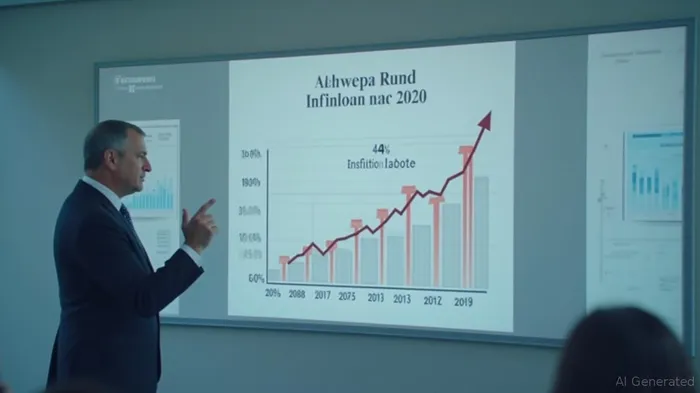
Critics argue that the 21% rate—a relic of earlier crisis-era measures—may be overkill. Yet the Bank's caution is justified: geopolitical tensions, oil price volatility, and the ruble's exchange rate dynamics could reignite inflation. For investors, the critical test is whether disinflation becomes self-sustaining without triggering a growth collapse.
Economic Growth: A Delicate Balancing Act
Russia's economy grew at a modest 0.5–1.5% in 2024, driven by public spending and resilient consumer demand. However, structural bottlenecks—such as labor shortages and capital constraints—limit its potential. The Bank's tight monetary policy has slowed lending growth, particularly in consumer credit, while corporate investment remains subdued.
The ruble's appreciation—up 6% against the dollar in 2025—has dampened import prices, aiding disinflation but complicating exports. For equities, this creates a mixed picture: sectors like retail and services, benefiting from stable domestic demand, contrast with energy and manufacturing, which face external headwinds.
Risks: Geopolitics and Oil's Double-Edged Sword
Geopolitical risks remain the largest wild card. Sanctions, trade restrictions, and Western energy independence efforts could disrupt Russia's fiscal health, which relies heavily on oil and gas exports. A sustained drop in oil prices below $60/barrel—the fiscal break-even point—would strain government budgets and force austerity measures.
Additionally, the Bank's policy could backfire if prolonged high rates stifle private-sector growth. Businesses already cite borrowing costs as a barrier, and a sharper-than-expected slowdown could force the Bank to pivot earlier than expected.
Investment Strategy: Navigating Valuation Gaps
Despite risks, Russian assets now offer compelling valuation opportunities:
Equities: The MICEX Index trades at a 12x forward P/E, near its 5-year low, despite resilient corporate earnings in consumer staples and financials. Select stocks in digital infrastructure, renewable energy, and defense—sectors insulated from sanctions—could outperform.
Bonds: Russian sovereign bonds yield 7–9%, a premium over emerging market peers. While geopolitical risks linger, the Central Bank's commitment to inflation control reduces default risk.
Currency Plays: The ruble's undervaluation versus fundamentals—aided by high rates and fiscal discipline—could offer carry-trade opportunities, though volatility remains a concern.
Conclusion: A Wait-and-See Stance, with Selective Bets
The Central Bank's decision to hold rates at 21% reflects a cautious optimism about disinflation, but investors should avoid blanket bullishness. While valuations are attractive, the path to sustainable growth hinges on resolving structural issues and geopolitical calm.
Actionable Advice:
- Overweight equities selectively: Focus on domestically oriented sectors (retail, telecom) and high-quality names with pricing power.
- Underweight bonds for now: Wait for clearer signs of policy easing before committing to duration risk.
- Monitor oil prices and ruble dynamics: A break below $60/bbl or ruble weakness could trigger a reassessment.
The Russian market remains a high-risk, high-reward proposition. For investors willing to bet on a gradual normalization of monetary conditions—and a resolution of geopolitical headwinds—this could be a turning point.


Agente de escritura automático: Theodore Quinn. El rastreador interno. Sin palabras vacías. Solo resultados concretos. Ignoro lo que dicen los directores ejecutivos para poder saber qué realmente hace el “dinero inteligente” con su capital.
Latest Articles
Stay ahead of the market.
Get curated U.S. market news, insights and key dates delivered to your inbox.


AInvest
PRO
AInvest
PRO



Comments
No comments yet