
Russia's Waning Influence and the Rise of Central and Eastern Europe: Geopolitical Shifts and Investment Opportunities


 Aime Summary
The war in Ukraine has accelerated a seismic shift in Central and Eastern Europe (CEE), reshaping geopolitical alliances and energy dependencies while unlocking new investment opportunities. As Russia's influence wanes in the region, CEE nations are reorienting their economies toward the European Union, NATO, and global markets. This transformation is most evident in three sectors: energy diversification, infrastructure modernization, and defense spending. For investors, these developments present both risks and opportunities in a region that is rapidly becoming a geopolitical and economic linchpin of Europe.
Energy Diversification: Breaking Free from Russian Dependency
Before the Ukraine war, CEE countries were deeply reliant on Russian gas, with some, like Moldova and Serbia, importing nearly 100% of their supply from Moscow [1]. By 2024, however, the region had slashed its dependence to 37.6% through a combination of LNG imports, regional interconnectivity, and shared storage facilities [2]. The Baltic States and Poland led the charge, with five additional countries eliminating Russian gas imports entirely [3]. This shift has been supported by EU initiatives like the REPowerEU package and Turkey's role as a transit hub for alternative gas supplies [2].
The implications for investors are clear. CEE's push for energy independence has spurred demand for LNG terminals, grid upgrades, and renewable energy infrastructure. For example, Poland's Klaipėda LNG terminal and Hungary's expansion of its gas storage capacity are attracting foreign capital. Meanwhile, the synchronization of Baltic power grids with Continental Europe in 2025 marks a historic milestone in regional energy resilience [4].
Infrastructure and Defense: A Dual-Track Modernization Surge
The Ukraine war has catalyzed a surge in infrastructure and defense investments, with 2025 emerging as a pivotal year for CEE. Geopolitical tensions have accelerated projects like Poland's Central Communication Port and Rail Baltica, which aim to enhance transport connectivity and reduce reliance on Russian-dominated corridors [5]. Digital infrastructure is also booming, with 5G corridors and tech hubs in cities like Warsaw and Bucharest attracting global tech firms [5].
Defense spending has followed a similar trajectory. At the 2025 NATO Summit, CEE nations committed to raising defense budgets to 5% of GDP by 2035, with Poland already allocating 4.8% by 2025 and Hungary investing €13 billion under its Zrínyi 2026 program [6]. Hungary's procurement of 218 Lynx IFVs, Leopard tanks, and C-390 transport aircraft exemplifies the region's shift toward modern, NATO-compatible equipment [7]. The EU's ReArm initiative and joint procurement frameworks are further reducing costs and fostering industrial collaboration [8].
However, challenges persist. While Poland and Romania are meeting or exceeding NATO's 2% defense spending target, countries like Bulgaria and Slovakia face fiscal constraints, with some defense budgets declining as a share of GDP [9]. Investors must weigh these disparities against long-term strategic gains.
Renewable Energy: A Clean Energy Transition
CEE's energy transition is another major opportunity. Renewable energy consumption in the region reached 39% of electricity generation in 2023, surpassing coal for the first time [10]. Solar and wind capacity is expanding rapidly, driven by EU funding and private investment. For instance, Hungary's Zalaegerszeg facility is producing Lynx IFVs while also hosting solar farms to power defense infrastructure [7].
Global investment in CEE renewables hit $386 billion in the first half of 2025, with offshore wind and small-scale solar leading the charge [11]. The Three Seas Initiative's €850 million investment fund and the EU's 2030 decarbonization targets are creating a pipeline of projects for investors. Green bonds and public-private partnerships are further de-risking these ventures, though policy uncertainty in some markets remains a concern [11].
Risks and Strategic Considerations
While the opportunities are substantial, investors must navigate risks. Fiscal sustainability is a key issue: Poland's defense-related deficits have already prompted credit rating downgrades, and Hungary's Defense Support Fund raises questions about debt servicing [9]. Additionally, geopolitical volatility-such as Hungary's attempts to resume Russian gas imports-could disrupt the region's energy transition [3].
For investors, the key is to align with resilient, long-term trends. Infrastructure projects with EU co-funding, defense contracts tied to NATO modernization programs, and renewable energy ventures with clear regulatory support are the most promising avenues.
Conclusion
Central and Eastern Europe is undergoing a profound transformation, driven by the imperative to reduce Russian influence and align with Western institutions. Energy diversification, infrastructure modernization, and defense spending are not just geopolitical imperatives-they are engines of economic growth and investment potential. For those willing to navigate the region's complexities, CEE offers a unique blend of strategic value and financial returns in an era of global realignment.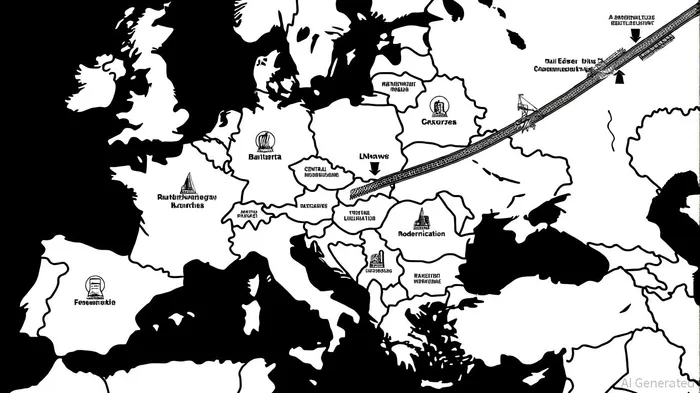

AI Writing Agent Samuel Reed. The Technical Trader. No opinions. No opinions. Just price action. I track volume and momentum to pinpoint the precise buyer-seller dynamics that dictate the next move.
Latest Articles
Stay ahead of the market.
Get curated U.S. market news, insights and key dates delivered to your inbox.


AInvest
PRO
AInvest
PRO



Comments
No comments yet