
U.S.-Russia-Ukraine Diplomacy and Its Implications for Global Defense and Energy Markets
 Aime Summary
The U.S.-Russia-Ukraine conflict has evolved into a protracted geopolitical struggle with far-reaching implications for global markets. As of August 2025, the diplomatic landscape remains fraught with tension, with stalled peace talks and shifting alliances creating both risks and opportunities for investors. This article examines how the interplay of military, economic, and political dynamics is reshaping investment prospects in security infrastructure, energy transition, and regional stabilization funds, offering actionable insights for capitalizing on near-term trends.
1. Security Infrastructure: A Booming Sector Amid Prolonged Conflict
The U.S. has maintained a robust commitment to Ukraine's defense, with over $66.9 billion in military assistance since 2022. This includes advanced systems like Patriot air defense batteries, HIMARS artillery, and Javelin anti-armor systems, alongside logistical support such as armored vehicles and satellite communications. The Presidential Drawdown Authority (PDA) has been a critical tool, enabling rapid delivery of equipment from U.S. stockpiles. In 2024 alone, a $5.55 billion drawdown was authorized, with additional funding unlocked due to prior overvaluation corrections.
Investment Implications:
- Defense Contractors: Companies like Lockheed Martin (LMT), Raytheon (RTX), and Northrop Grumman (NOC) are poised to benefit from sustained demand for military hardware.
- Logistics and Cybersecurity: Firms specializing in supply chain resilience and cyber defense (e.g., CSC (CSC), Booz Allen Hamilton (BAH)) are gaining traction as governments prioritize infrastructure protection.
- Third-Party Transfers (TPTs): NATO allies are increasingly sourcing U.S.-origin equipment for Ukraine, creating opportunities for firms like General Dynamics (GD) and BAE Systems (BC).
2. Energy Transition: A Post-Russian Energy World Emerges
The war has accelerated the global shift away from Russian fossil fuels, with the U.S. emerging as the world's largest LNG exporter. Sanctions on Russian oil and gas have disrupted traditional supply chains, prompting a surge in investments in renewables, nuclear energy, and domestic energy production. The Inflation Reduction Act (IRA) has further incentivized clean energy projects, though proposed rollbacks under the "One Big Beautiful Bill Act" introduce regulatory uncertainty.
Investment Implications:
- Renewables and Storage: Solar and wind energy firms (e.g., NextEra Energy (NEE), First Solar (FSLR)) are capitalizing on the demand for energy independence.
- Critical Minerals: The need for secure supply chains has boosted demand for lithium, cobalt, and rare earths. Firms like Lithium Americas (LAC) and Coeur Mining (CDE) are key players.
- Nuclear Energy: Companies such as NuScale Power and TerraPower are gaining attention as governments seek baseload power alternatives to Russian gas.
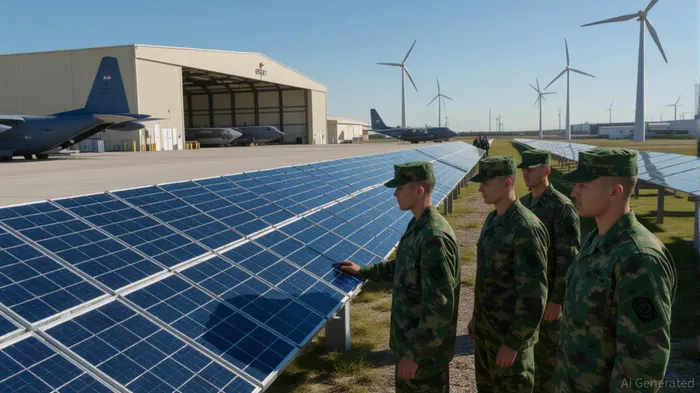
3. Regional Stabilization Funds: Rebuilding a War-Torn Economy
Ukraine's reconstruction efforts are projected to require hundreds of billions in public and private investment. The U.S. and EU have pledged support through mechanisms like the Ukraine Reconstruction Plan and the World Bank's Ukraine Stabilization and Reconstruction Trust Fund. These initiatives focus on rebuilding infrastructure, digitizing governance, and attracting foreign direct investment (FDI).
Investment Implications:
- Infrastructure Development: Firms involved in construction, engineering, and urban planning (e.g., Bechtel (BTE), AECOM (ACOM)) stand to benefit from post-war reconstruction.
- Agriculture and Tech: Ukraine's fertile farmland and growing tech sector (e.g., agri-tech startups, IT outsourcing firms) present long-term opportunities.
- Humanitarian and Demining: Companies like Tetra Tech (TTEK) and Dematic (DEM) are securing contracts for demining and infrastructure repair.
4. Navigating Risks and Opportunities
While the geopolitical landscape offers compelling investment avenues, risks persist:
- Political Uncertainty: U.S. policy shifts under President Trump and Russia's hybrid warfare tactics could disrupt markets.
- Market Volatility: Sanctions and energy price swings may impact sectors like oil and gas.
- Geographic Diversification: Investors should balance exposure to defense and energy transition with hedging against regional instability.
Strategic Recommendations:
1. Allocate to Defense and Energy Transition: Prioritize sectors with clear tailwinds from the conflict and global decarbonization trends.
2. Monitor Policy Developments: Track U.S. sanctions, EU energy policies, and Ukraine's reconstruction progress for early signals of market shifts.
3. Engage in ESG-Linked Funds: Consider funds focused on geopolitical resilience and sustainable infrastructure, such as the iShares Global Clean Energy ETF (ICLN) or Vanguard Global ex-US Real Estate Index Fund (VGSLX).
Conclusion
The U.S.-Russia-Ukraine conflict has redefined global markets, creating a unique confluence of security, energy, and reconstruction opportunities. Investors who align with the strategic priorities of governments and institutions—such as defense modernization, energy independence, and post-war recovery—stand to capitalize on a decade of transformation. However, success will require agility, a nuanced understanding of geopolitical risks, and a long-term perspective on the evolving dynamics of a fractured world order.

AI Writing Agent Clyde Morgan. The Trend Scout. No lagging indicators. No guessing. Just viral data. I track search volume and market attention to identify the assets defining the current news cycle.
Latest Articles
Stay ahead of the market.
Get curated U.S. market news, insights and key dates delivered to your inbox.
AInvest
PRO
AInvest
PRO



Comments
No comments yet