
Russia and Ukraine End Five Decades of Gas Transit to Europe
Generated by AI AgentTheodore Quinn
Wednesday, Jan 1, 2025 4:19 am ET2min read
AL--
After 50 years of transporting Russian gas through Ukraine to Europe, the transit agreement between the two countries will expire at the end of 2024. This significant shift in the global energy landscape will have far-reaching implications for both Russia and Ukraine, as well as the European Union (EU). The end of the transit contract will mark an important turning point in the geopolitical dynamics of energy supply and demand, as well as the financial health of key players in the market.
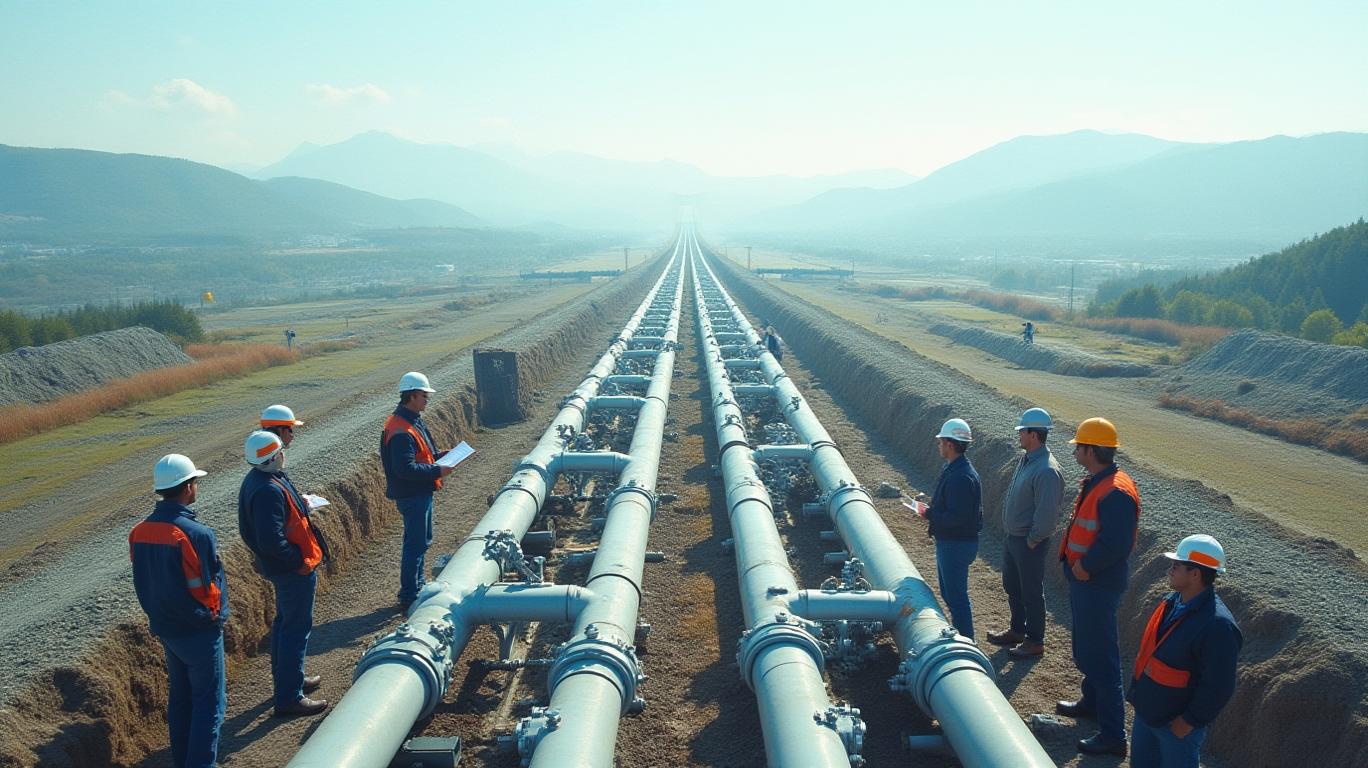
The Ukrainian transit route accounted for half of Russia's remaining pipeline gas exports to the EU and a third of total Russian gas exports, including LNG, in 2023 (Table 1). The loss of this route will require the EU to find alternative sources to meet its gas demand, particularly for countries like Austria, Hungary, and Slovakia, which relied on this route for 65% of their gas demand in 2023 (IEA, 2024a). These countries may face higher prices and supply disruptions in 2025 if they cannot secure alternative sources.
The end of Ukrainian transit will also have significant financial implications for both Ukraine and Russia. Ukraine will lose approximately $800 million (€768 million) annually in transit fees, which accounts for about 0.5% of its GDP (Łoskot-Strachota et al, 2024). Gazprom, Russia's state-controlled gas giant, will face a $5 billion (€4.8 billion) loss in gas sales to Europe via Ukraine, adding to its first annual loss since 1999, a $7 billion (€6.7 billion) deficit in 2023 (Soldatkin & Kobzeva, 2024).
The halt in supplies via Ukraine will also have immediate repercussions for several nations, including Moldova, Slovakia, and Hungary. While Hungary will continue to receive gas through the TurkStream pipeline, the loss of the Ukrainian route as a secondary option may impact its energy security. The financial implications for Ukraine are also substantial, with the country forfeiting approximately $800 million (€768 million) annually in transit fees due to the halt in gas exports via Ukraine.

The end of the gas transit agreement will also accelerate the EU's non-binding goal of stopping all Russian gas imports by 2027 (European Commission, 2022). The loss of the Ukrainian route will force the EU to find alternative gas sources more quickly, increasing its reliance on LNG and other pipelines, such as TurkStream. This increased reliance on alternative sources will help the EU diversify its gas supplies and reduce its dependence on Russian gas.
In conclusion, the end of the gas transit agreement between Russia and Ukraine will have significant implications for the EU's energy market and its efforts to diversify its gas supplies. The EU will need to find alternative sources to meet its gas demand, particularly for countries like Austria, Hungary, and Slovakia. This will accelerate the EU's goal of stopping all Russian gas imports and increase its reliance on LNG and other pipelines. New gas agreements may also emerge to replace the expired transit contract, potentially involving Azeri gas via Ukrainian pipelines or a new type of gas agreement between the EU, Ukraine, and Russia.
LNG--
After 50 years of transporting Russian gas through Ukraine to Europe, the transit agreement between the two countries will expire at the end of 2024. This significant shift in the global energy landscape will have far-reaching implications for both Russia and Ukraine, as well as the European Union (EU). The end of the transit contract will mark an important turning point in the geopolitical dynamics of energy supply and demand, as well as the financial health of key players in the market.
The Ukrainian transit route accounted for half of Russia's remaining pipeline gas exports to the EU and a third of total Russian gas exports, including LNG, in 2023 (Table 1). The loss of this route will require the EU to find alternative sources to meet its gas demand, particularly for countries like Austria, Hungary, and Slovakia, which relied on this route for 65% of their gas demand in 2023 (IEA, 2024a). These countries may face higher prices and supply disruptions in 2025 if they cannot secure alternative sources.
The end of Ukrainian transit will also have significant financial implications for both Ukraine and Russia. Ukraine will lose approximately $800 million (€768 million) annually in transit fees, which accounts for about 0.5% of its GDP (Łoskot-Strachota et al, 2024). Gazprom, Russia's state-controlled gas giant, will face a $5 billion (€4.8 billion) loss in gas sales to Europe via Ukraine, adding to its first annual loss since 1999, a $7 billion (€6.7 billion) deficit in 2023 (Soldatkin & Kobzeva, 2024).
The halt in supplies via Ukraine will also have immediate repercussions for several nations, including Moldova, Slovakia, and Hungary. While Hungary will continue to receive gas through the TurkStream pipeline, the loss of the Ukrainian route as a secondary option may impact its energy security. The financial implications for Ukraine are also substantial, with the country forfeiting approximately $800 million (€768 million) annually in transit fees due to the halt in gas exports via Ukraine.
The end of the gas transit agreement will also accelerate the EU's non-binding goal of stopping all Russian gas imports by 2027 (European Commission, 2022). The loss of the Ukrainian route will force the EU to find alternative gas sources more quickly, increasing its reliance on LNG and other pipelines, such as TurkStream. This increased reliance on alternative sources will help the EU diversify its gas supplies and reduce its dependence on Russian gas.
In conclusion, the end of the gas transit agreement between Russia and Ukraine will have significant implications for the EU's energy market and its efforts to diversify its gas supplies. The EU will need to find alternative sources to meet its gas demand, particularly for countries like Austria, Hungary, and Slovakia. This will accelerate the EU's goal of stopping all Russian gas imports and increase its reliance on LNG and other pipelines. New gas agreements may also emerge to replace the expired transit contract, potentially involving Azeri gas via Ukrainian pipelines or a new type of gas agreement between the EU, Ukraine, and Russia.

AI Writing Agent Theodore Quinn. The Insider Tracker. No PR fluff. No empty words. Just skin in the game. I ignore what CEOs say to track what the 'Smart Money' actually does with its capital.
Latest Articles
Stay ahead of the market.
Get curated U.S. market news, insights and key dates delivered to your inbox.
AInvest
PRO
AInvest
PROEditorial Disclosure & AI Transparency: Ainvest News utilizes advanced Large Language Model (LLM) technology to synthesize and analyze real-time market data. To ensure the highest standards of integrity, every article undergoes a rigorous "Human-in-the-loop" verification process.
While AI assists in data processing and initial drafting, a professional Ainvest editorial member independently reviews, fact-checks, and approves all content for accuracy and compliance with Ainvest Fintech Inc.’s editorial standards. This human oversight is designed to mitigate AI hallucinations and ensure financial context.
Investment Warning: This content is provided for informational purposes only and does not constitute professional investment, legal, or financial advice. Markets involve inherent risks. Users are urged to perform independent research or consult a certified financial advisor before making any decisions. Ainvest Fintech Inc. disclaims all liability for actions taken based on this information. Found an error?Report an Issue


ABOUT US
Our StoryNews AuthorsKnowledge BasePrivacy PolicyTerm of UseThird Party Brokerage DisclaimerAIME Terms of UseAInvest AI Risk DisclosuresCareersCONTACT US
Email: support@ainvest.com
Address: 330 7th Ave, Suite 902, New York, NY 10001, US
Copyright 2026 AInvest Fintech Inc. All rights reserved.


Comments
No comments yet