
Russia's Trade Surplus Grows, But Fiscal Crisis Deepens
 Aime Summary
Russia's trade balance recorded a surplus of $10.02 billion in February 2026, exceeding the previous month's surplus of $6.80 billion. The surplus indicates continued export strength, but broader economic indicators—such as declining oil revenues and a deepening fiscal crisis—paint a more complex picture. The surplus may temporarily ease some budgetary pressures, but it does not offset structural weaknesses in the economy. Investors are advised to monitor how the surplus interacts with rising domestic borrowing and inflationary pressures. The surplus could also lead to increased domestic liquidity, but it does not signal a broader economic recovery.
The Russian trade balance for February 2026 came in at a $10.02 billion surplus, surpassing the $6.80 billion surplus recorded in the previous month and published at 21:00 UTC. While this increase suggests continued export strength, it is a narrow indicator amid broader economic strain. Russia's economy is increasingly burdened by declining oil and gas revenues, high-interest rates, and domestic borrowing pressures that are feeding inflation and slowing growth.
What the February 2026 Russia Trade Balance Data Revealed
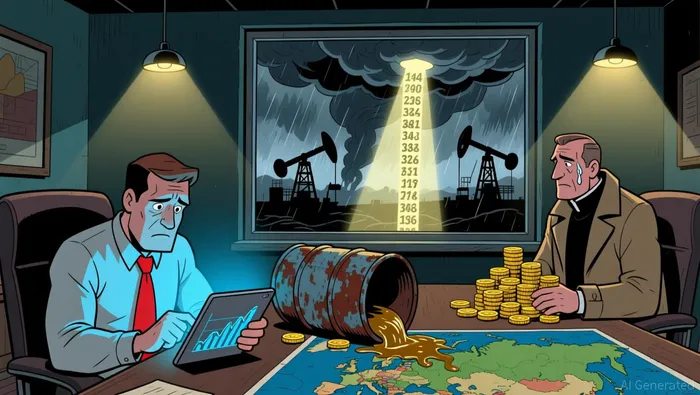
Despite the widening trade surplus, the broader economic context remains fragile. Russia’s oil and gas revenues have sharply declined, reaching $5.1 billion in January 2026, the lowest since the pandemic's peak. This decline has forced the government to raise taxes and increase domestic borrowing, exacerbating inflation and reducing fiscal flexibility. The Central Bank of Russia has maintained an interest rate of 16%, aiming to curb inflation but also deterring private borrowing and worsening economic stagnation.
The trade surplus may provide some temporary relief for the government's strained budget. However, the surplus alone is not sufficient to offset the broader fiscal challenges. The government has limited access to international capital markets and is increasingly constrained in its ability to finance growing deficits. As of early 2026, the combined deficit of federal, regional, and social funds has reached 4% of GDP.
Why the Trade Balance Matters in a Stressed Russian Economy
The trade balance serves as a snapshot of Russia's external economic position, but its significance in 2026 is complicated by a deteriorating internal economy. While a higher surplus might suggest improved competitiveness or export resilience, it does not address the root causes of Russia's economic slowdown: declining investment, rising inflation, and structural imbalances in its economy.
The surplus may lead to increased domestic liquidity, but this is unlikely to stimulate growth. Instead, it could contribute to further inflationary pressures as the government continues to borrow domestically to cover its budget shortfalls. The Central Bank is caught between maintaining high interest rates to control inflation and the need to support a faltering economy.
The broader picture is one of a government struggling to maintain stability while dealing with shrinking energy revenues and a growing fiscal deficit. As Russia's economy becomes increasingly self-reliant, the trade surplus may become one of the few positive indicators in an otherwise bleak economic landscape.
What Investors Should Watch Next in the Russian Economic Outlook
Investors should monitor several key developments in the coming months:
First, watch for changes in the Central Bank's monetary policy. With inflation still at 5.6% and the interest rate at 16%, the bank faces a difficult balancing act. Any shift in policy could have significant implications for the ruble, inflation, and overall economic stability.
Second, pay attention to oil and gas revenue trends. These remain the lifeblood of Russia's economy. If revenues continue to decline, the government may be forced to take even more drastic measures, such as increasing domestic borrowing or raising taxes further, which could trigger deeper economic contraction. According to reports, these trends are a major concern for the economy.
Third, monitor the potential for a banking crisis. Russian economist Igor Lipsits has warned that the banking system is under severe strain, with problematic assets now exceeding 10% of total assets. A banking collapse could have far-reaching consequences for the broader economy and the government's ability to fund its operations.
Finally, keep an eye on geopolitical developments. Sanctions and international pressure on the Russian shadow fleet continue to limit oil exports. A further tightening of these policies could reduce the trade surplus and worsen the fiscal situation.
In summary, while the trade surplus may offer a brief reprieve from some fiscal pressures, it does not indicate a broader economic recovery. Investors should continue to approach Russian economic indicators with caution and remain attentive to the interplay of domestic and international factors shaping the country's economic outlook.

Stay ahead of the market.
Get curated U.S. market news, insights and key dates delivered to your inbox.


AInvest
PRO
AInvest
PRO



Comments
No comments yet