
U.S.-Russia Summit in Alaska Aims to Assess Ukraine Conflict Resolution
 Aime Summary
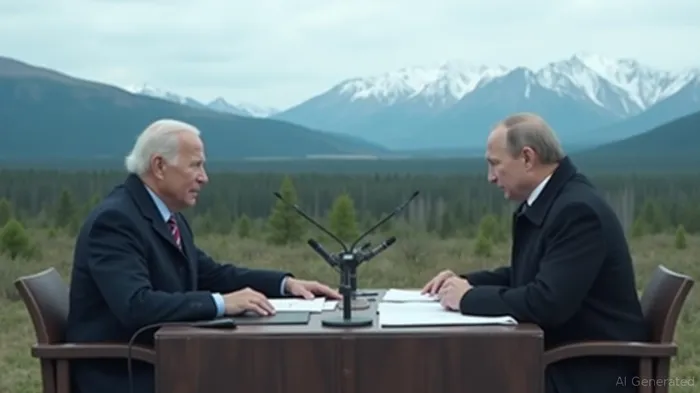
The United States President and the Russian President are scheduled to meet in Alaska this Friday, marking their first in-person meeting in six years. The President described this encounter as a trial run, aimed at assessing the Russian President's willingness to end the conflict in Ukraine. During a press conference at the White House, the President characterized the meeting as exploratory, highlighting the potential for constructive dialogue. He stated his intention to urge the Russian President to end the war.
The President expressed confidence that within the first two minutes of the meeting, he would have a clear sense of whether an agreement could be reached. He suggested that his response to the Russian President could range from wishing him luck in continuing the fight to exploring the possibility of a deal. When questioned about how he would determine the feasibility of an agreement, the President asserted that it was part of his job to assess such situations, given his expertise in negotiations.
The President has adopted a firm stance on Russia, approving the supply of additional American weapons to Ukraine and threatening tariffs on Russian oil buyers. However, there are concerns from Ukraine and Europe that the President might agree to a deal that forces significant concessions from Kyiv. The President acknowledged that any potential agreement would likely involve territorial exchanges, stating that both Russia and Ukraine would need to cede land to resolve the conflict.
Despite the meeting's exploratory nature, the President downplayed the likelihood of it immediately ending the war in Ukraine, noting that reaching an agreement is not solely within his control. He also mentioned plans to speak with the Ukrainian President following the meeting, either in a separate call or a joint session with the Russian President. Additionally, he intends to consult with European leaders after the meeting.
Ukraine has expressed apprehension about being sidelined in direct U.S.-Russia talks. The Ukrainian President has emphasized the importance of Ukraine's involvement in any negotiations, calling for European nations to participate as well. He reiterated Ukraine's willingness to accept a genuine peace solution but refused to make territorial concessions to Russia. The Ukrainian President also urged the international community to increase pressure on Russia, asserting that the Russian President's actions do not indicate a genuine pursuit of peace.
The Vice President stated that the U.S. is coordinating a meeting between the Russian and Ukrainian Presidents to discuss ending the conflict, while maintaining open communication channels with Ukraine. However, the Vice President believes that a meeting between the Russian and Ukrainian Presidents before the U.S.-Russia summit would not be productive. Following the Alaska meeting, the Russian President's aide indicated that the next U.S.-Russia summit would take place in Russia, with an invitation already extended to the U.S.

Stay ahead of the market.
Get curated U.S. market news, insights and key dates delivered to your inbox.






Comments
No comments yet