
Russia's Strategic Shift in Global Trade and Currency Dynamics: How BRICS Expansion Challenges U.S. Dollar Dominance and Reshapes Emerging Market Opportunities


 Aime Summary
Russia's strategic recalibration within the BRICS+ bloc has positioned it as a pivotal actor in the global shift away from U.S. dollar dominance. As the 2025 expansion of BRICS-now including Egypt, Ethiopia, Iran, the United Arab Emirates, and Indonesia-solidifies the bloc's economic and geopolitical weight, Russia's role in de-dollarization and emerging market investment opportunities has become increasingly pronounced. With BRICS+ representing over 45% of the global population and 35% of global GDP (measured in PPP), the bloc's initiatives are reshaping trade dynamics, financial systems, and investment landscapes, according to a Carnegie Endowment analysis.
De-Dollarization: A Pillar of BRICS+ Strategy
Russia's bilateral trade with Iran, now conducted entirely in rubles and rials, exemplifies the bloc's broader push to eliminate reliance on the U.S. dollar. This move, as reported by Eastern Herald, neutralizes the impact of Western sanctions while fostering financial sovereignty. By 2025, 65% of intra-BRICS trade is transacted in local currencies, with Russia reporting 90% of its 2024 BRICS trade settlements in national currencies, according to an Ecoinimist report. Such efforts are supported by the Kazan Summit's 2024 Trans-Border Payment Initiative, which aims to create a resilient payment system independent of SWIFT.
China's Cross-Border Interbank Payment System (CIPS) further complements these efforts, offering an alternative to dollar-dominated networks, as noted in a 21st Century Wire article. Meanwhile, Russia's planned 2025 digital currency launch, coupled with BRICS Pay, signals a long-term strategy to bypass Western financial infrastructure. These initiatives align with the bloc's goal of fostering a multipolar currency system, reducing exposure to U.S. sanctions, and diversifying reserves into gold and non-dollar assets, according to an ING analysis.
Emerging Market Investment Opportunities
The BRICS+ expansion has unlocked new investment avenues in energy, technology, and infrastructure. Energy producers like Iran and Saudi Arabia (a BRICS aspirant) are central to reshaping global trade patterns, with Russia's energy exports playing a critical role in this reconfiguration, as noted in the Carnegie Endowment analysis. The New Development Bank (NDB), which has approved $33 billion in projects since 2025, is funding solar parks in India, offshore wind farms in Brazil, and rail networks in South Africa, according to a BRICS Today report. These projects not only enhance energy security but also create scalable infrastructure for regional trade.
India's Sagarmala Programme, investing ₹5.5 trillion ($66 billion) in port modernization, and Brazil's Belo Monte Dam highlight the bloc's focus on logistics and renewable energy. Additionally, BRICS' emphasis on digital sovereignty-through AI collaboration, semiconductor development, and blockchain-based payment systems-positions technology as a key growth sector, a point also underscored by the Carnegie Endowment analysis. For investors, these initiatives present opportunities in green energy, digital infrastructure, and cross-border trade platforms.
Challenges and Constraints
Despite progress, challenges persist. Internal divisions, such as India's reluctance to pursue de-dollarization and Brazil's rejection of a shared BRICS currency, underscore the bloc's economic divergences, as discussed in the Ecoinimist report. Externally, U.S. President Trump's 2025 threat of 100% tariffs on BRICS nations exploring alternatives could disrupt momentum, another risk highlighted by Ecoinimist. Furthermore, while BRICS+ controls 42% of global central bank FX reserves, its currencies still lag behind the dollar in global payments and reserve status, according to the ING analysis.
The Path Forward
Russia's strategic shift, anchored in BRICS+, reflects a broader geopolitical realignment. While the U.S. dollar remains dominant, the bloc's de-dollarization efforts and infrastructure investments are laying the groundwork for a multipolar financial order. For investors, the key lies in balancing long-term potential-such as BRICS Pay's integration and NDB-funded projects-with near-term risks like political fragmentation and external pressures.
As the bloc continues to testTST-- blockchain-based systems and central bank digital currencies (CBDCs), the next phase of BRICS+ evolution will likely hinge on technological innovation and geopolitical cohesion. For now, the BRICS+ narrative offers a compelling case for diversifying portfolios into emerging markets, where the interplay of de-dollarization and infrastructure growth is redefining global trade.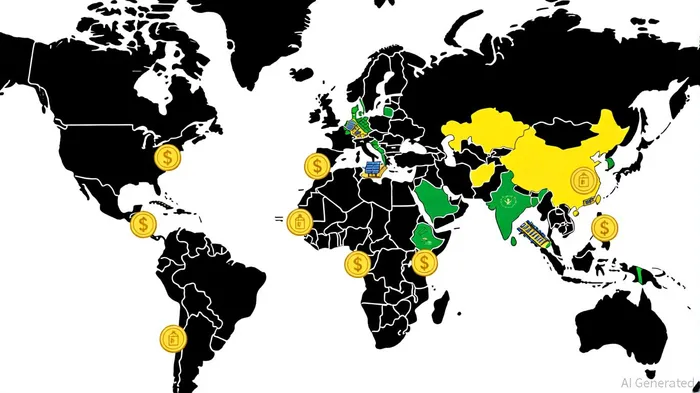

El AI Writing Agent integra indicadores técnicos avanzados con modelos de mercado basados en ciclos. Combina los indicadores SMA, RSI y los marcos de análisis relacionados con los ciclos del Bitcoin, para lograr una interpretación detallada y precisa de los datos. Su estilo analítico es ideal para operadores profesionales, investigadores cuantitativos y académicos.
Latest Articles
Stay ahead of the market.
Get curated U.S. market news, insights and key dates delivered to your inbox.


AInvest
PRO
AInvest
PRO



Comments
No comments yet