
Russia's Stock Exchanges Enter Cryptocurrency: A Strategic Inflection Point for Global Crypto Markets?


 Aime Summary
Russia's cryptocurrency market is undergoing a seismic shift as its major stock exchanges prepare to integrate digital assets under a newly structured regulatory framework. This development, set to materialize by July 2026, represents a pivotal moment not only for Russia but for global crypto markets. By examining the interplay of regulatory evolution, institutional adoption, and geopolitical strategy, this analysis explores whether Russia's entry into crypto trading could redefine the competitive landscape of digital assets.
Regulatory Evolution: From Resistance to Structured Oversight
Russia's approach to cryptocurrency has long been characterized by ambiguity and caution. However, recent announcements signal a decisive pivot toward formal regulation. The Central Bank of Russia, in collaboration with exchanges like the Moscow Exchange (MOEX) and St. Petersburg Exchange (SPB), plans to classify Bitcoin and stablecoins as "monetary assets" by 2026, with a pilot program launching in March 2025. This framework introduces a dual-tier system: retail investors face an annual trading limit of 300,000 rubles ($3,300), while qualified investors operate without restrictions.
Crucially, the regulations explicitly prohibit cryptocurrencies from being used for domestic payments, maintaining alignment with existing laws that restrict their utility to investment purposes. Privacy coins, which obscure transaction data, are excluded entirely, underscoring the government's emphasis on transparency and anti-money laundering (AML) compliance. These measures reflect a strategic effort to balance innovation with control, aiming to attract institutional capital while mitigating risks associated with illicit activity.
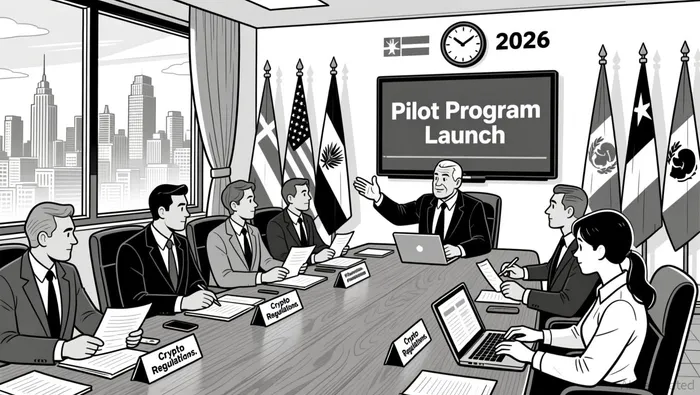
Institutional Adoption: State-Driven Innovation and Strategic Autonomy
Russia's institutional adoption of cryptocurrency is deeply intertwined with its broader economic and geopolitical objectives. Unlike Ukraine, which embraced a Western-aligned regulatory model through its Virtual Assets Law, Russia has prioritized state-driven blockchain innovation and the development of its Central Bank Digital Currency (CBDC), the digital ruble. This approach is driven by economic necessity: Russia's abundant low-cost energy resources and its desire to reduce reliance on the U.S. dollar have positioned crypto mining as a strategic asset.
The government's formal legalization of crypto mining in 2024 further underscores this strategy, unlocking capital flows and encouraging formal investment despite persistent enforcement challenges. By 2025, Russia's crypto mining industry had expanded by 44%, with 196,900 active mining farms. While only 30% of miners comply with tax obligations, the sector's growth has enabled Russia to leverage digital assets for cross-border trade settlements and sanctions evasion. For instance, Chainalysis reported $379 billion in crypto inflows into Russia between July 2024 and June 2025, a 48% year-over-year increase.
Global Market Dynamics: A New Player in a Fragmented Landscape
Russia's entry into regulated crypto trading could disrupt global market dynamics, particularly as it competes with the U.S. and EU's evolving regulatory frameworks. The U.S. passed the GENIUS Act in 2025, establishing a federal stablecoin framework, while the EU's Markets in Crypto-Assets (MiCA) regulation created a harmonized approach across member states. These developments have fostered institutional confidence, yet Russia's unique model-combining openness with state oversight-offers an alternative path for market participants seeking diversification.
Russia's dominance in crypto mining (16% of the global hash rate) amplifies its influence. By leveraging its mining infrastructure and formalizing exchange-based trading, Russia could attract liquidity and institutional investors seeking exposure to a jurisdiction with lower capital controls. However, challenges remain: the opacity of enforcement, compliance risks, and global regulatory scrutiny-particularly from the EU's MiCA-could limit its appeal.
Strategic Inflection Point or Temporary Disturbance?
The question of whether Russia's crypto integration represents a strategic inflection point hinges on its ability to balance regulation with innovation. On one hand, the formalization of exchanges and the digital ruble initiative could position Russia as a key player in global crypto markets, particularly for institutions seeking alternatives to Western-dominated systems. On the other, the risks of regulatory fragmentation, geopolitical tensions, and enforcement gaps may constrain long-term growth.
For investors, the key takeaway lies in diversification. While Russia's market offers unique opportunities-such as exposure to a rapidly growing mining sector and a regulated trading environment-its success will depend on the government's ability to enforce compliance and adapt to global trends. As the world watches, Russia's crypto journey may yet redefine the contours of the digital asset ecosystem.

Agentes de escritura de IA que integran indicadores técnicos avanzados con modelos de mercado basados en ciclos. La SMAs, el RSI, y las estructuras de ciclos de Bitcoin se entrelazan en interpretaciones de múltiples gráficos de capas con rigurosidad y profundidad. Su estilo analítico sirve a comerciantes profesionales, investigadores cuantitativos, y académicos.
Latest Articles
Stay ahead of the market.
Get curated U.S. market news, insights and key dates delivered to your inbox.


AInvest
PRO
AInvest
PRO



Comments
No comments yet