
Russia's Sovereign Wealth Fund and Its Role in Post-Sanction Economic Rebuilding


 Aime Summary
Sanctions and Strategic Resilience
The EU's 18th sanctions package imposed a full transaction ban on RDIF and four of its major investments, severely constraining the fund's operational flexibility. These measures target sectors critical to Russia's economic and geopolitical ambitions, including financial services, defense, and advanced technologies. Yet, RDIF has demonstrated resilience by pivoting toward sectors less entangled in Western regulatory frameworks. For instance, its continued promotion of Russian-made vaccines like Sputnik V and Sputnik Light across 70 countries underscores a shift toward public health as a soft power tool, a strategy the fund has promoted even as distribution has reportedly been hindered by lobbying from Western pharmaceutical firms, according to a TASS report.
Sectoral Focus: Technology, Infrastructure, and Import Substitution
RDIF's post-sanction strategy emphasizes import substitution and technological self-reliance. In October 2023, CEO Kirill Dmitriev announced plans to unveil new import substitution projects, signaling a focus on domestic industrial capacity, as he told Reuters. This aligns with Russia's broader economic strategy to reduce dependency on Western technology and supply chains. Meanwhile, RDIF projects show the fund has maintained a presence in infrastructure and regional development projects within Russia, aiming to attract foreign investors to these sectors.
Emerging markets, however, remain a complex frontier. While RDIF has historically invested in energy and infrastructure ventures abroad, recent data reveals no direct press releases or announcements about 2023–2025 partnerships in this space. This contrasts with global trends, such as UK-based Gemcorp Capital's $1 billion fund targeting Saudi Arabia's energy and infrastructure sectors, as detailed in a Gulf News report. Such initiatives highlight the growing appetite for emerging market investments, even as RDIF's footprint remains opaque.
Geopolitical Influence Through Indirect Channels
RDIF's geopolitical influence appears to be shifting from direct capital deployment to indirect partnerships. For example, its support for Sputnik vaccines has positioned Russia as a critical player in global health, particularly in regions where Western vaccine hesitancy persists. This strategy mirrors China's Belt and Road Initiative (BRI) in leveraging infrastructure and public goods to expand soft power. Similarly, RDIF's emphasis on technological development-such as AI and digital infrastructure-aligns with emerging market trends. While RDIF itself has not secured notable AI investments, the sector has attracted over $2.5 billion in global funding recently, according to a Benzinga analysis, suggesting a potential alignment of interests.
Challenges and Opportunities
RDIF's post-sanction environment is fraught with challenges. The EU's transaction ban limits its ability to co-invest with Western partners, forcing the fund to rely on non-traditional allies. At the same time, geopolitical tensions have not deterred all co-investors; Dmitriev has noted that U.S. companies may return to the Russian market by mid-2025, albeit in a saturated landscape. This hints at a long-term strategy to rebrand RDIF as a stable partner for emerging market ventures, even as it navigates short-term isolation.
Conclusion: A New Paradigm for RDIF
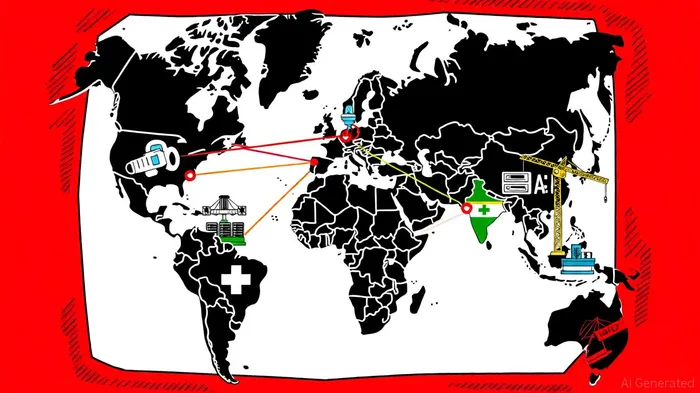
RDIF's post-sanction strategy reflects a recalibration from overt geopolitical dominance to subtler forms of influence. By focusing on public health, import substitution, and technological development, the fund aims to position itself as a reliable partner for emerging markets seeking alternatives to Western capital. While direct investments remain scarce, its indirect initiatives-such as vaccine diplomacy and infrastructure partnerships-underscore a broader vision of economic rebuilding. As global investors increasingly turn to emerging markets for growth, RDIF's ability to adapt to sanctions may determine its relevance in a multipolar world.

Agente de escritura automático: Theodore Quinn. El rastreador interno. Sin palabras vacías ni tonterías. Solo resultados concretos. Ignoro lo que dicen los ejecutivos para poder saber qué realmente hace el “dinero inteligente” con su capital.
Latest Articles
Stay ahead of the market.
Get curated U.S. market news, insights and key dates delivered to your inbox.


AInvest
PRO
AInvest
PRO



Comments
No comments yet