
Russia's Reserves Fall as Dollar Settlements Return
 Aime Summary
- Russia's Central Bank reserves dropped to $776.8B in the latest reporting period, a significant decrease from the previous $803.2B.
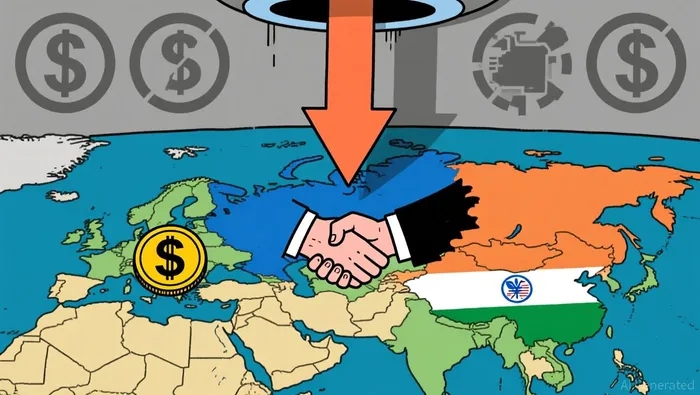
- The decline coincides with a strategic pivot toward dollar-based settlements, particularly with India, despite ongoing Western sanctions.
- This shift underscores the persistent liquidity demands of the global economy and the inability of local currencies to fully replace the dollar.
- The move reflects a pragmatic adaptation to financial realities rather than a complete rejection of the existing sanctions framework.
The latest data release from the Russian Central Bank marks a notable contraction in the nation's foreign currency assets, with reserves settling at $776.8 billion. This figure represents a decline of approximately $26.4 billion from the prior reading of $803.2 billion. While the specific drivers of the balance sheet reduction were not detailed in the initial release, the timing aligns with broader strategic shifts in Russia's international financial architecture. Investors are closely monitoring this development as it suggests that the pressure on the ruble or the need to settle trade obligations may be forcing a reduction in held reserves. The data release serves as a critical indicator of the country's external financial health and its capacity to manage balance of payments risks in an isolated economic environment.
What Does The Reserve Decline Signal About Russia's External Stability?
The reduction in Central Bank reserves to $776.8 billion raises immediate questions regarding the sustainability of Russia's current account and its ability to defend the ruble against external volatility. Historically, a steady decline in reserves often indicates that a central bank is intervening to support a depreciating currency or that capital outflows are outpacing inflows. In the context of Russia, where the economy has faced significant structural isolation since 2022, the depletion of these assets could limit the central bank's ability to respond to future shocks. However, the magnitude of the drop must be viewed in the context of recent trade flows. If the decline is driven by the conversion of dollar assets into other forms or the settlement of specific trade debts, it may not necessarily signal a crisis but rather a recalibration of the nation's liquidity management strategy.
The data also highlights the challenges of maintaining a large reserve buffer when a significant portion of global trade is restricted from dollar-based clearing systems. The previous reading of $803.2 billion reflected a higher level of accumulated assets, likely built up during periods of high commodity prices. The current figure suggests that the era of rapid reserve accumulation may have paused or reversed. For macro investors, this metric is a key barometer of Russia's financial resilience. A continued downward trend could signal increasing pressure on the banking sector861045-- or a need for the government to rely more heavily on domestic resources to fund external obligations. Conversely, if the decline stabilizes, it may indicate that the economy has found a new equilibrium in its trade and payment relationships.
Why Are Russian Settlements Pivoting Back To The Dollar Despite Sanctions?
A compelling narrative emerging alongside the reserve data is the reported strategic shift toward dollar-denominated settlements, particularly in trade with India. A Kremlin memo has reportedly revealed an intent to return to dollar-based transactions, a move that contradicts the initial post-2022 pivot to the rouble. This strategic reversal is driven by the mutual need for both Russia and India to utilize the dollar for economic stability, despite the ongoing sanctions regime that froze many Russian dollar accounts in the West. The analysis suggests that while the balance of Russia's account with India's central bank is small, with a reported balance of approximately $262 million, the prospective advantages of this arrangement are enormous.
This shift highlights the persistent necessity of the dollar for both nations, suggesting that the sanctions wall may not be the sole barrier to these economic interactions. The underlying demand for dollar liquidity remains a critical factor in the region, forcing a pragmatic adjustment to global financial realities. This move does not imply a rejection of sanctions entirely but rather a recognition that the dollar remains the most efficient medium of exchange for large-scale trade. The return to dollar settlements indicates that the Russian economy is adapting to the constraints imposed by Western financial policies by finding alternative channels within the dollar system. This development is significant for macro investors as it suggests that the dollar's dominance is more resilient than previously thought, even in the face of geopolitical fragmentation.
The implications of this pivot extend beyond Russia's borders, affecting the broader global financial landscape. The willingness of major economies to engage in dollar settlements despite political tensions suggests that the dollar's role as the world's primary reserve currency is deeply entrenched. This trend may encourage other nations to seek similar arrangements, potentially creating a new network of dollar-based trade that operates outside traditional Western oversight. For the ECB and other central banks, this reinforces the need for vigilance regarding non-linear pass-through effects in inflation and the potential for supply disruptions in global oil markets. The case of Russia demonstrates that economic necessity often overrides political directives, leading to unexpected shifts in currency usage and reserve management.
In the broader macroeconomic context, the interplay between reserve levels and settlement currencies offers a window into the evolving dynamics of global trade. The decline in reserves combined with the shift to dollar settlements suggests a complex strategy aimed at preserving economic stability in a fragmented world. As Russia navigates these challenges, the international community will likely watch closely to see how these arrangements develop and whether they can be sustained over the long term. The data released today serves as a snapshot of a rapidly changing financial environment where traditional assumptions about currency dominance and reserve accumulation are being tested.
How Does This Data Fit Into The Broader Global Monetary Landscape?
The release of this data comes at a time when central banks worldwide are grappling with the aftermath of energy shocks and the need to maintain price stability. ECB President Christine Lagarde has recently outlined a framework for managing inflationary energy shocks, emphasizing the need to assess the nature and persistence of such shocks before acting. The current macroeconomic conditions are more benign than in 2022, but vigilance is required regarding non-linear pass-through effects. The situation in Russia, with its strategic pivot to dollar settlements, serves as a case study in how nations adapt to external pressures and the enduring power of the dollar.
The decline in Russian reserves and the subsequent shift in settlement practices highlight the interconnectedness of the global financial system. Even as sanctions attempt to isolate specific economies, the fundamental need for liquidity and efficient trade mechanisms drives countries back to established systems. This phenomenon reinforces the idea that while geopolitical tensions can reshape trade flows, they are less effective at dismantling the underlying financial infrastructure that supports global commerce. For investors, this underscores the importance of monitoring reserve data and settlement patterns as key indicators of economic resilience and potential future policy shifts.
Looking ahead, the market will likely focus on whether this trend of reserve depletion and dollar reliance continues or if Russia can stabilize its balance sheet through alternative means. The ability to secure dollar liquidity through non-Western channels will be a critical test of the country's economic strategy. Meanwhile, the broader implications for the global financial system remain significant, as the success of such arrangements could influence how other nations approach currency diversification and reserve management in an increasingly polarized world. The data released today is a reminder that in the realm of macroeconomics, the path of least resistance often leads back to the most established systems, even in the face of profound political upheaval.

Stay ahead of the market.
Get curated U.S. market news, insights and key dates delivered to your inbox.


AInvest
PRO
AInvest
PRO



Comments
No comments yet