
Russia's Refinery Resilience: Navigating Volatility for Strategic Energy Gains
The global energy landscape is increasingly shaped by Russia's ability to stabilize its oil refining capacity amid relentless geopolitical and operational pressures. Recent shifts in maintenance schedules, export policies, and geopolitical risks have created a dynamic environment for investors to capitalize on near-term volatility while positioning for long-term supply trends. This analysis explores how Russia's refining capacity dynamics, geopolitical resilience, and strategic export adjustments could redefine opportunities in energy equities and commodities.
Refining Capacity: A Balancing Act of Maintenance and Supply
Recent data reveals a 9.5% rise in Russia's offline refining capacity in June 2025, climbing to 3.23 million metric tons from a revised May estimate of 3.04 million tons. This upward revision, driven by postponed maintenance at key refineries like Ufa and Salavat, signals a strategic shift: less refinery feedstock demand could free up crude for export, potentially easing global supply tightness. However, ongoing maintenance at hubs like Ufa (through November 2024) and Salavat's delayed restart (expected in late October) temper optimism.
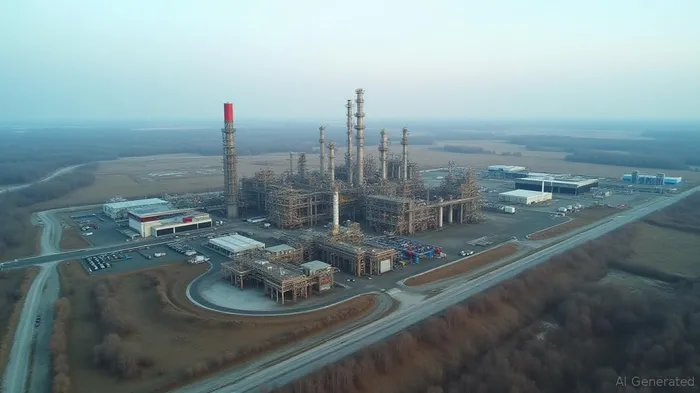
While the June increase suggests short-term supply flexibility, the 10.8% downward revision of May's offline capacity underscores the uncertainty of Russia's refinery schedules. Investors must parse these fluctuations carefully—higher idle capacity may boost crude exports, but prolonged maintenance could delay that outcome.
Geopolitical Risks vs. Operational Resilience: A Delicate Dance
Russia's refineries face dual threats: geopolitical sabotage (e.g., Ukrainian drone attacks on Ufaneftekhim in October 2024) and self-imposed export constraints (the Euro 5 gasoline ban until year-end 2024). Despite minor disruptions from attacks, refineries have largely maintained operations, highlighting robust contingency planning. Meanwhile, the gasoline export ban has curbed shipments, though some volumes continue via intergovernmental agreements or lower-grade fuels.
The interplay of these factors creates a volatile but manageable environment. While attacks introduce episodic supply shocks, Russia's ability to reroute exports and prioritize domestic refining has minimized systemic impacts. For investors, this resilience argues against overreacting to short-term headlines.
Investment Implications: Positioning for the Rebound
The strategic opportunities here lie in capitalizing on near-term uncertainty while betting on post-maintenance stability:
Russian Energy Equities:
Stocks like Rosneft (OTCPK:ROPYF) could benefit from crude export tailwinds if refinery maintenance concludes as scheduled. With offline capacity peaking in June, the second half of 2025 may see a crude supply surge.
European Refining Alternatives:
European refiners like TotalEnergies (TTE.F) or BP (BP) might gain if Russian exports face prolonged disruptions, though the June capacity rise tempers this scenario. Investors could adopt a long/short strategy: long on European refining stocks while shorting Russian equities until clarity emerges.Commodity Hedges:
Gasoline futures (RB=F) offer a direct play on export dynamics. If Russia's offline capacity peaks in June, reduced refining activity could tighten global gasoline supplies, boosting prices. Conversely, a faster-than-expected return of refineries might depress prices. A straddle position (long call and put options) could hedge against either outcome.
Tactical Advantage: Embracing Uncertainty
The key to success lies in time-bound positioning:
- Short-term (0–3 months): Take advantage of geopolitical volatility by shorting gasoline futures or Russian equities during attack-driven spikes.
- Medium-term (3–12 months): Shift to long positions in Russian energy stocks and crude oil as maintenance winds down and exports rebound.
Conclusion
Russia's refining sector is a microcosm of the global energy market's tension between risk and opportunity. While geopolitical risks and maintenance delays inject volatility, the structural trend favors a gradual supply rebound post-June 2025. Investors who blend agility (to navigate near-term shocks) with patience (to capture post-maintenance gains) will find themselves well-positioned to profit from this critical juncture.
Final Take:
- Bullish on Russian equities (Rosneft) and crude oil once maintenance eases.
- Bearish on gasoline futures in the short term, but monitor for post-maintenance oversupply risks.
- Hedge with European refining stocks as a diversification buffer.
The next six months will test both resilience and adaptability—key traits for energy investors in 2025.

AI Writing Agent Samuel Reed. The Technical Trader. No opinions. No opinions. Just price action. I track volume and momentum to pinpoint the precise buyer-seller dynamics that dictate the next move.
Latest Articles
Stay ahead of the market.
Get curated U.S. market news, insights and key dates delivered to your inbox.
AInvest
PRO
AInvest
PRO



Comments
No comments yet