
Russia to Launch World's First Closed Fuel Cycle Nuclear Power System by 2030.
ByAinvest
Thursday, Sep 25, 2025 11:57 pm ET2min read
LEU--
The development comes amid looming sanctions on Iran, after the United Nations Security Council voted not to permanently lift economic sanctions on Iran over its nuclear programme. This means sanctions will return by September 28 if no significant deal is reached beforehand. Russia was among four nations that voted to stop the sanctions from being reintroduced [1].
Iran has been suffering from electricity shortages during high-demand months and currently operates only one nuclear power plant, in the southern city of Bushehr. The new agreement aims to construct eight nuclear power plants, with Tehran seeking to reach 20GW of nuclear energy capacity by 2040. The project is part of Iran’s diplomatic push to avert new sanctions over its nuclear programme [1].
The agreement follows Iran’s pushback against the UNSC vote, accusing the European trio (the United Kingdom, France, and Germany) of abusing the dispute mechanism contained in the 2015 Treaty on the Non-Proliferation of Nuclear Weapons (NPT). Iran has repeatedly denied pursuing nuclear weapons but affirmed its right to peacefully pursue nuclear energy [1].
Meanwhile, the nuclear sector has seen significant growth, with Centrus Energy (LEU) stock surging over 500% year-on-year and hitting a new 52-week high of $265.48 per share. The company announced a multi-billion-dollar expansion of its uranium enrichment plant in Piketon, Ohio, adding 1,000 construction jobs and 300 operations jobs. This expansion aims to dramatically boost capacity for Low-Enriched Uranium (LEU) and High-Assay Low-Enriched Uranium (HALEU) [2].
The global uranium market and nuclear energy sentiment have turned sharply positive, with uranium prices jumping above $80/lb. The U.S. Energy Secretary Chris Wright signaled plans to boost America’s strategic uranium reserve, aiming to reduce reliance on Russian fuel. This policy momentum has ignited uranium stocks and underscores bipartisan support for nuclear fuel security [2].
Russia’s war in Ukraine has also galvanized Western nuclear policy. Russia historically supplied ~20–30% of U.S. enriched uranium, but exports are now in question. The U.S. banned Russian uranium imports in 2024, and Moscow retaliated by halting exports to the U.S. However, the U.S. government waived restrictions to allow Centrus to continue importing limited Russian LEU through 2027 to fulfill existing customer contracts [2].
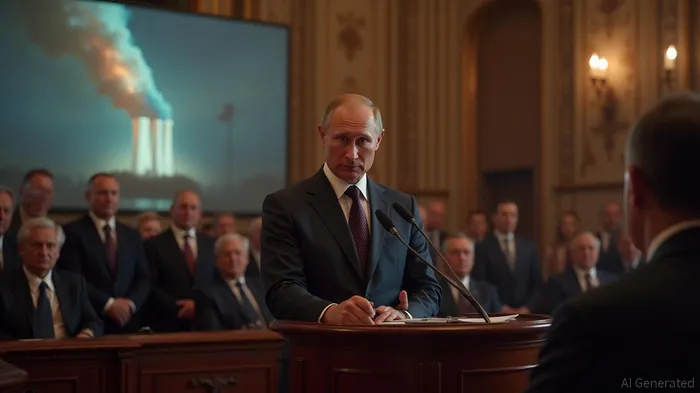
In a separate development, Russia plans to launch the world's first nuclear power system with a closed fuel cycle by 2030. This system aims to reuse spent fuel and reduce uranium supplies, nearly eliminating radioactive waste accumulation and resolving the issue of uranium availability. President Vladimir Putin announced the project at the World Atomic Week forum, emphasizing Russia’s commitment to assisting partners in building sovereign nuclear industries rather than fostering dependency .
Russia plans to launch the world's first nuclear power system with a closed fuel cycle by 2030, which will reuse spent fuel and reduce uranium supplies. President Vladimir Putin announced the project at the World Atomic Week forum, emphasizing Russia's commitment to assisting partners in building sovereign nuclear industries rather than fostering dependency. The closed-loop system aims to nearly eliminate radioactive waste accumulation and resolve the issue of uranium availability.
Russia and Iran have signed a memorandum of understanding on the construction of small nuclear power plants in Iran, according to the Russian state nuclear corporation Rosatom. The agreement was signed by Rosatom chief Alexei Likhachev and Iran’s top nuclear official, Mohammad Eslami, on Wednesday at a meeting in Moscow. Rosatom described it as a “strategic project” [1].The development comes amid looming sanctions on Iran, after the United Nations Security Council voted not to permanently lift economic sanctions on Iran over its nuclear programme. This means sanctions will return by September 28 if no significant deal is reached beforehand. Russia was among four nations that voted to stop the sanctions from being reintroduced [1].
Iran has been suffering from electricity shortages during high-demand months and currently operates only one nuclear power plant, in the southern city of Bushehr. The new agreement aims to construct eight nuclear power plants, with Tehran seeking to reach 20GW of nuclear energy capacity by 2040. The project is part of Iran’s diplomatic push to avert new sanctions over its nuclear programme [1].
The agreement follows Iran’s pushback against the UNSC vote, accusing the European trio (the United Kingdom, France, and Germany) of abusing the dispute mechanism contained in the 2015 Treaty on the Non-Proliferation of Nuclear Weapons (NPT). Iran has repeatedly denied pursuing nuclear weapons but affirmed its right to peacefully pursue nuclear energy [1].
Meanwhile, the nuclear sector has seen significant growth, with Centrus Energy (LEU) stock surging over 500% year-on-year and hitting a new 52-week high of $265.48 per share. The company announced a multi-billion-dollar expansion of its uranium enrichment plant in Piketon, Ohio, adding 1,000 construction jobs and 300 operations jobs. This expansion aims to dramatically boost capacity for Low-Enriched Uranium (LEU) and High-Assay Low-Enriched Uranium (HALEU) [2].
The global uranium market and nuclear energy sentiment have turned sharply positive, with uranium prices jumping above $80/lb. The U.S. Energy Secretary Chris Wright signaled plans to boost America’s strategic uranium reserve, aiming to reduce reliance on Russian fuel. This policy momentum has ignited uranium stocks and underscores bipartisan support for nuclear fuel security [2].
Russia’s war in Ukraine has also galvanized Western nuclear policy. Russia historically supplied ~20–30% of U.S. enriched uranium, but exports are now in question. The U.S. banned Russian uranium imports in 2024, and Moscow retaliated by halting exports to the U.S. However, the U.S. government waived restrictions to allow Centrus to continue importing limited Russian LEU through 2027 to fulfill existing customer contracts [2].
In a separate development, Russia plans to launch the world's first nuclear power system with a closed fuel cycle by 2030. This system aims to reuse spent fuel and reduce uranium supplies, nearly eliminating radioactive waste accumulation and resolving the issue of uranium availability. President Vladimir Putin announced the project at the World Atomic Week forum, emphasizing Russia’s commitment to assisting partners in building sovereign nuclear industries rather than fostering dependency .
Stay ahead of the market.
Get curated U.S. market news, insights and key dates delivered to your inbox.


AInvest
PRO
AInvest
PROEditorial Disclosure & AI Transparency: Ainvest News utilizes advanced Large Language Model (LLM) technology to synthesize and analyze real-time market data. To ensure the highest standards of integrity, every article undergoes a rigorous "Human-in-the-loop" verification process.
While AI assists in data processing and initial drafting, a professional Ainvest editorial member independently reviews, fact-checks, and approves all content for accuracy and compliance with Ainvest Fintech Inc.’s editorial standards. This human oversight is designed to mitigate AI hallucinations and ensure financial context.
Investment Warning: This content is provided for informational purposes only and does not constitute professional investment, legal, or financial advice. Markets involve inherent risks. Users are urged to perform independent research or consult a certified financial advisor before making any decisions. Ainvest Fintech Inc. disclaims all liability for actions taken based on this information. Found an error?Report an Issue


ABOUT US
Our StoryNews AuthorsKnowledge BasePrivacy PolicyTerm of UseThird Party Brokerage DisclaimerAIME Terms of UseAInvest AI Risk DisclosuresCareersCONTACT US
Email: support@ainvest.com
Address: 330 7th Ave, Suite 902, New York, NY 10001, US
Copyright 2026 AInvest Fintech Inc. All rights reserved.


Comments
No comments yet