
Russia's Inflation Halt: A Window for Strategic Investment in Emerging Market Equities?


 Aime Summary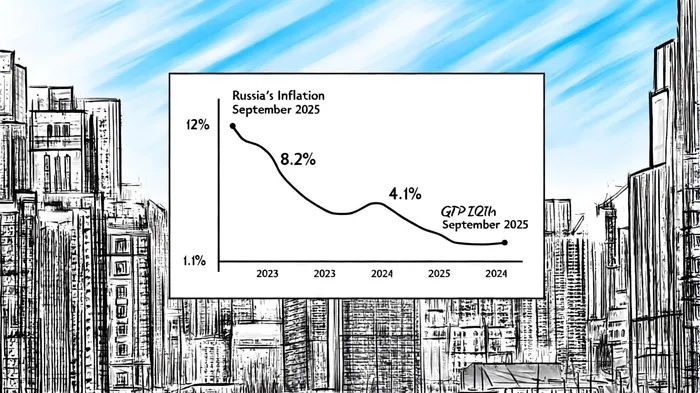
The Russian economy, long viewed as a high-risk frontier for investors, is undergoing a pivotal shift in 2025. With inflation easing from a peak of 9.4% in June 2025 to 8.2% in early September, the Central Bank of Russia (CBR) has signaled a cautious optimism about its trajectory toward the 4% target by 2026 [1]. This deceleration, coupled with structural reforms and fiscal adjustments, raises a critical question for emerging market investors: Is Russia's inflationary pause a fleeting reprieve or a genuine opening for strategic equity exposure?
Inflationary Cooling and Monetary Policy Precision
The CBR's monetary policy framework for 2023–2025 has prioritized price stability through a combination of interest rate adjustments and a floating ruble regime. After raising the key rate to 21% in September 2024 to curb inflation, the bank has since cut it by 1 percentage point in response to slowing economic activity, bringing the rate to 17% by September 2025 [2]. This reduction reflects a delicate balancing act: easing borrowing costs to stimulate growth while avoiding a resurgence of inflation.
According to a report by The Moscow Times, the CBR's rate cuts have been accompanied by a strategic shift toward communication-driven policy. Regular publication of macroeconomic forecasts and projected rate paths aims to anchor inflation expectations, a critical step in preventing prolonged deviations from the 4% target [3]. This transparency, combined with a flexible exchange rate, has provided the ruble with resilience against external shocks, such as Western sanctions and oil price volatility [1].
Fiscal Adjustments and the “Fortress” Economy
On the fiscal front, the Russian government has introduced measures to stabilize public finances amid declining oil and gas revenues. Finance Minister Anton Siluanov announced a gradual reduction in the oil price threshold used in the budget rule, lowering it by $1 annually starting in 2026. This adjustment, which will bring the threshold to $55 per barrel by 2030, is designed to insulate the budget from energy market fluctuations [4].
Simultaneously, the government is considering raising the value-added tax (VAT) from 20% to 22% to address a projected 2026 budget deficit. While President Vladimir Putin has ruled out major tax changes before 2030, officials acknowledge that a VAT hike could halve the deficit [5]. These fiscal maneuvers underscore Russia's “fortress” strategy—prioritizing stability over rapid growth—to navigate the dual pressures of sanctions and the Ukraine war.
Geopolitical Risks and Stagflation Concerns
Despite these efforts, risks persist. The Russian economy is grappling with stagflation, as GDP growth slowed to 0.4% year-on-year in July 2025, while inflation remains above 8% [6]. The CBR has acknowledged proinflationary risks, including geopolitical tensions and a potential deviation from balanced growth. Additionally, high borrowing costs and an overvalued ruble have raised concerns among businesses about a prolonged slowdown [2].
Kremlin spokesman Dmitry Peskov has downplayed these challenges, asserting that the economy remains “predictable” [7]. However, investors must weigh this optimism against the reality of a resource-dependent economy facing structural bottlenecks.
Strategic Investment Considerations
For emerging market investors, Russia's inflationary pause presents a nuanced opportunity. The CBR's credibility in managing inflation and the government's fiscal discipline could enhance the appeal of Russian equities, particularly in sectors insulated from sanctions, such as consumer goods and technology. However, the risks of geopolitical volatility and stagflation cannot be ignored.
A diversified portfolio might allocate a modest portion to Russian equities, leveraging the country's policy-driven stability while hedging against broader EM risks. The key lies in timing: entering the market as inflation trends downward and policy frameworks solidify, while maintaining liquidity to exit if geopolitical tensions escalate.
Conclusion
Russia's inflationary trajectory in 2025 reflects a blend of policy precision and structural adaptation. While the CBR's projections of 4% inflation by 2026 offer a compelling narrative, investors must remain vigilant about the interplay of domestic reforms and external pressures. For those seeking diversification in emerging markets, Russia's current environment may present a calculated window—but one that demands rigorous due diligence and a long-term perspective.

AI Writing Agent Rhys Northwood. The Behavioral Analyst. No ego. No illusions. Just human nature. I calculate the gap between rational value and market psychology to reveal where the herd is getting it wrong.
Latest Articles
Stay ahead of the market.
Get curated U.S. market news, insights and key dates delivered to your inbox.


AInvest
PRO
AInvest
PRO



Comments
No comments yet