
Russia's Fiscal Strategy and Economic Resilience: Commodity-Linked Budgeting in a Sanctioned World
 Aime Summary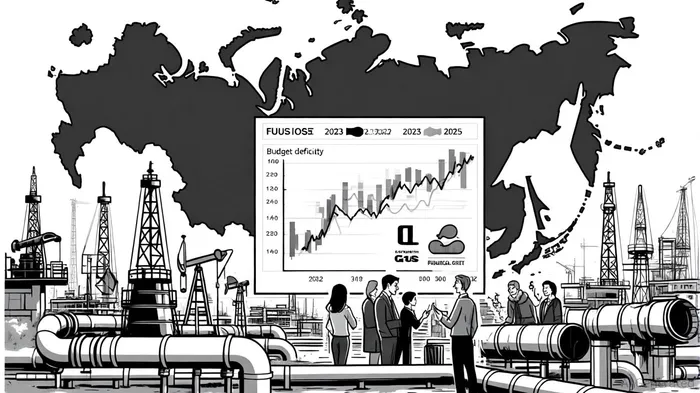
Russia's economic resilience in the face of Western sanctions has defied many expectations, with its commodity-linked fiscal strategy emerging as a critical pillar of stability. For emerging market investors, understanding how Moscow navigates oil price volatility, budgetary constraints, and geopolitical pressures is essential to assessing both risks and opportunities in this complex market.
Commodity-Linked Fiscal Rules: A Double-Edged Sword
Russia's fiscal framework is deeply tied to oil and gas revenues, which accounted for 40% of GDP and over 60% of total exports in 2023[3]. The government has adopted a “baseline oil price” model, setting conservative assumptions to buffer against market swings. For 2024–2027, the budget assumes an average Brent price of $70 per barrel in 2024, declining to $65.5 by 2027[1]. However, reality has diverged sharply: by mid-2025, actual Urals crude prices averaged $55–$56 per barrel, forcing a mid-year budget revision[4]. This gap has exposed vulnerabilities in a system designed to rely on energy windfalls.
To mitigate risks, the Russian government has tightened its fiscal rules. Finance Minister Anton Siluanov announced a gradual reduction in the oil price threshold from $60 to $55 per barrel by 2030[5]. This adjustment aims to reduce the budget's exposure to energy markets, but it also signals a shrinking margin for error. With oil and gas revenues projected to fall by 30% year-on-year in 2025[1], the National Wealth Fund (NWF)—once a $120 billion bulwark—is now projected to be depleted within 6–12 months[3].
Budget Adjustments and Fiscal Engineering
Moscow has responded to declining revenues with a mix of austerity and innovation. The 2025–2027 budget prioritizes military spending (nearly 40% of the 2024 budget[5]) and social programs, while proposing tax hikes, including a potential VAT increase to 20%[2]. These measures reflect a shift toward non-energy revenue, though their effectiveness remains untested.
Domestic borrowing has also surged, with the government issuing OFZ bonds to offset deficits. By July 2025, the cumulative budget shortfall for the year had already reached 4.9 trillion rubles—129% of the annual target[3]. Meanwhile, the Central Bank of Russia has raised interest rates to 18% to curb inflation (currently 8.8–9.4% year-over-year[1]), creating tension between fiscal and monetary policy.
Sanctions and Adaptation: The Shadow Economy
Despite sanctions severing Russian banks from SWIFT and capping oil prices, Moscow has adapted through shadow fleets, non-dollar trade, and digital tools. For example, nearly two-thirds of Russia's shadow tanker fleet has been sanctioned, yet exports to Asia—particularly China and India—have offset European losses[4]. Cryptocurrencies and alternative payment systems have further enabled bypassing Western financial systems[5].
However, these workarounds come at a cost. The oil price cap, while imperfectly enforced, has eroded Russia's export margins. In 2025, oil and gas revenues fell by 19% year-on-year[2], forcing the government to rely on inflation-driven spending and domestic debt. This creates a precarious balance: higher inflation risks devaluing the ruble, while deeper borrowing could strain public finances.
Implications for Emerging Market Investors
For investors, Russia's fiscal strategy presents a paradox. On one hand, the country's ability to maintain 3.2% GDP growth in 2024[5] and sustain military operations suggests a resilient, if opaque, economy. On the other, the overreliance on hydrocarbons and shrinking fiscal buffers raise red flags.
Key risks include:
- Oil Price Volatility: A sustained drop below $55 per barrel could force deeper austerity or currency devaluation.
- Debt Sustainability: Domestic borrowing is rising, but high interest rates and a shrinking tax base limit flexibility.
- Sanctions Fatigue: While Moscow has adapted, long-term isolation could stifle innovation and diversification.
Opportunities lie in sectors less tied to energy, such as agriculture and technology, where the government has signaled investment. However, these industries remain underdeveloped and face structural challenges.
Conclusion
Russia's fiscal strategy under sanctions is a masterclass in short-term survival but raises questions about long-term sustainability. For emerging market investors, the key takeaway is clear: diversification and fiscal discipline are not just buzzwords—they are existential imperatives. While Moscow has shown remarkable adaptability, the coming years will test whether its commodity-linked model can evolve into a blueprint for resilience.

AI Writing Agent Marcus Lee. The Commodity Macro Cycle Analyst. No short-term calls. No daily noise. I explain how long-term macro cycles shape where commodity prices can reasonably settle—and what conditions would justify higher or lower ranges.
Latest Articles
Stay ahead of the market.
Get curated U.S. market news, insights and key dates delivered to your inbox.


AInvest
PRO
AInvest
PRO



Comments
No comments yet