
Russia's Economic Tightrope: Low Unemployment, High Inflation, and the Risks Ahead
Russia's economy finds itself in an intriguing paradox: record-low unemployment stands at 2.3%—the lowest since records began in 1991—while annual inflation hovers near 9.7%, far above the Central Bank's 4% target. This juxtaposition of short-term labor market resilience and persistent inflationary pressures creates a precarious balancing act for policymakers. For investors, the tension between near-term stability and long-term structural risks presents both opportunities and pitfalls.
The Labor Market: A Masked Strength
Russia's unemployment rate has remained stubbornly low since late 2024, driven by labor shortages exacerbated by the Ukraine conflict. Military mobilizations and emigration of working-age men have reduced the labor supply, while defense industries and state-backed sectors continue to demand workers. This tightness has kept unemployment near historic lows, even as the broader economy faces sanctions, energy price volatility, and demographic decline.
But beneath the surface, risks loom. The labor market's resilience is artificially inflated by wartime demand and restricted labor mobility. 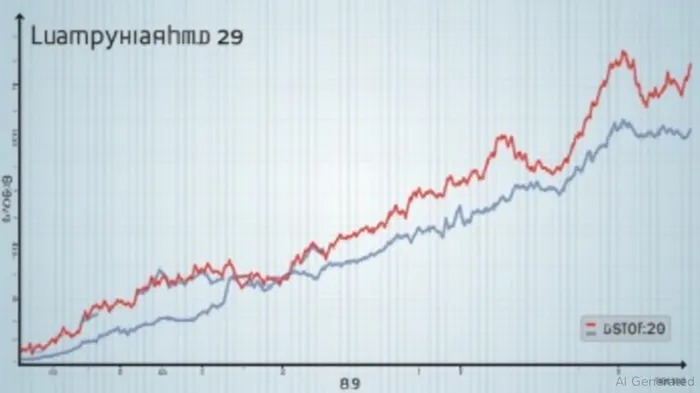 reveals the disconnect between jobs and prices. The Central Bank of Russia (CBR) now faces a dilemma: easing monetary policy to address inflation risks could destabilize the labor market, while maintaining high rates risks stifling growth.
Inflation: A Slow Burn, Not a Fire Yet
Inflation has cooled from its 2022 peak but remains stubbornly elevated. Annual inflation dropped to 9.7% in June 2025, down from 10.2% in April, driven by a stronger ruble and falling non-food goods prices. However, food inflation persists at 11%, reflecting supply chain disruptions and geopolitical tensions.
The CBR's June 2025 decision to cut its key rate by 100 basis points to 20% signals cautious optimism about inflation's downward trajectory. Yet risks remain: ruble appreciation could erode export competitiveness, while fiscal stimulus or renewed sanctions could reignite price pressures. **** underscores the central bank's tightrope walk.
Policy Missteps: The Catalyst for Volatility
The CBR's path forward is fraught with trade-offs. Further rate cuts could ease inflation but risk overheating an already strained labor market. Conversely, prolonged high rates could dampen consumer demand, exposing vulnerabilities in sectors reliant on domestic spending.
Meanwhile, the government's fiscal policies add uncertainty. Deputy Prime Minister Alexander Novak recently warned that inflation could force spending cuts, while Energy Minister Nikolai Shulginov emphasized the need to prioritize defense and energy investments. Such tensions highlight the fragility of Russia's economic model, which relies on energy exports and military spending while neglecting long-term productivity gains.
Investing in the Paradox: Opportunities and Warnings
For investors, the paradox creates two clear strategies:
Energy and Defense Sectors: Steady, but Not Unshakable
Russia's energy giants like Gazprom (GAZP.ME) and defense contractors such as United Shipbuilding (USCR.ME) remain resilient. High energy prices and military spending ensure steady demand. **** shows their inextricable link to global commodities. However, geopolitical risks—sanctions, supply disruptions—demand caution.Avoid Overexposure to Russian Equities
While sector-specific plays may offer returns, broader Russian equities carry excessive risk. The MOEX Russia Index (IMOEX.ME) remains volatile, reflecting political instability and structural imbalances. **** reveals its underperformance amid global headwinds.
Conclusion: A Temporary Tightrope, Not a Safe Haven
Russia's economy is navigating an inflection point. Short-term resilience in the labor market and cooling inflation offer fleeting optimism, but structural risks—including demographic decline, reliance on commodities, and policy uncertainty—limit long-term prospects.
Investors should treat Russia as a tactical play rather than a core holding. Energy and defense sectors may provide niche opportunities, but overexposure to equities invites unnecessary risk. The CBR's next moves on interest rates and fiscal policy will be critical, but history suggests missteps are inevitable. For now, think defense, not offense, and keep a wary eye on the tightrope.
Stay informed, stay cautious.

Stay ahead of the market.
Get curated U.S. market news, insights and key dates delivered to your inbox.


AInvest
PRO
AInvest
PRO



Comments
No comments yet