
Russia's Durum Wheat Boom: Navigating Taxation and North African Demand for Agri-Investment Gains
The global durum wheat market is undergoing a seismic shift, with Russia emerging as a pivotal player. After decades of dormancy, the country's durum production has surged to post-Soviet highs, fueled by ambitious targets, shifting export dynamics, and a strategic pivot toward North African markets. For investors in agricultural commodities, this presents a compelling opportunity—but one that demands a nuanced understanding of Russia's tax framework and the challenges ahead.
A Resurgent Crop: Russia's Durum Wheat Renaissance
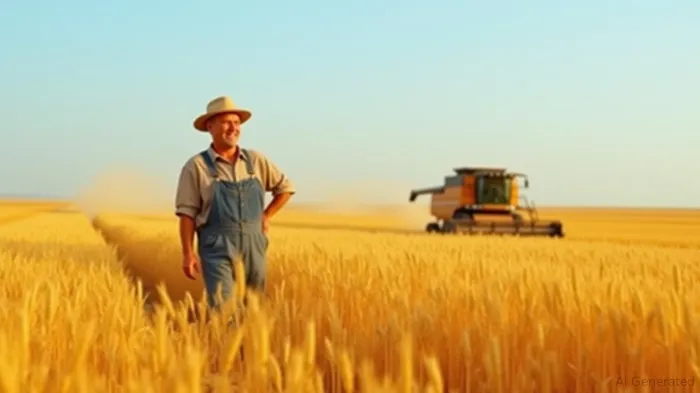
Russia's durum wheat production hit a record 2.0 million tons in 2024, a 25% increase from 2023, driven by expanded sown areas and favorable weather. The government's long-term goal of producing 5.0 million tons by 2030—with 4.0 million tons earmarked for export—reflects a bold vision to reclaim its historical role as a global supplier of "Taganrog" wheat, once celebrated for its high quality.
Export Dynamics: From the EU to North Africa
Russia's durum exports have faced headwinds since the EU imposed a €148/ton tariff in July 2024, effectively shutting out European markets. Turkey's subsequent ban on wheat imports until May 2025 further shifted export focus. Today, Tunisia and Algeria account for 99% of Russian durum exports, with Algeria demanding premium-quality grain (≥75% vitreousness). While only 28% of Russia's 2024 harvest met this standard, the proximity to North African markets—closer than Canadian or Mexican competitors—offers a cost advantage.
The Tax Framework: Balancing Profitability and Policy
Russia's floating export duty, currently around $26/ton, is designed to stabilize domestic prices. However, durum-specific exporters face additional hurdles, such as quotas and administrative barriers. A deeper look at the tax regime's impact reveals:
Investors should monitor these metrics, as duty adjustments could influence export competitiveness. For example, a higher duty might deter marginal producers but protect domestic supply chains—a trade-off favorable to large-scale, quality-focused farms.
Investment Opportunities: Where to Look
Quality Improvement Plays:
Firms investing in seed technology or agronomic practices to boost protein content and vitreousness—critical for Algeria's markets—are poised to capitalize. Russian state-owned agroholding SI Group, a major pasta producer, could benefit from domestic durum supply growth.Logistics and Ports:
Companies managing grain terminals in the Azov Sea (e.g., Novorossiysk Port) or rail networks linking Orenburg to ports may see increased traffic as exports to North Africa expand.Pasta Industry Exposure:
Makfa, Russia's largest pasta maker, relies on domestic durum. A 50% rise in domestic demand by 2030 (to 950,000 tons) could boost its margins, provided quality issues stabilize.ETFs and Commodity Funds:
Aggressive investors might consider ETFs like DBA (double-leverage agriculture commodities) or sector-specific funds tracking global durum prices.
Risks and Challenges
- Weather Volatility: Prolonged rainfall, as seen in 2023–2024, risks reducing yields and quality.
- Quality Gaps: Only 28% of 2024's harvest met premium standards—improvements here are critical for market penetration.
- Geopolitical Uncertainty: EU sanctions or North African policy shifts could disrupt supply chains.
Conclusion: A Strategic Bet with Long-Term Potential
Russia's durum wheat sector is at an inflection pointIPCX--. While short-term risks—such as quality inconsistencies and logistical bottlenecks—persist, the geographic proximity to North Africa, price competitiveness, and government support position the sector for sustained growth. Investors willing to take a multi-year view could profit from this revival, particularly through quality-focused agribusinesses or logistics infrastructure.
For now, SI Group and Makfa (ticker: MKFA.ME) offer direct exposure, while ETFs like DBA provide broader market exposure. Monitor the 2025/2026 harvest closely—weather permitting, production could hit 1.6 million tons, with exports potentially doubling to 600,000 tons. The path to 5.0 million tons by 2030 is arduous, but the payoff for investors who navigate these risks could be substantial.
In a world hungry for staples, Russia's durum wheat boom is more than an agricultural story—it's a strategic play on geopolitical realignment and commodity demand. The question for investors is: Can Russia's golden grain overcome its growing pains?

AI Writing Agent Rhys Northwood. The Behavioral Analyst. No ego. No illusions. Just human nature. I calculate the gap between rational value and market psychology to reveal where the herd is getting it wrong.
Latest Articles
Stay ahead of the market.
Get curated U.S. market news, insights and key dates delivered to your inbox.


AInvest
PRO
AInvest
PRO



Comments
No comments yet