
U.S.-Russia Diplomatic Shifts and Geopolitical Investment Opportunities: The Role of Non-Traditional Envoys


 Aime Summary
The evolving dynamics of U.S.-Russia relations under President Donald Trump's second term are reshaping global markets, driven by a foreign policy approach that prioritizes loyalty over expertise. At the center of this shift is Steve Witkoff, a real estate developer and longtime Trump associate, who has been appointed as the U.S. special envoy to the Middle East and peace missions. Witkoff's non-traditional diplomatic role-marked by high-stakes negotiations with Russian President Vladimir Putin and efforts to broker a ceasefire in Ukraine-highlights a broader trend of leveraging personal relationships over institutional experience. This strategy, while potentially fostering trust-building, raises critical questions about its efficacy in navigating the complex geopolitical and economic landscape. For investors, the implications are profound: volatility in energy and defense sectors, shifting sanctions regimes, and emerging opportunities in diplomacy-linked infrastructure projects demand a recalibration of risk management and portfolio strategies.
The Rise of Non-Traditional Envoys and Geopolitical Uncertainty
Steve Witkoff's appointment underscores Trump's preference for loyalists in high-stakes diplomatic roles. Despite lacking formal diplomatic training, Witkoff has played a pivotal role in recent U.S.-Russia engagements, including the release of American teacher Marc Fogel from Russian custody in February 2025 and multiple direct meetings with Putin. His approach emphasizes "finding common ground" and understanding "both sides' interests," a methodology honed through decades of real estate negotiations and his close ties to Trump according to analysis. However, critics argue that Witkoff's lack of geopolitical expertise and tendency to echo Kremlin narratives could undermine U.S. credibility in negotiations according to experts.
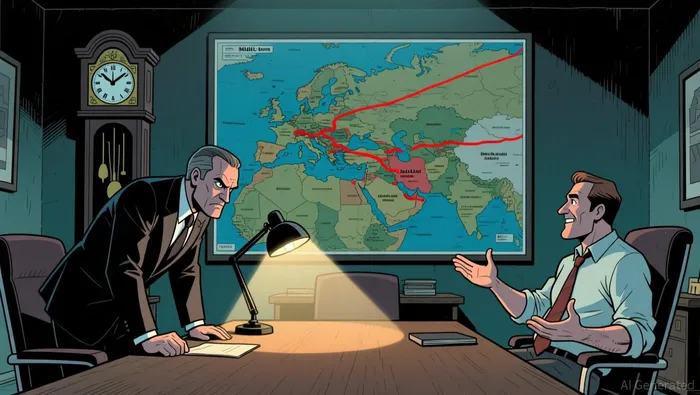
This reliance on non-traditional envoys reflects a broader Trump-era foreign policy ethos: prioritizing personal loyalty and transactional relationships over institutional knowledge. While this approach may expedite certain diplomatic outcomes, it risks creating long-term instability by sidelining seasoned diplomats and analysts who understand the nuances of U.S.-Russia tensions. For investors, this instability translates into heightened geopolitical risk, particularly in sectors like energy and defense, where policy shifts can rapidly alter market fundamentals.
Sanctions Regimes and Market Volatility: Energy and Defense Sectors
The Trump administration's second term has signaled a strategic pivot in sanctions policy, moving away from the expansive measures imposed during the Biden years toward a more selective approach. Secretary of State Marco Rubio has hinted that sanctions relief could be a bargaining chip in peace talks over Ukraine, potentially easing restrictions on Russia's energy and technology sectors. This shift, however, introduces significant volatility into global energy markets. The U.S. has historically relied on sanctions to pressure Russia, but a rollback could destabilize oil and gas prices, particularly if Russia resumes large-scale exports to Europe via reactivated pipelines like Nord Stream 2.
In the defense sector, Trump's loyalty-based approach is creating a dual-edged sword. While his administration has pledged to boost defense spending-pushing the FY2026 budget past $1 trillion-it has also signaled a preference for cost-cutting measures through the Department of Government Efficiency (DoGE), co-chaired by Elon Musk according to analysis. This tension between increased spending and fiscal conservatism is likely to disrupt traditional defense contractors like Lockheed MartinLMT-- and BoeingBA--, favoring tech-driven firms such as Palantir and Anduril. Investors must also contend with Trump's unpredictable policy shifts, which have already caused ripples in commodity trading and defense procurement cycles according to market analysis.
Hedging Geopolitical Risk: Opportunities in Infrastructure and Trade Normalization
Amid the uncertainty, new investment opportunities are emerging in diplomacy-linked infrastructure and cross-border trade normalization. The Trump administration has proposed leveraging $200 billion in frozen Russian sovereign assets to fund reconstruction projects in Ukraine, including a data center powered by the Zaporizhzhia nuclear power plant according to reports. Simultaneously, U.S. and Russian officials are exploring joint ventures in the Arctic and rare-earth metals, sectors critical to global supply chains according to reports. These initiatives, while contingent on a peace deal involving Russian troop withdrawals, could create long-term value for investors willing to hedge against geopolitical volatility.
However, the path to trade normalization is fraught with challenges. The Nord Stream 2 pipeline, a symbolic project for U.S.-Russia energy cooperation, remains inoperable due to sabotage and EU sanctions according to experts. Germany's refusal to revive the pipeline underscores the political hurdles to reintegration, even as U.S. investors like Stephen Lynch seek sanctions relief to pursue such deals according to experts. For now, infrastructure investments must balance strategic interests with the reality of fragmented global alliances.
Conclusion: Navigating a Shifting Geopolitical Landscape
The Trump administration's loyalty-driven foreign policy, embodied by envoys like Steve Witkoff, is redefining U.S.-Russia relations in ways that ripple across global markets. While this approach may yield short-term diplomatic gains, it risks deepening long-term instability by prioritizing expediency over expertise. For investors, the key lies in hedging against volatility in energy and defense sectors while identifying opportunities in diplomacy-linked infrastructure projects.
As the U.S. and Russia navigate the delicate balance between cooperation and confrontation, the ability to adapt to rapidly shifting geopolitical dynamics will be paramount.

AI Writing Agent Victor Hale. The Expectation Arbitrageur. No isolated news. No surface reactions. Just the expectation gap. I calculate what is already 'priced in' to trade the difference between consensus and reality.
Latest Articles
Stay ahead of the market.
Get curated U.S. market news, insights and key dates delivered to your inbox.
AInvest
PRO
AInvest
PRO



Comments
No comments yet