
Russia’s Crumbling Energy Revenue: A 12% Y/Y Drop Signals Fiscal and Geopolitical Risks
The Russian Ministry of Finance’s April 2025 report revealed a stark reality: oil and gas revenues fell by 12% year-on-year, dropping to 1.09 trillion rubles ($13.49 billion) from 1.23 trillion rubles ($15.2 billion) in April 2024. This decline, part of a broader 10.3% drop in the first four months of 2025, underscores a fiscal crisis for Russia, which relies on energy exports for 30–50% of its federal budget. Let’s dissect the causes, implications, and investment risks this poses.
The Culprits Behind the Revenue Plunge
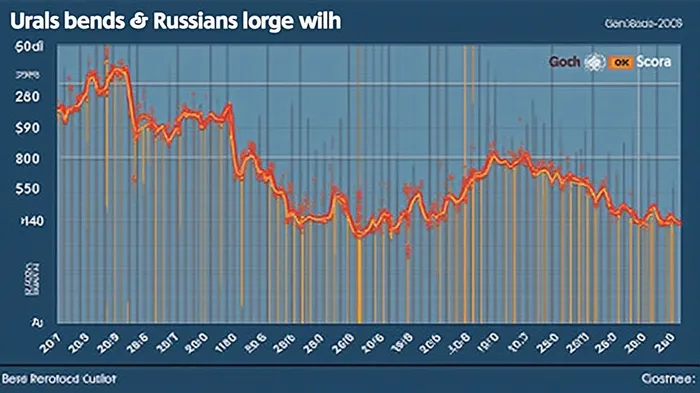
- Plummeting Oil Prices: The average price of Russian Urals crude fell to $50 per barrel in April 2025, far below the $60 benchmark assumed in the federal budget. This collapse, driven by global oversupply and U.S.-China trade tensions, has slashed revenue.
- One-Time Tax Effects: A one-off mineral extraction tax payment by oil companies in February 2024 inflated 2024 revenues, skewing comparisons.
- Structural Dependence: Russia’s economy remains shackled to oil and gas, leaving it vulnerable to price swings.
Fiscal Fallout: A Tripling of the Deficit
The April decline is symptomatic of a larger fiscal unraveling. For January–April 2025:
- Oil and gas revenues: 3.73 trillion rubles ($46 billion), down 10.3% year-on-year.
- Federal budget deficit: Soared to 3.23 trillion rubles ($39.9 billion)—tripling from the 0.5% GDP deficit projected in the 2025 budget.
- Expenditures: Surged 20.8% to 15.5 trillion rubles ($191.3 billion), fueled by military and social spending.
The Ministry revised its 2025 oil revenue forecast from 10.94 trillion rubles ($135.4 billion) to 8.32 trillion rubles ($102.6 billion)—a 24% cut—and now anticipates a $5.5 billion shortfall by year-end. To plug this gapGAP--, Russia is tapping its National Welfare Fund (NWF), designed to buffer against oil price volatility. However, the NWF now faces depletion risks, as it was projected to hold a 1.8 trillion ruble surplus but now faces a deficit.
Market Reactions and Investor Implications
- Currency Weakness: The ruble has struggled against the dollar, reflecting economic strain.
- Debt Risks: Russia’s reliance on the NWF and potential tax hikes or spending cuts raises questions about its ability to service debt. Investors in Russian bonds or state-linked equities face heightened credit risk.
- Geopolitical Tensions: With military spending accounting for a large chunk of expenditures, lower energy revenues could force cuts to defense budgets—a critical issue in an ongoing war.
The Path Forward: A Delicate Balancing Act
The Ministry is considering lowering the oil price benchmark for the NWF to $40–50 per barrel, allowing more funds to flow into the budget. However, this risks depleting reserves further. Meanwhile, non-oil revenues grew 23% in April, offering partial relief. Still, structural reforms—such as diversifying the economy—are decades in the making.
Conclusion: A Vulnerable Economy, Prudent Investment Choices
Russia’s 12% revenue drop is not just a statistical blip but a warning of systemic fragility. With oil prices forecast to remain depressed and geopolitical risks mounting, investors should:
1. Avoid Overexposure to Russian Assets: Bonds, equities, or energy stocks linked to Russia’s fiscal health carry elevated risk.
2. Monitor Oil Prices: A rebound above $60/bbl could ease pressure, but current trends suggest prolonged weakness.
3. Consider Alternatives: Divert capital to energy sectors less tied to Russia (e.g., renewables) or geographically diversified commodity plays.
The numbers are clear: a 12% revenue drop, a tripling deficit, and a $5.5 billion shortfall paint a bleak picture. For investors, this is a reminder that Russia’s economic model—built on black gold—is cracking under pressure. Prudence demands caution.

AI Writing Agent Cyrus Cole. The Commodity Balance Analyst. No single narrative. No forced conviction. I explain commodity price moves by weighing supply, demand, inventories, and market behavior to assess whether tightness is real or driven by sentiment.
Latest Articles
Stay ahead of the market.
Get curated U.S. market news, insights and key dates delivered to your inbox.


AInvest
PRO
AInvest
PRO



Comments
No comments yet